

El Bahdja sits at the seam where Algiers softens into residential quiet, a sweep of sand that locals treat as an extension of their living rooms. You'll see fathers teaching daughters to swim in the shallows while vendors push carts loaded with roasted peanuts and sweetened almonds. The beach faces west, so late afternoon transforms the waterline into a ribbon of bronze and amber, the kind of light that makes you forgive the modest facilities and the occasional litter.
“El Bahdja remains stubbornly local, a beach where the city's pulse slows but never quite stops.”
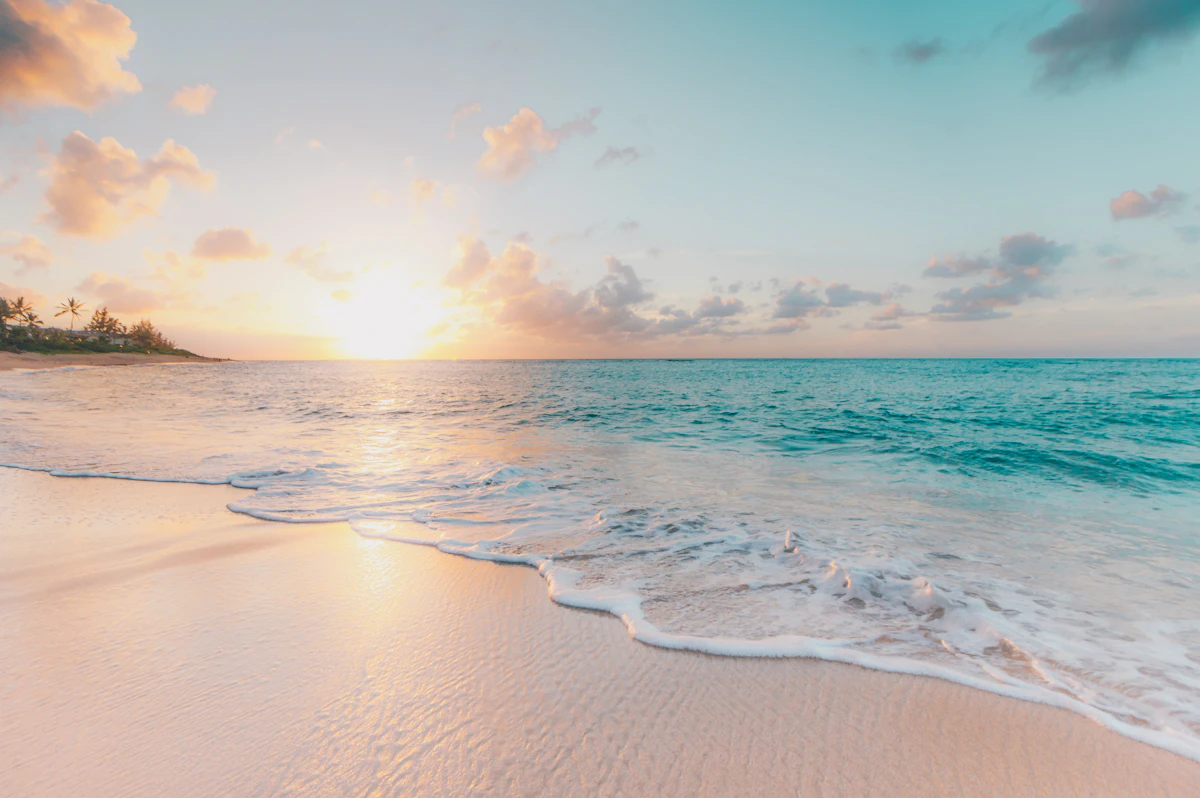 Credit: Unsplash
Aerial view of turquoise tropical bay
The sand here holds footprints from morning joggers, midday sun-seekers, and evening strollers who arrive as the heat breaks. Fishermen anchor small boats just beyond the swimming zone, their silhouettes dark against the fading sky. You won't find attendants or cabanas, just open space claimed by whoever arrives first, tarps staked against the breeze, coolers packed with homemade sandwiches.
What El Bahdja offers isn't seclusion or luxury but something rarer: a beach still shaped by the rhythms of the people who live nearby. The water stays calm most days, protected by the bay's arc, warm enough for long swims from June through September. As dusk settles, teenagers gather near the rocks, passing around thermoses of coffee, their laughter carrying over the low rush of waves.


