

The coastal road from Melbou hugs the mountain like a thread, and below it, El Djorf Beach sprawls in shades of charcoal and rust. Instead of sand, you'll navigate jagged basalt shelves smoothed by millennia of tide, their surfaces slick with spray when the swell picks up. Tidal pools cradle sea urchins and tiny silver fish; the rockface behind you rises in strata of limestone and schist, striped by mineral seep.
“El Djorf offers unfiltered geology and tidal drama where most Béjaïa beaches smooth themselves into sand.”
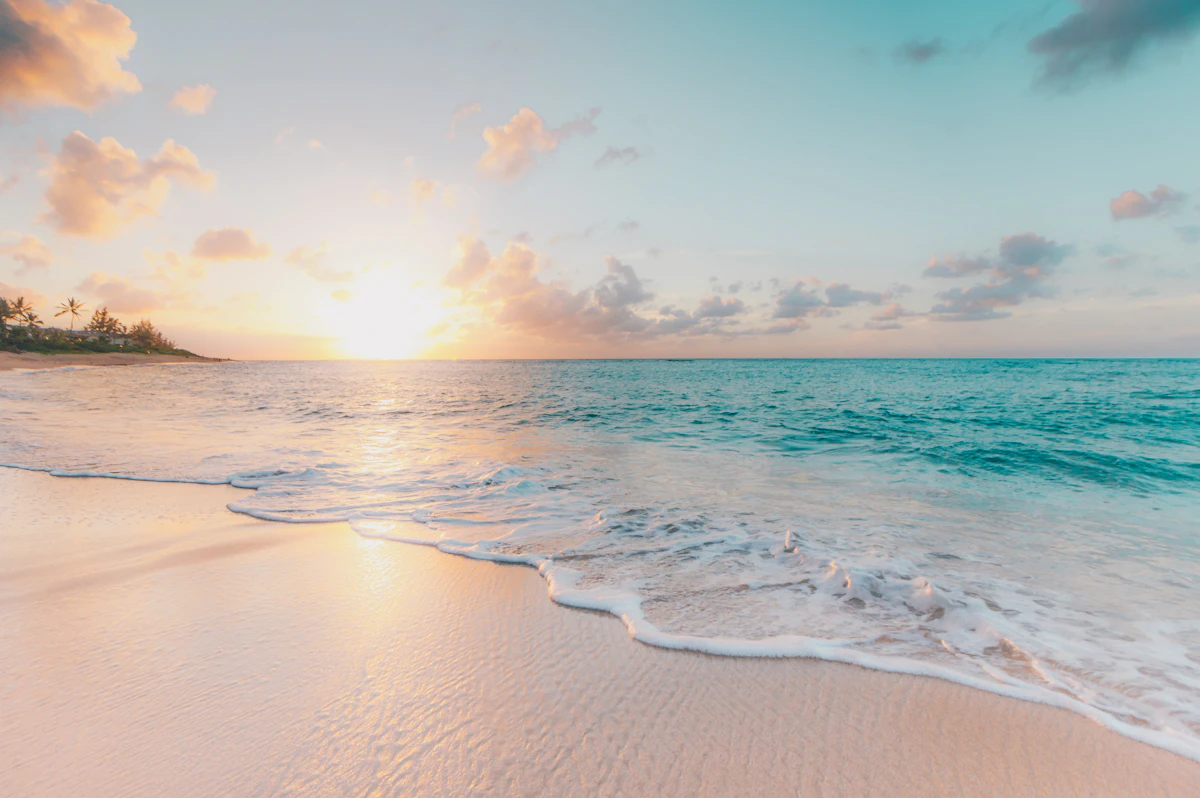 Credit: Unsplash
Aerial view of turquoise tropical bay
Couples arrive in the late afternoon, when the angle of the sun softens the stone and turns the water cobalt. You'll hear the hollow clap of waves filling fissures, the distant bleat of goats on the hillside, the occasional motorbike grinding along the tarmac overhead. There are no vendors, no lifeguards—just a handful of fishermen perched on boulders, lines taut in the current.
Bring sturdy shoes with grip; the descent from the roadside pullout demands attention, and the rock underfoot can betray you when wet. Pack everything in, pack everything out. What you gain in return is solitude, the salt-tightened skin, and the satisfaction of a place that refuses to pander.


