

There is no path down. The cliffs rise straight from the sea, their faces streaked white with guano and webbed with cracks where stunted shrubs cling. The only way in is by kayak, small boat, or a long swim from the nearest accessible point a kilometer east. As you round the headland, the bay opens like a secret—a narrow crescent of smooth, fist-sized cobbles backed by rock walls that amplify every sound: the clatter of stones in the retreating wave, the cry of a gull, the distant thrum of a fishing boat's engine.
“One of the last roadless bays along the Tipaza coast, accessible only by water and still largely undisturbed by human development.”
 Credit: Unsplash
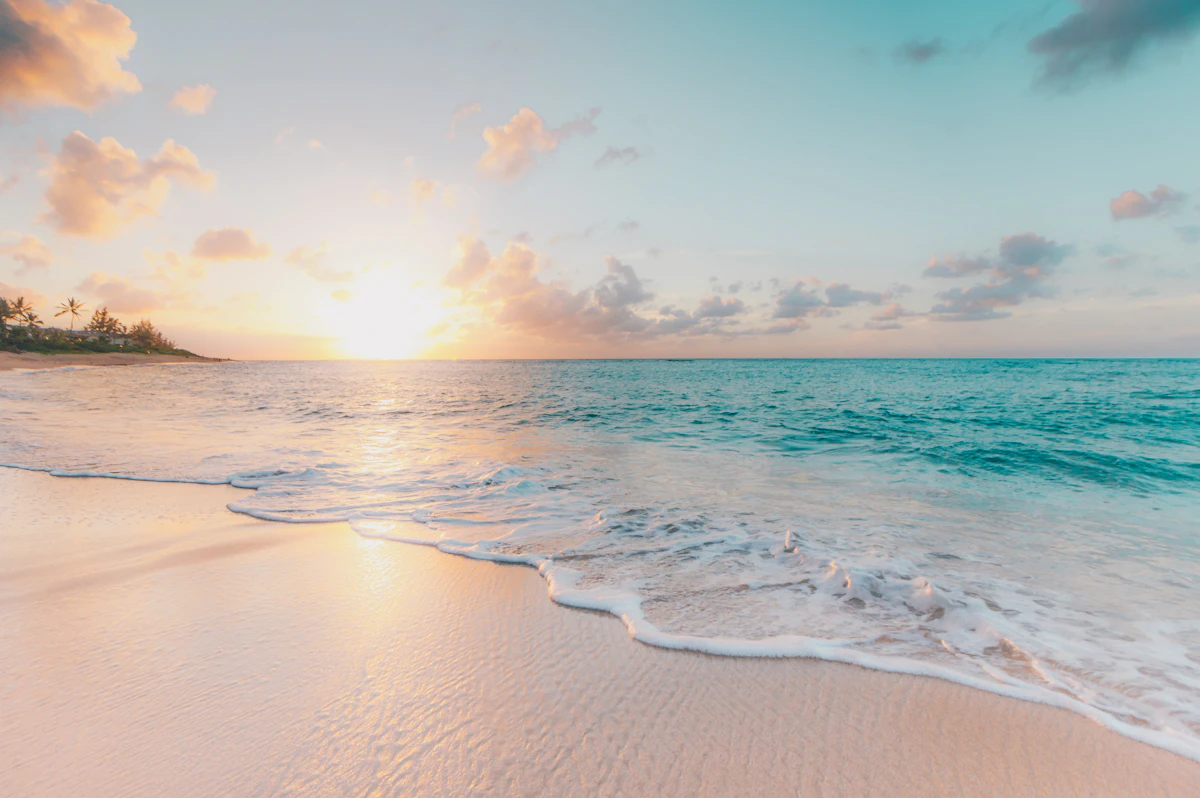
Aerial view of turquoise tropical bay
The water is a shock of cold even in summer, fed by deep currents that well up along the cliff base. You pull your boat onto the stones and the silence settles over you. The bay faces north, so the sun strikes it obliquely, leaving the cliffs in cool shadow for much of the day. Tide pools form in the rocks at the eastern edge, each one a miniature world of anemones, limpets, and tiny transparent shrimp.
The name—Veau Marin, "sea calf"—is a reminder of what's been lost. Mediterranean monk seals once bred in bays like this, hauling out on the stones to rest and nurse their pups. They're gone now, extirpated by hunting and disturbance. But the bay retains its wildness, its sense of being just barely within human reach. You stay as long as the weather holds, then push off and let the current carry you back toward the open coast.


