

Playa Península Potter feels less like a beach and more like standing at the edge of a living laboratory. The shoreline curves in a narrow arc of wave-smoothed pebbles, charcoal and rust-colored, slick with kelp at the tideline. Behind you, the corrugated buildings of Base Carlini—Argentina's year-round research station—sit low against the tundra, while ahead, the Drake Passage churns in shades of pewter and indigo. This is Antarctica's accessible face, where science and wilderness collide in a landscape stripped to essentials.
“This is the only Antarctic beach where you can watch active polar research unfold alongside breeding seal colonies, accessible to civilians yet utterly remote.”
 Credit: Pexels
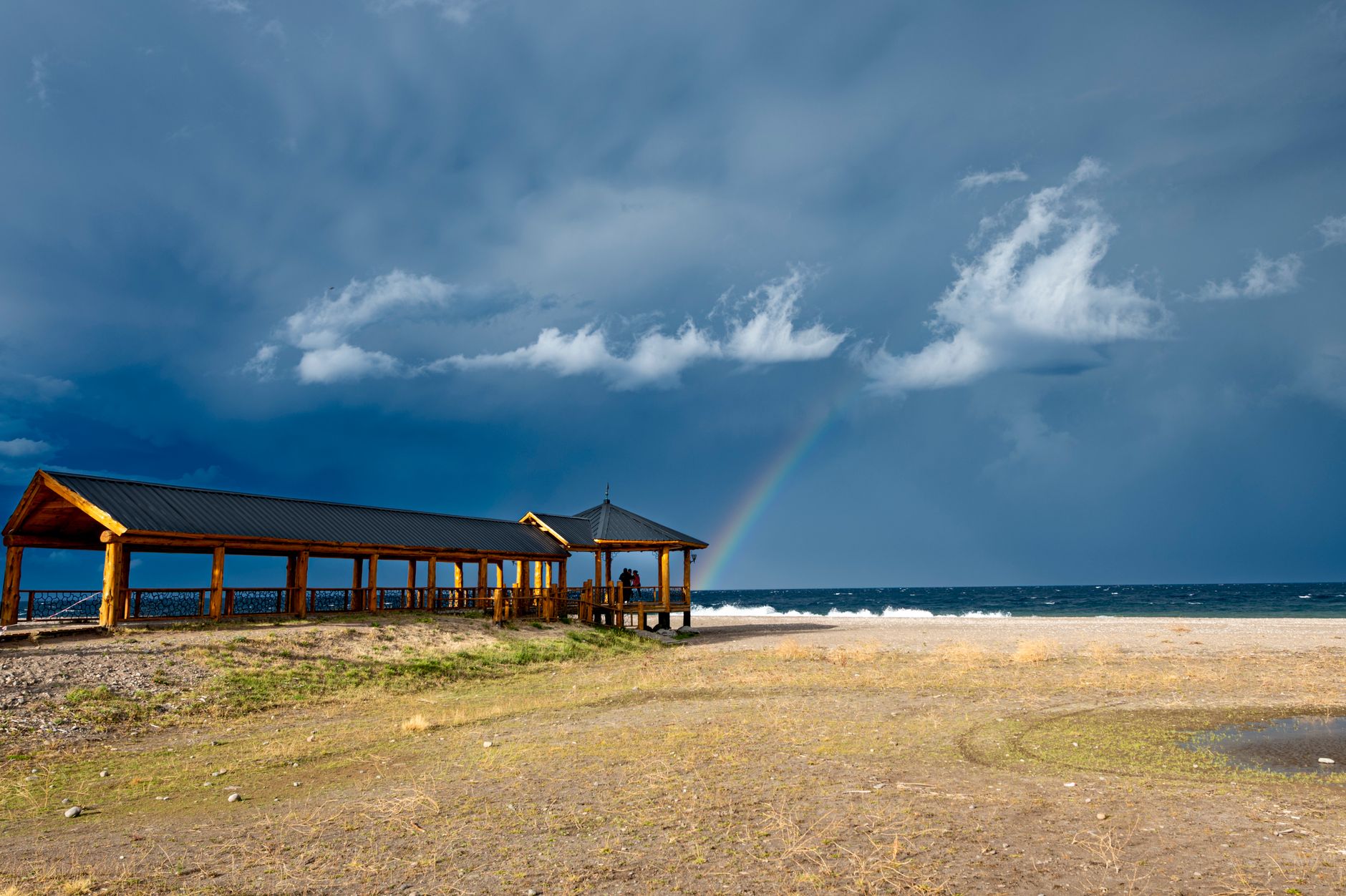
A wooden gazebo by the sea under dramatic skies with a rainbow in Santa Cruz, Argentina.
Elephant seals dominate the beach in summer, their blubbery forms sprawled across the stones like breathing boulders, exhaling plumes of condensation. Gentoo penguins commute past them, slipping into the frigid water to hunt krill. You'll hear the cacophony before you see it—barking seals, shrieking skuas, the wind rattling against rock. The air smells of guano, salt, and something ancient. Icebergs the size of apartment buildings drift offshore, calved from glaciers you can see fracturing in slow motion across the bay.
You won't swim here—the water hovers near freezing—but you'll stand mesmerized, watching Argentine scientists shuttle between weather instruments and marine biology stations. The beach exists in a strange duality: protected wilderness monitored by humans whose presence is both intrusive and essential. When the last expedition ship departs in late summer, the penguins reclaim every inch, indifferent to the flags and research permits left behind.


