

Playa Potter Cove lies tucked into the western arm of King George Island, a stone's throw from Base Carlini, Argentina's year-round Antarctic research station. The beach itself is a narrow crescent of wave-smoothed pebbles, dark gray and bronze, where the Southern Ocean laps against the continent's edge with a cold, steady insistence. Glacial meltwater trickles down from Maxwell Bay's ice tongues, pooling in shallow channels that reflect the pewter sky. The air carries the acrid tang of rookeries—chinstrap and gentoo penguins nest on the ridges above, their calls echoing off the surrounding cliffs.
“One of the few Antarctic beaches where active polar research unfolds mere meters from your boots.”
 Credit: Pexels
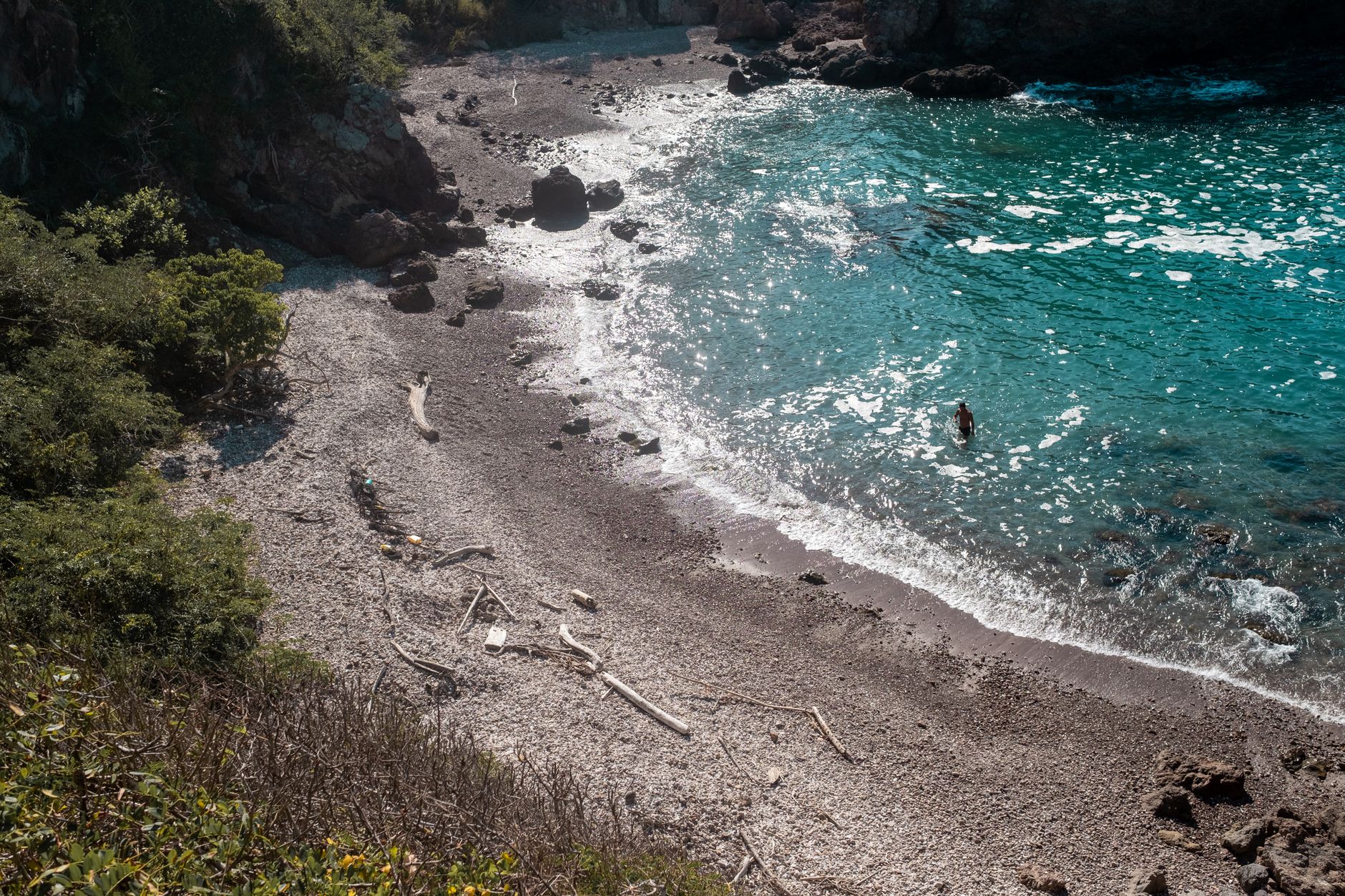
A stunning view of a sunlit bay with turquoise waters and a rocky beach, perfect for a summer vacation.
You won't find loungers or lifeguards here. What you will encounter are scientists hauling equipment, skuas patrolling for scraps, and the occasional Weddell seal sprawled across the tide line, indifferent to your presence. The cove serves as a logistical beachhead for research teams studying glacial retreat, marine biology, and climate shifts; expedition ships anchor offshore, ferrying passengers ashore in rigid inflatables. Summer light stretches long into the evening, casting alpenglow across the icebergs that calve from nearby Fourcade Glacier.
Visiting requires joining an organized Antarctic cruise—no casual drop-ins. Weather dictates every landing, and the station itself remains off-limits except during designated tours. But standing on those cold, rounded stones, watching the ice shimmer and the penguins waddle past, you understand why explorers and researchers keep returning to this unforgiving edge of the world.


