

The shoreline curves in a shallow arc, stones ranging from fist-sized cobbles to palm-smoothing ovals in slate gray and charcoal black. Pack ice drifts offshore even in the austral summer—December through February—and you'll step from Zodiac to beach in insulated boots, not sandals. Chinstrap penguins waddle past in preoccupied columns, indifferent to your presence, while Antarctic terns hover overhead, their calls cutting through the wind that never quite stops.
“One of the planet's southernmost beaches, accessible only by expedition vessel and weather permitting, offering solitude measured in continents rather than kilometers.”
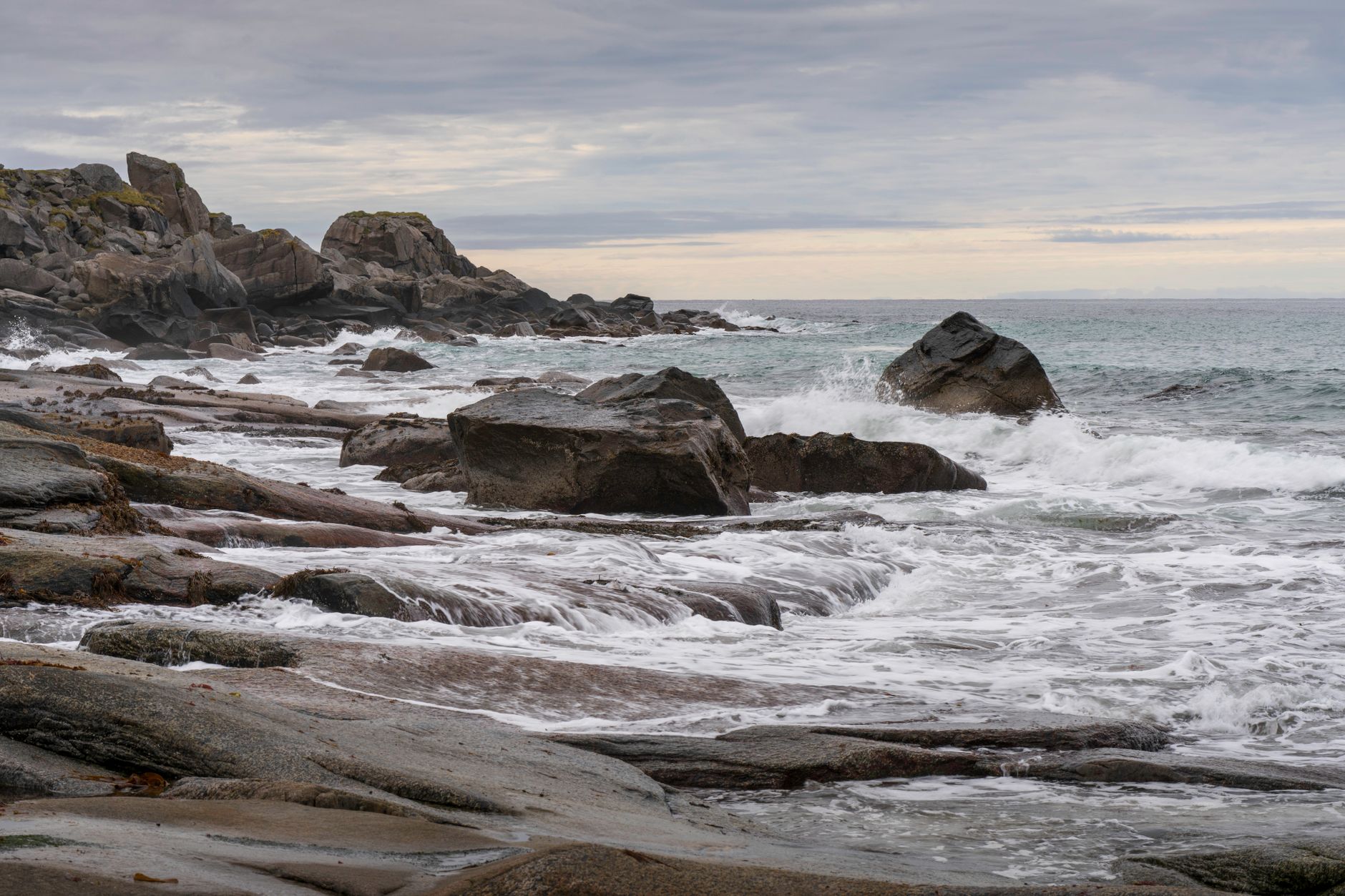 Credit: Pexels
Serene coastal scene with waves crashing on rocky shore under cloudy skies.
This is expedition cruising at its most stripped-down: no beach bars, no sun loungers, no cell service for a thousand miles. Your ship's naturalist will brief you on Low Impact Visitor Guidelines before you set foot on shore, and your time ashore rarely exceeds two hours. The weather dictates everything. Katabatic winds can scrub a landing in minutes, and the same bight that offers shelter one morning can churn with swells by afternoon.
You'll return to the ship with grit under your fingernails and the peculiar satisfaction of having stood somewhere fewer people visit in a year than most beaches see in an hour. The pebbles in your pocket—technically prohibited, so leave them—will feel like contraband from a planet that tolerates human presence but does not invite it.


