
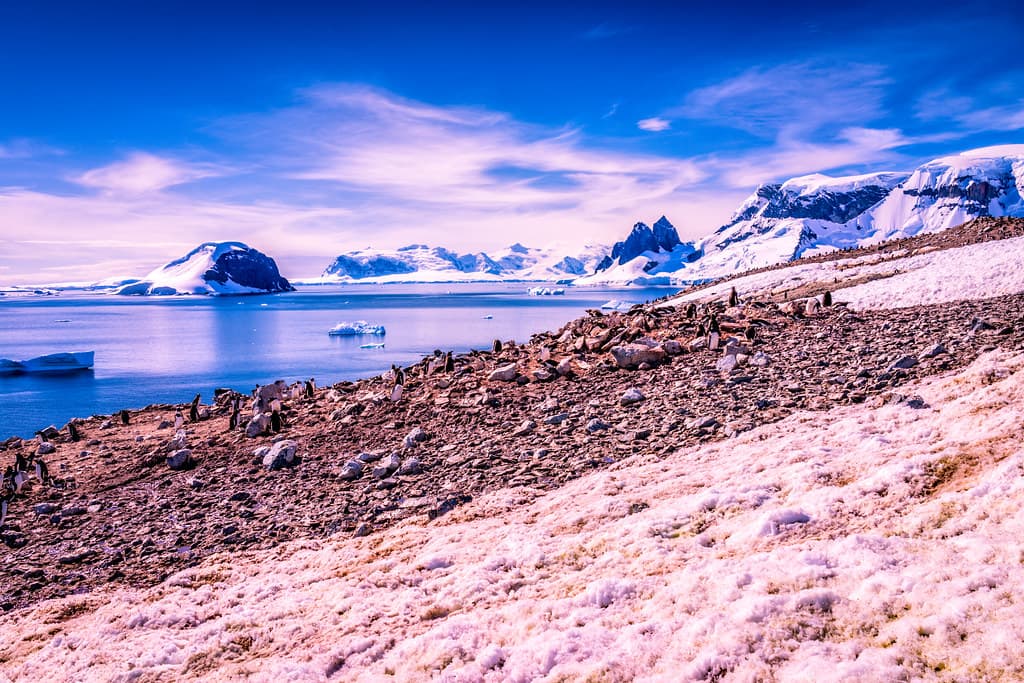
The beach at Cuverville Island offers no sand, no shade, no warmth—only a narrow margin of dark pebbles wedged between the Errera Channel and snow slopes that rise steeply into fog. You navigate carefully over rounded stones slick with guano and seawater, your boots crunching with each step, while gentoo penguins toboggan past on their bellies, indifferent to your cameras and Gore-Tex. The colony here numbers in the tens of thousands during breeding season, their calls a constant braying chorus that echoes off the surrounding peaks of the Arctowski Peninsula.
“This is the largest gentoo penguin rookery on the western Antarctic Peninsula, where the birds breed in such density that the island's topography is literally shaped by their activity.”
 Credit: Flickr
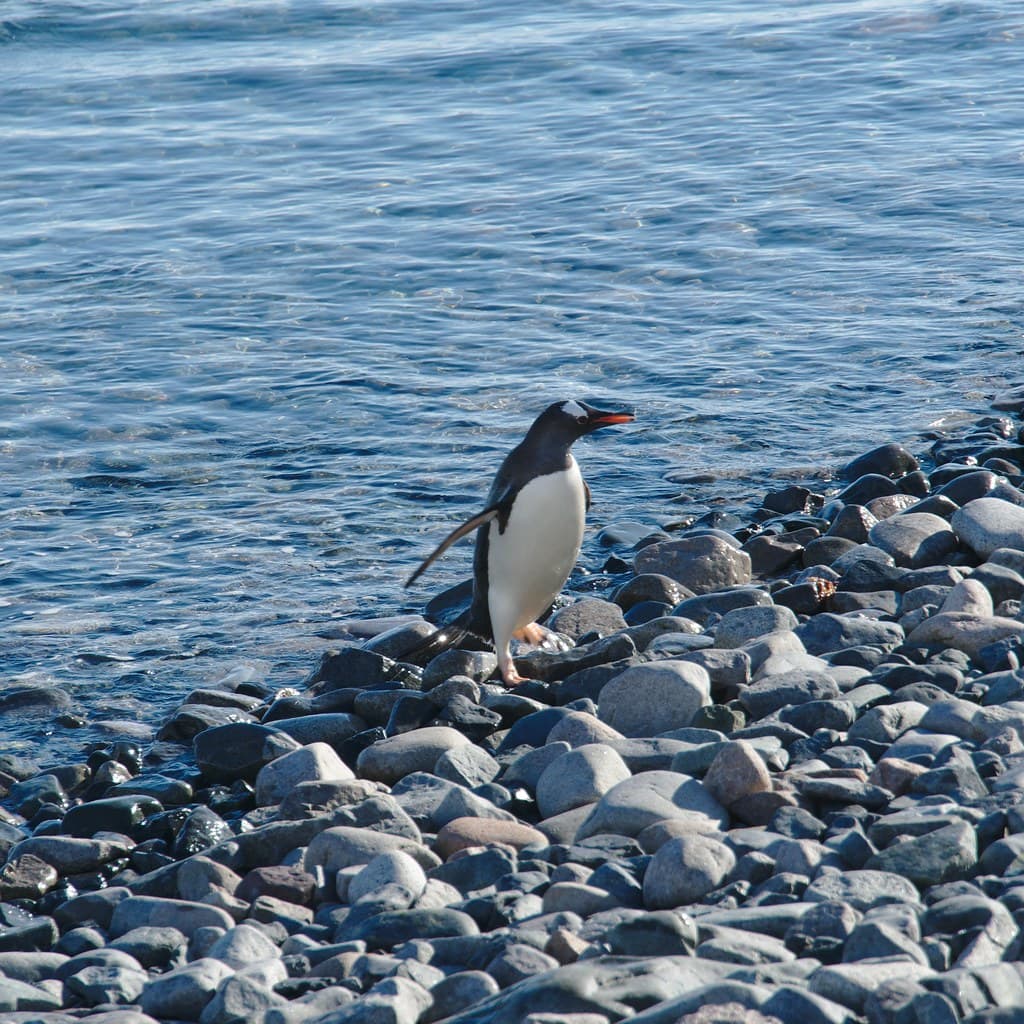
Cuverville Island Beach — photo by mlcastle
The shoreline itself shifts with the tide and the whims of brash ice—chunks of glacier the size of cars that drift lazily in the channel, occasionally grinding onto the beach with a sound like crushed glass. You'll smell the colony before you see it: a sharp, organic pungency that clings to your jacket long after you've returned to the ship. Skuas patrol overhead, opportunistic and patient, while Weddell seals haul out on ice floes just offshore, their dark eyes tracking your movements without concern.
Expedition leaders rope off nesting areas, and you're required to stay five meters from any penguin—though the birds themselves observe no such courtesy, waddling directly across your path as they ferry pebbles to their mates or return from fishing runs, their white bellies still dripping seawater. The light here is mercurial: flat gray one moment, then suddenly brilliant as the sun finds a gap in the clouds, turning the ice sculptures along the shore into blazing sculptures of cobalt and silver.


