Counting the waves…
Counting the waves…
A refined fusion of water purity, environmental stability, and communal vibrancy for Pendulum Cove Beach.
View MethodologyAnalyzed via live sensors and environmental data.
Wave height, wind, and atmospheric stability.
Live footfall and crowd balance metrics.
Community reviews and curated sentiment.
“You wade into the Southern Ocean at the edge of a collapsed volcano, where hot springs bubble through charcoal sand and rusted whaling-era tanks tilt into the surf. Penguins waddle past fumaroles as your Zodiac crew…”
Limited recent visitor reports — live OBI telemetry is your best guide for current conditions.
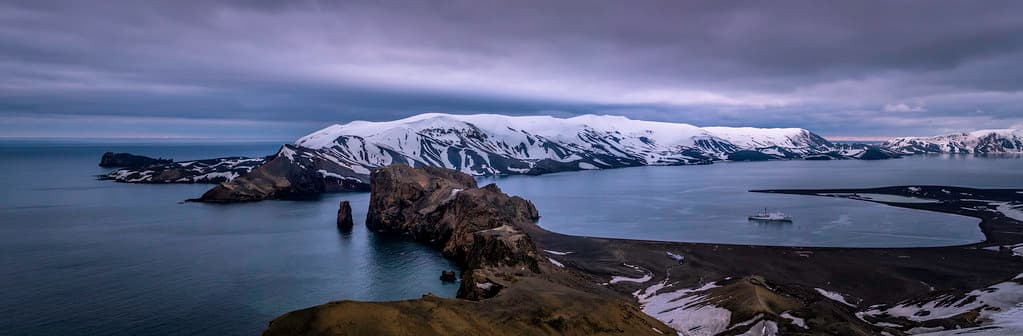
The crunch beneath your boots isn't snow—it's volcanic ash, black and fine as gunpowder, stretching along the crescent shore of Deception Island's flooded caldera. Steam rises from fissures in the beach where geothermal heat meets frigid air, creating an otherworldly fog that drifts across the bay. You kneel to touch the sand and pull back—it's hot enough to scald, a reminder that this dormant volcano last erupted in 1970, burying a British research station whose twisted metal ruins still jut from drifts at the shoreline's edge.
Chinstrap penguins ignore the thermal anomalies, porpoising through waves before tobogganing across the ash. Expedition leaders brief you on the protocol: dig a shallow depression where surf meets sand, and for a few minutes the geothermal seep might warm the incoming tide enough for a polar plunge unlike any other. The water beyond your makeshift spa remains a bone-numbing 35°F, while the sand a foot down can reach 140°F.
Excavate where hot sand meets surf
Frame tanks against volcanic slopes
Crater rim overlook above beach
Prime Visitation
Best Weather | Less Crowds
Where it is
Pendulum Cove Beach
Deception Island, Antártida e Islas del Atlántico Sur, Argentina
-62.936700°, -60.597600°
Weather
Loading…
Swell
—
Temp
Warm · Restorative
UV Index
Moderate
Wind
—
Tidal State
Last known
Max Sunlight
—
Ideal Shade
—
Jan - Dec (Peak)
Mar - Nov (Off-season)
Best Weather | Less Crowds
Select a category to load nearby places.
Unlock restaurants, luxury stays and curated maritime experiences within 2km
Swimming at Pendulum Cove Beach is occasionally possible in specific geothermal areas where volcanic activity warms the water, but it's highly regulated and often not available. Water temperatures vary dramatically from dangerously cold Antarctic seawater to uncomfortably hot geothermal zones, sometimes within inches. Volcanic activity is unpredictable, and hot spots can shift or disappear. When swimming is permitted, expedition staff will designate safe areas and supervise closely. Many expeditions no longer offer swimming here due to safety concerns and environmental protection protocols. If attempting, you must follow all staff instructions, wear appropriate footwear to protect from sharp volcanic rocks and hot sand, and limit exposure time.
Pendulum Cove Beach is best visited during the Antarctic summer from November through March, with peak season running December through February. During these months, you'll experience milder temperatures (around 0°C to 2°C), extended daylight hours approaching 20 per day, and the most stable weather for Zodiac landings. The geothermal activity remains present year-round, but only the summer months allow tourist access via expedition cruises. January and February typically offer the warmest conditions and best opportunities for photography of the volcanic black sand against snow and ice. However, Deception Island's weather is notoriously changeable, and visits depend on current conditions.
Pendulum Cove Beach is accessible only via expedition cruise ship, with visitors landing by Zodiac boat after the ship enters Deception Island's caldera through Neptune's Bellows channel. Most Antarctic expeditions depart from Ushuaia, Argentina, with the Drake Passage crossing taking approximately two days. Pendulum Cove is located on the inner eastern shore of the volcanic caldera. All access is managed by IAATO-licensed expedition operators following strict environmental protocols. There are no airports for tourists, no independent transport options, and no infrastructure—only guided expedition landings coordinated based on weather, sea conditions, and regulatory permissions.
Pendulum Cove Beach has no accommodations, restaurants, or any facilities. The site features abandoned research station ruins from past volcanic eruptions, but no operational buildings or services. All visitors stay aboard expedition cruise ships that provide complete hotel services, meals, and amenities. Shore visits are temporary excursions lasting one to three hours maximum. Expedition staff may provide hot beverages during landings, but no commercial infrastructure exists. The ruined Chilean station buildings are historical artifacts, not functional facilities. Your expedition vessel serves as your complete base, with all food, lodging, and logistics managed onboard throughout your Antarctic journey.
Pendulum Cove Beach holds important historical significance as a site for early Antarctic scientific research, particularly 19th-century pendulum experiments that gave the location its name. The beach features ruins of Chile's Pedro Aguirre Cerda Station, destroyed by volcanic eruptions in 1967-1970, serving as a dramatic reminder of Antarctica's active geology. The volcanic black sand, steaming geothermal vents, and visible volcanic activity demonstrate ongoing geological processes rare in Antarctic settings. The combination of expedition history, volcanic geology, and the surreal landscape of an active caldera creates a unique Antarctic experience. The site represents both human Antarctic endeavor and nature's overwhelming power.
Photos