
The pebbles shift beneath your boots as you navigate the shoreline, each stone worn smooth by centuries of Southern Ocean storms. Ahead, the beach disappears into a living tapestry of black-and-white bodies—king penguins stretching toward the tussock grass in numbers that challenge comprehension. Their orange ear patches flash like embers against the monochrome landscape, while downy brown chicks huddle in créches that ripple and reform with the logic of murmuration.
“This is the planet's most accessible half-million-penguin gathering, reachable only by expedition vessel across the Scotia Sea.”
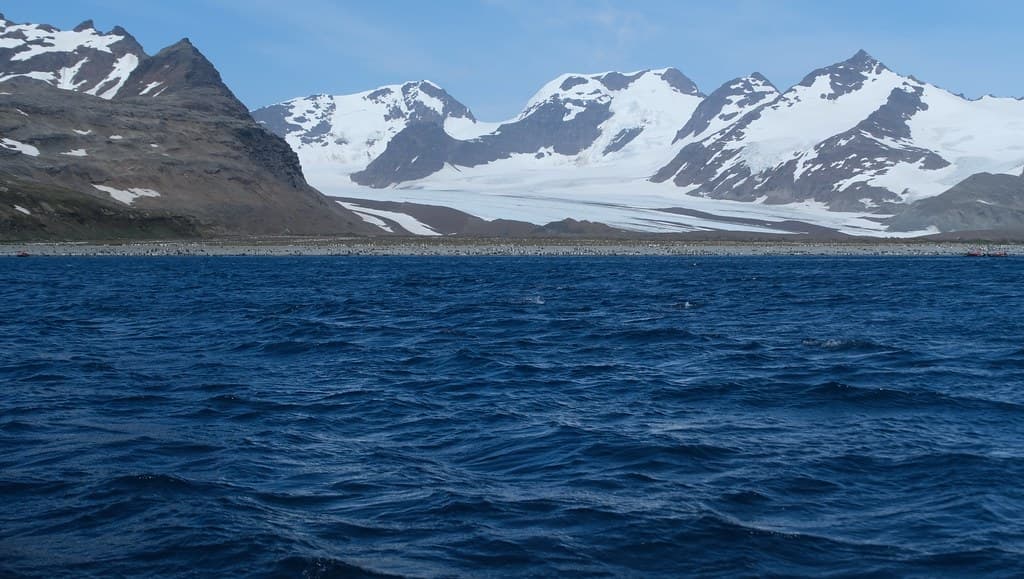 Credit: Flickr
Salisbury Plain, South Georgia Island
Behind this avian metropolis, the Allardyce Range rises in serrated white ridges, glaciers spilling through saddles like frozen waterfalls. Elephant seals lounge at the tide line, their guttural belches punctuating the penguins' constant chatter. You'll smell them before you see them—a thick, organic musk that mingles with kelp and salt spray. The beach curves for nearly two miles, its dark stones absorbing what little warmth the subantarctic sun offers.
You're permitted to approach no closer than five meters, yet the penguins rarely observe the same courtesy. They waddle past your ankles with imperial indifference, returning from fishing expeditions or heading oceanward, their white bellies stark against the black beach. Every few minutes a wave deposits a fresh cohort, sleek and dripping, while others porpoise through the breakers with balletic precision.


