

The inlet curves into King George Island like a question mark, sheltered enough that you can hear the individual stones shift with each surge. Gray-brown pebbles—offspring of volcanic eruptions and millennia of freeze-thaw cycles—slope gently into water so cold it stings your fingertips even through insulated gloves. Chinstrap penguins porpoise offshore, their black-and-white bodies threading between bergy bits calved from nearby glaciers.
“One of the planet's southernmost beaches, accessible only during the brief Antarctic summer when sea ice retreats from Admiralty Bay.”
 Credit: Pexels
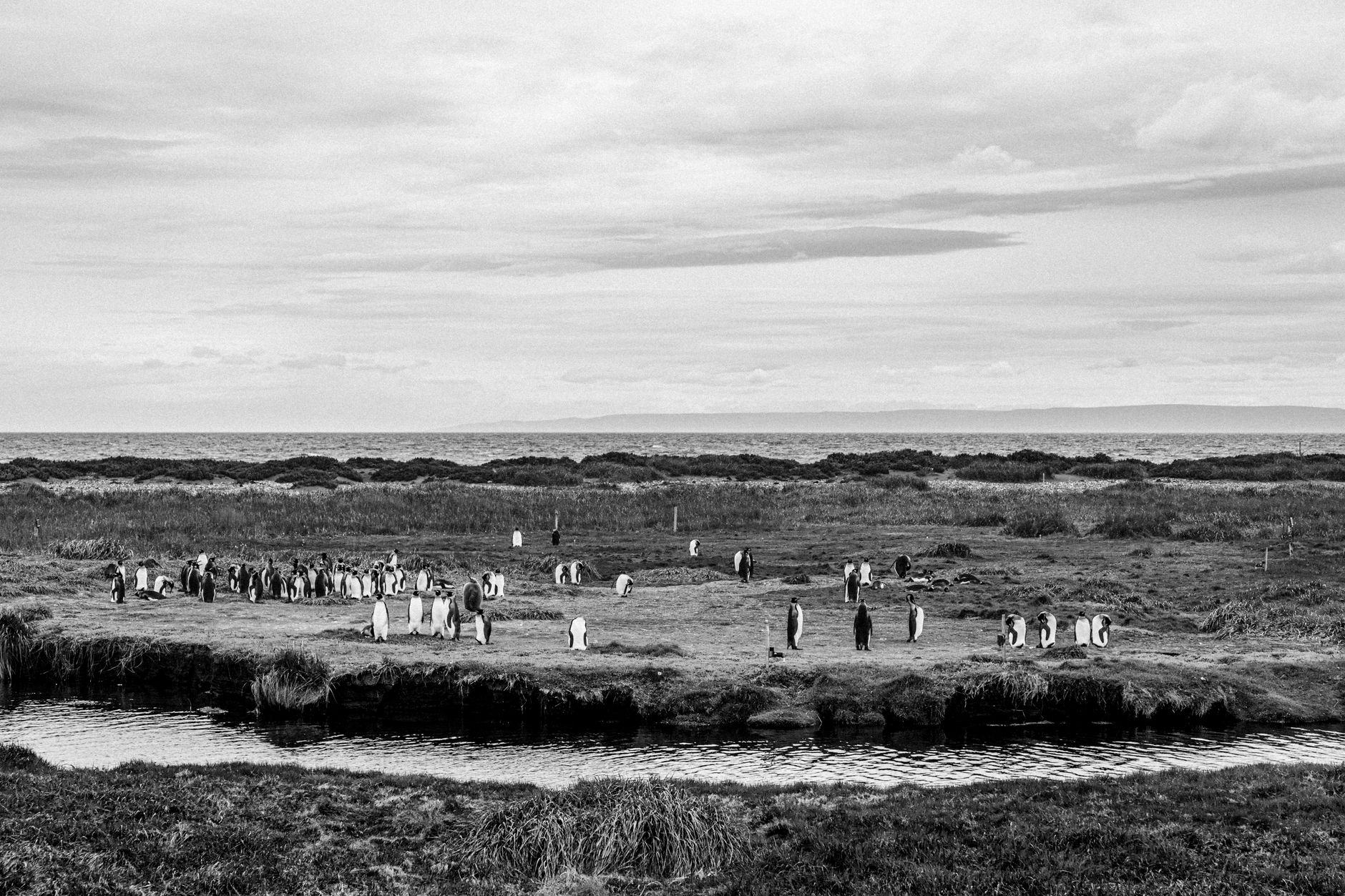
A serene black-and-white scene of penguins near the ocean under a cloudy sky.
You've arrived as part of an expedition cruise; no pier exists here, no infrastructure beyond the occasional research station visible across the bay. The beach itself remains unaltered, a study in minimalism. Lichen crusts the larger boulders in shades of burnt orange and chartreuse, the only vegetation hardy enough to endure the katabatic winds that funnel down from the island's interior ice cap. The air tastes of salt and ozone, sharpened by proximity to the Drake Passage.
Time moves differently here. You stand long enough to watch skuas harass a penguin colony on the adjacent rocks, long enough for your cheeks to go numb, long enough to understand that this beach exists on geological time, indifferent to the few humans granted brief passage. When the expedition leader signals, you reluctantly board the Zodiac, pebbles clattering one final time beneath your retreat.


