
Jessie Bay Beach curves along Laurie Island's northeastern shore, a crescent of wave-tumbled pebbles flanked by ice-carved ridges and the permanent structures of Argentina's Orcadas Base, Antarctica's oldest continuously operating research station. The stones underfoot range from thumbnail-sized to fist-sized, polished smooth by relentless southern swells and abraded ice. In the brief austral summer—December through February—the bay sheds much of its pack ice, revealing dark waters patrolled by leopard seals and visited by humpback whales threading through brash ice.
“One of fewer than twenty beaches in Antarctica regularly visited by research personnel, offering a rare terrestrial foothold in the planet's most isolated ocean.”
 Credit: Flickr
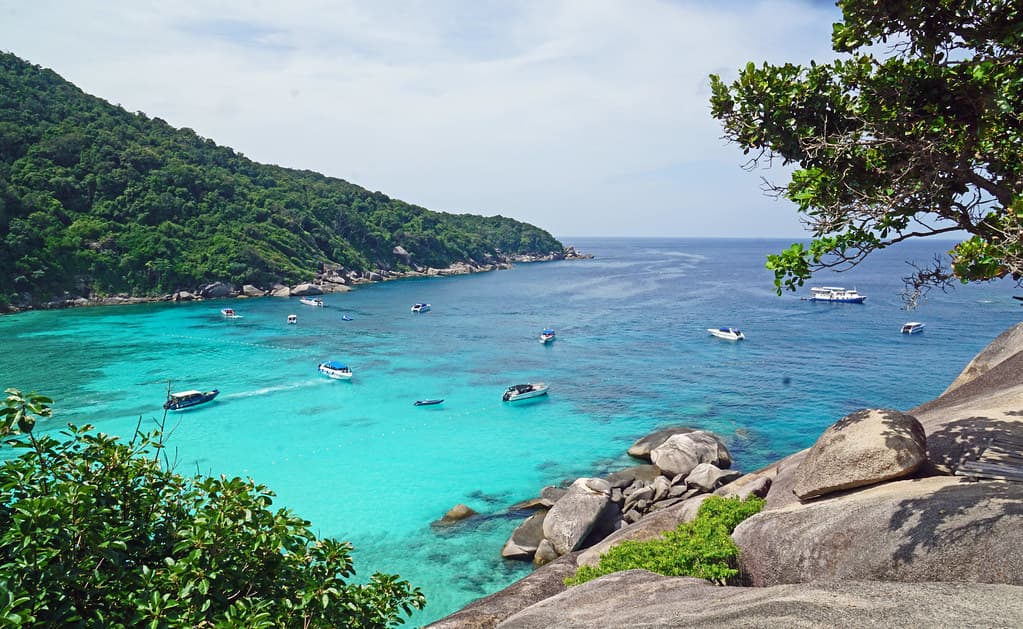
Similan Islands
Access requires passage aboard expedition vessels or rare berths on Antarctic resupply ships; no casual visitor sets foot here. You'll wear expedition-grade thermal layers and waterproof boots as you wade through kelp wrack at the tideline, surrounded by breeding colonies of Antarctic terns and skuas. The beach itself is less a destination than a threshold: a meeting point between rock, ice, and the Scotia Sea's gunmetal swells.
The landscape maintains its severity year-round. Wind scours the exposed coastline at speeds exceeding fifty knots; the horizon stretches unbroken toward the Weddell Sea. At midnight during the height of summer, low-angled sunlight gilds the ice cliffs in amber and rose, while petrels skim the wavelets just offshore. This is Antarctica unvarnished—raw, cold, and profoundly indifferent to human comfort.


