

The South Orkney Islands lie 600 kilometers northeast of the Antarctic Peninsula, and Mossman Peninsula Beach occupies a rare ice-free sliver of Laurie Island's northern coast. You step onto fist-sized pebbles worn smooth by millennia of polar surf, the stones ranging from slate gray to rust-stained brown. The air temperature hovers near freezing even in austral summer, and katabatic winds funnel down from the island's interior with enough force to make your eyes water.
“This is one of the southernmost pebble beaches on Earth where you can stand among breeding seabirds and watch icebergs the size of city blocks drift past the shore.”
 Credit: Pexels
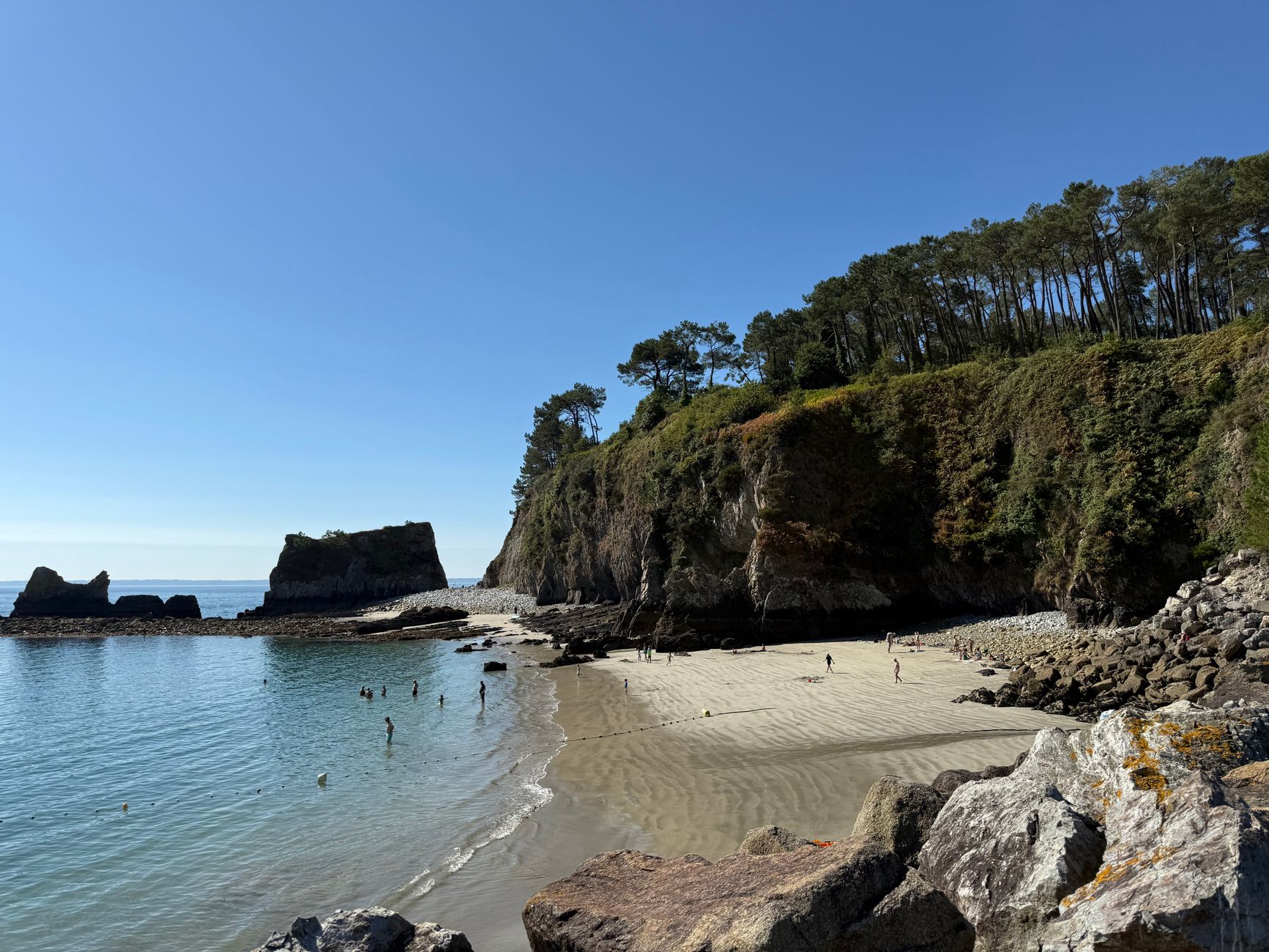
Beautiful beach with cliffs and clear blue water at Crozon Peninsula, perfect for relaxation.
Elephant seals haul out on the upper beach, their breath visible in humid plumes as they molt in heaps that resemble living boulders. The shoreline curves toward Argentina's Orcadas Base, the oldest continuously operating Antarctic research station, established in 1904. Kelp tangles in the tidal zone, and you'll notice how the water shifts from deep navy to milky turquoise where glacial melt meets the Southern Ocean.
Photographers arrive during the brief November-to-March window when expedition ships can navigate these latitudes. You frame shots of tabular icebergs against volcanic headlands, the low Antarctic sun casting sideways light that turns the pebbles into a mosaic of shadow and reflection. Adelie and chinstrap penguins patrol the wrack line, indifferent to your presence, while giant petrels ride updrafts along the cliffs. The silence between wind gusts feels absolute, broken only by the percussion of waves sorting stone by size and weight.


