
Sea Lion Island sits seventeen miles south of East Falkland, a wind-scoured sliver of peat bog and beach where the human population hovers near single digits and the wildlife census runs into tens of thousands. You'll walk beaches strewn with kelp ribbons and bleached clamshells, the sand alternating between blonde stretches and dark volcanic patches, while southern giant petrels wheel overhead and the smell of guano mingles with salt spray.
“It's the only beach where you can watch orcas beach themselves to hunt seals from the sand.”
 Credit: Flickr
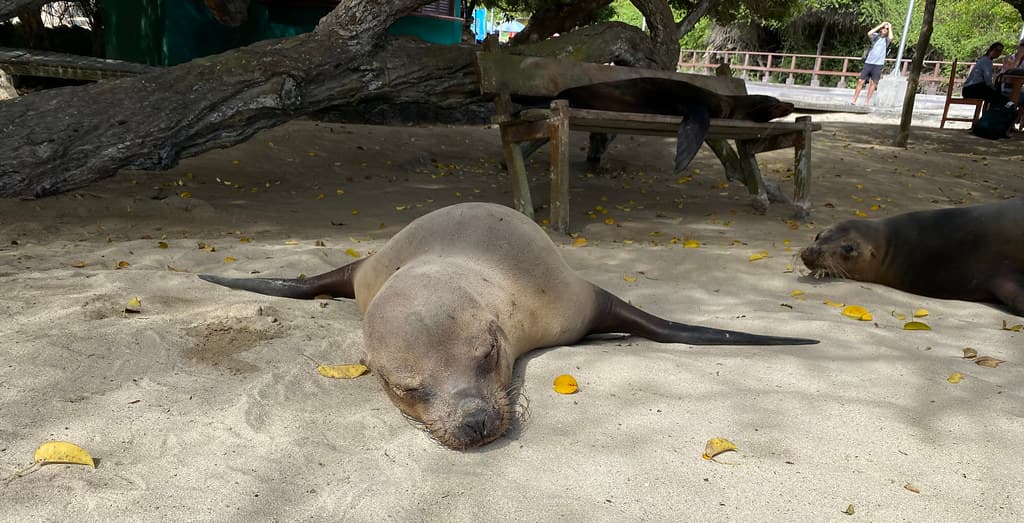
The Galápagos Sea Lion (Zalophus wollebaeki), the Puerto Villamil, Isla Isabela (Albemarle), the Galápagos Islands, Ecuador.
The shoreline belongs to elephant seals in spring—bulls the size of sedans sparring in the shallows, their guttural roars audible from the island's single lodge. Gentoo and Magellanic penguins nest in the tussac, their braying calls a constant soundtrack, while rockhopper colonies claim the western cliffs. October through March, orcas hunt close enough to shore that you'll see dorsal fins slicing through the kelp beds, sometimes within twenty yards of the tideline.
You'll stay at the island's lone accommodation, a refurbished farm lodge with eight rooms and meals served family-style, where the after-dinner conversation revolves around the day's sightings. Boardwalks traverse the boggy interior to minimize disturbance, and the beaches remain free of barriers—just you, the seabirds, and the Southern Ocean's unrelenting wind.


