
The walk to Gypsy Cove follows a boardwalk edged with faded red-and-white minefield warning signs, relics of the 1982 conflict that have become part of the landscape's strange poetry. Magellanic penguins ignore these human boundaries entirely, crossing the path with the unhurried confidence of longtime residents. Their burrows honeycomb the hillsides above the beach, and during breeding season the air fills with their donkey-like calls and the sharp scent of guano mixed with salt spray.
“One of the only places on Earth where you can observe breeding penguins within walking distance of a capital city, framed by Cold War history.”
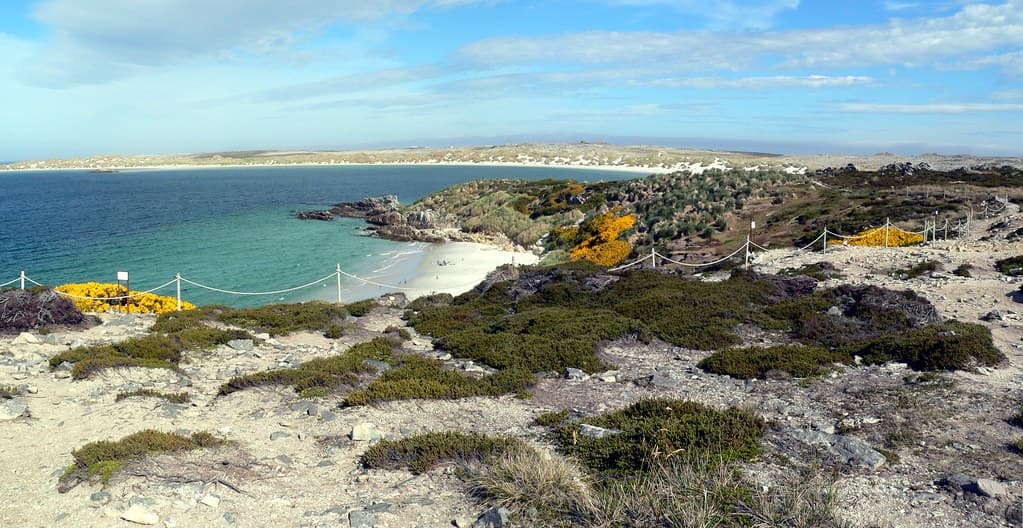 Credit: Flickr
Gypsy cove
The beach itself curves in a shallow arc, its sand darkened by volcanic minerals and littered with bull kelp that snaps and pops underfoot. Southern sea lions haul out on offshore rocks, their barks carrying across the water when the wind shifts. You'll want layers—the Falklands wind is relentless, even in summer, driving low clouds across a sky that can turn from pewter to brilliant blue in minutes. The water temperature hovers around 9°C year-round, numbing but alive with upwellings that feed the entire food chain.
Most visitors arrive mid-morning when the penguins are most active, marching between their nests and the sea in single-file processions that seem almost ceremonial. The beach faces northeast, sheltered enough that you can sit among the tussac clumps and watch the colony's daily rhythms unfold—preening, squabbling, the occasional belly-slide down a muddy bank toward the surf.


