
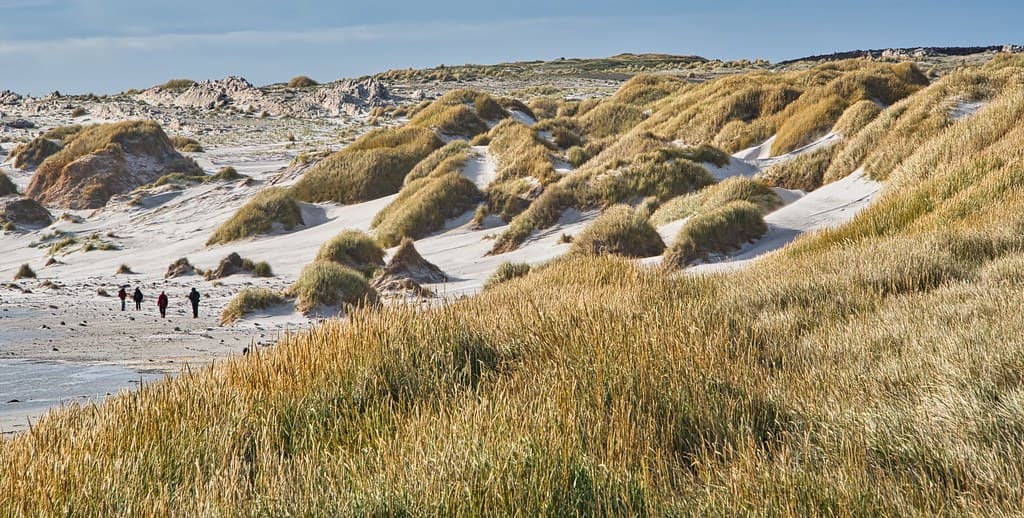
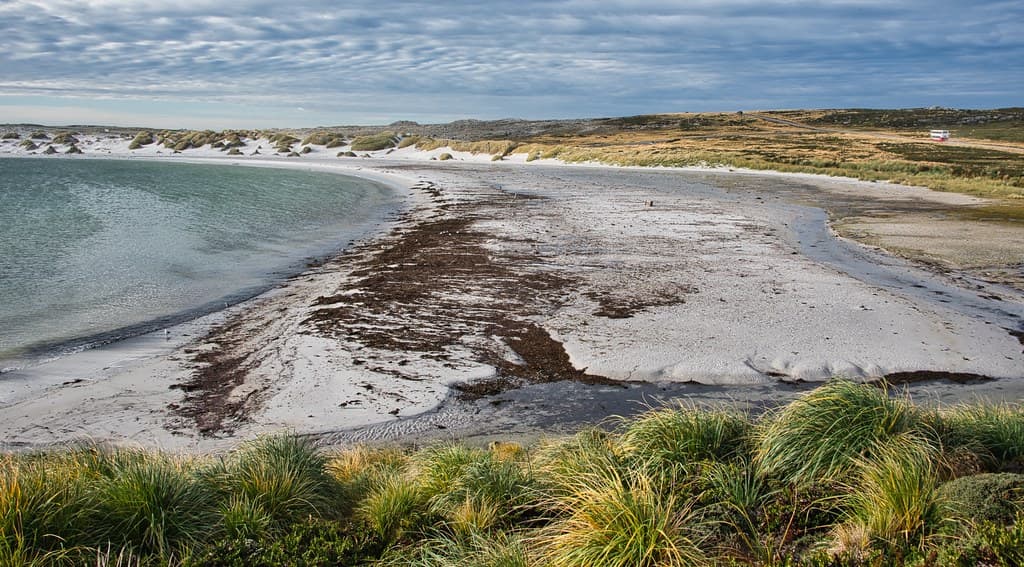
The walk from Stanley's weatherboard houses takes fifteen minutes on foot, winding past tussock grass that bends horizontal in the westerlies. When you crest the final rise, Surf Bay unfolds below: a generous arc of pale sand backed by low dunes, the kind of beach that feels vast even when you're not alone. The South Atlantic hammers the shore with reliable rhythm, whitecaps peeling left in the offshore wind.
“One of the southernmost surf breaks accessible by foot from a settled town, where sub-Antarctic wildlife shares the strand with beachgoers.”
 Credit: Flickr
Surf Bay — photo by Stand by Ukraine
You'll need a wetsuit—the water hovers around 8°C in January—but locals come regardless, spreading blankets on the upper beach where the sand stays dry and surprisingly warm on windless afternoons. Upland geese strut the tideline. Kelp gull cries mix with the hiss of retreating waves. The light here shifts fast: pewter to gold to slate in the span of an hour.
Stanley's handful of guesthouses sit close enough that you can hear the surf from bed on quiet nights. The beach lacks vendors, lifeguards, and umbrellas for rent. What it offers instead is space—room to watch storm systems roll in from the west, to body-surf small swells until your fingers go numb, to understand why islanders call this shoreline home despite the wind that never truly stops.


