
The pebbles rattle with each surge of the Southern Ocean, a percussion that mingles with the barks of fur seals and the hiss of superheated water meeting ice-cold sea. You've sailed five days from South Georgia to reach this shore, where Thule Island's volcanic spine rises three thousand feet through perpetual mist. Mount Belinda's lava streams have reshaped this coastline within your lifetime, adding fresh basalt to beaches that see fewer human footprints each year than Everest Base Camp sees in a day.
“This is the only beach in the world where you can witness an active volcano, glaciers, and Antarctic wildlife converging on a single stretch of shoreline.”
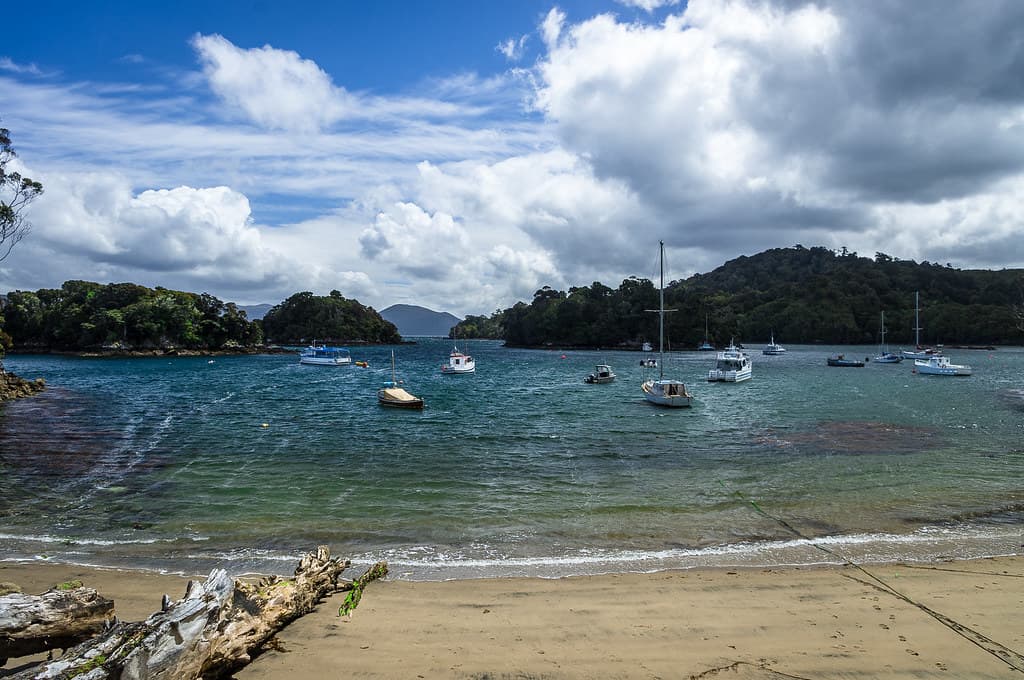 Credit: Flickr
Thule Bay, Stewart Island, New Zealand
Your Zodiac grounds on stones the size of robin's eggs, each one tumbled smooth by swells that have traveled unobstructed from Cape Horn. The beach slopes steeply; king penguins regard you with mild interest before returning to their preening. Behind them, glaciers hang suspended between peaks, their meltwater cutting rivulets through the black shore. The temperature hovers just above freezing even in the austral summer, and the wind carries volcanic grit that tastes metallic on your tongue.
No trail markers exist here, no lifeguard stations or beach bars. Your expedition leader briefs you on approach distances to wildlife—five meters from seals, fifteen from nesting birds. You'll have perhaps ninety minutes ashore before weather or sea conditions demand re-boarding. Every photograph you take, every pebble you examine, becomes a story you'll tell for decades, proof that you stood at the edge of the navigable world.


