
Admiralty Sound Beach exists in a realm where the ordinary rules of coastal travel dissolve. You arrive by Zodiac, the inflatable hull crunching against a shore of rounded stones darkened by millennia of Antarctic weather. The beach itself is more gravel apron than sandy strand, a narrow ribbon wedged between the peninsula's ice-clad slopes and the Weddell Sea's comparatively placid waters. Sheltered from the Southern Ocean's notorious swells, this zone offers something rare in Antarctica: calm.
“One of the rare calm-water beaches on the notoriously ice-choked Weddell Sea side of the Antarctic Peninsula.”
 Credit: Flickr
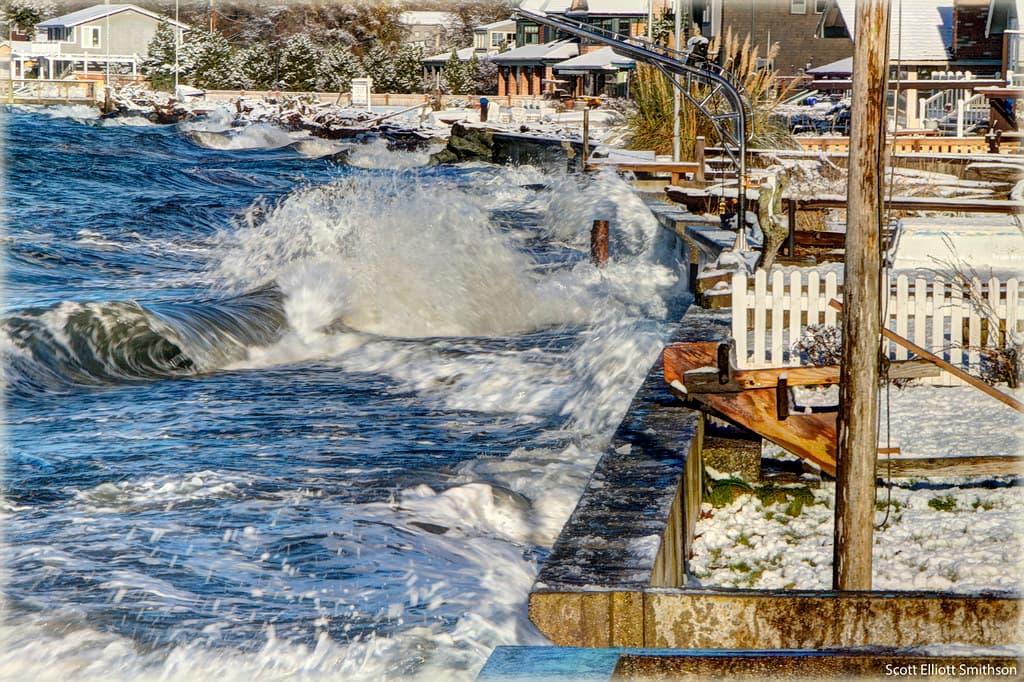
Waves Crashing Snowy Day
The surrounding soundscape is what you remember most. Adelie penguins bark from nearby rookeries, their calls ricocheting off ice cliffs that rise in corrugated blue-white walls. Leopard seals cruise offshore, their sinuous forms visible in water so clear you can count the stones ten feet down. Weddell seals haul out on ice floes, exhaling mist into air that hovers just above freezing even in the height of the austral summer.
You won't find solitude here in the human sense—expedition ships coordinate landings carefully—but you will find isolation from the rest of the inhabited world. The Weddell side of the peninsula receives fewer visitors than the western Drake Passage coast, and Admiralty Sound's protected position between island and mainland systems creates microclimates where weather can shift from bluebird clarity to whiteout in twenty minutes. You dress in layers, keep your camera batteries warm against your body, and accept that this beach operates on its own uncompromising terms.


