

Andersson Island sits in the throat where Antarctic Sound narrows into the Weddell Sea, a transition zone where pack ice collides with open water and weather systems clash without warning. You reach the pebble beach only when conditions align—calm seas, navigable ice, and a expedition captain willing to attempt the landing—which makes every visit feel borrowed from forces larger than human schedules.
“One of the few accessible landing sites where the Weddell Sea's notorious pack ice meets open water, revealing the Antarctic's raw mechanics.”
 Credit: Pexels
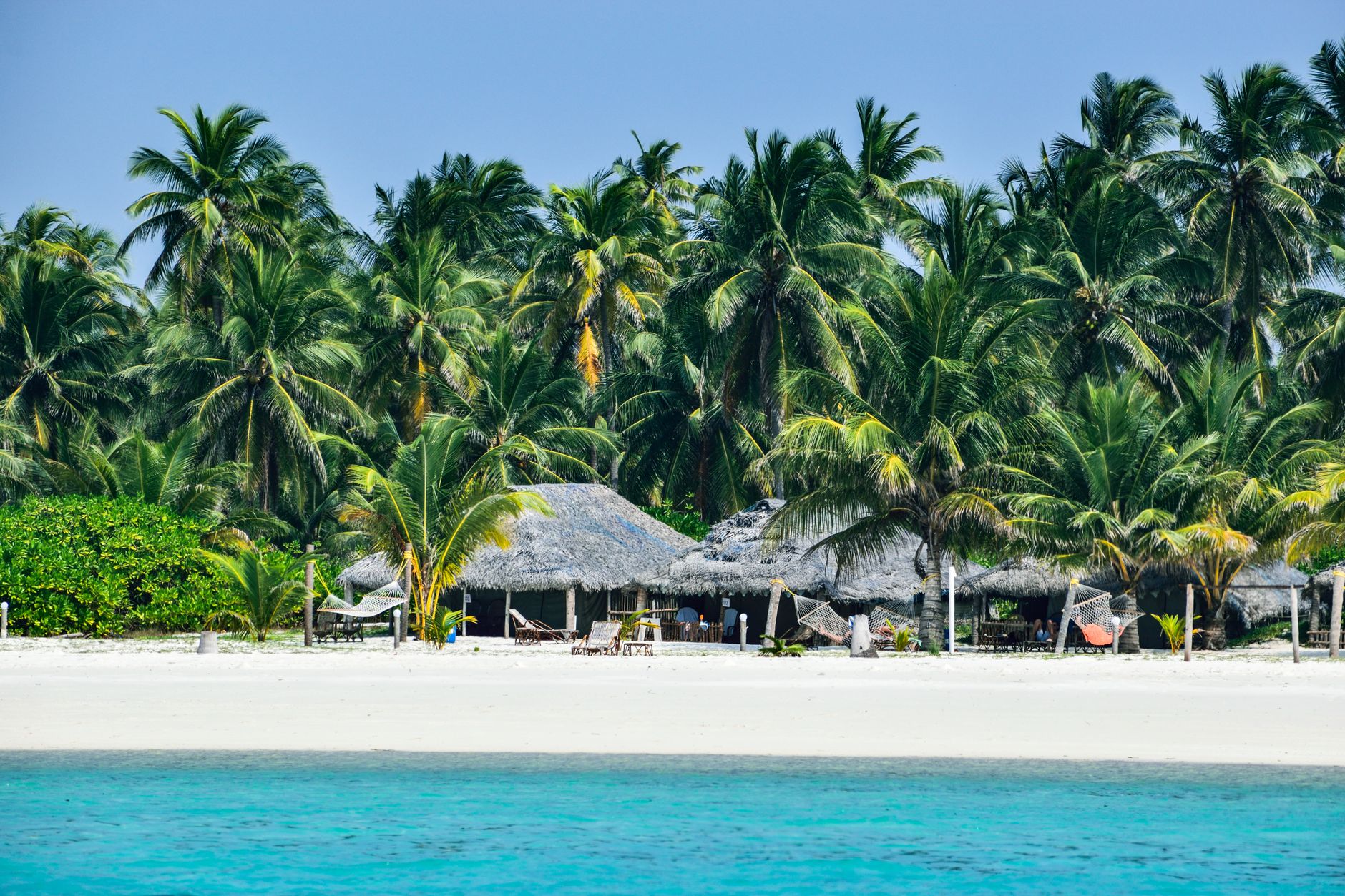
Idyllic beach scene with palm trees and huts on an Indian island shore.
The beach itself stretches in a narrow band of rounded stones, charcoal and rust-red, worn smooth by millennia of wave action and glacial scouring. No sand softens the shoreline here; every step announces itself with a satisfying crunch. Behind you, ice-scoured rock rises steeply, patched with lichen in improbable shades of orange and yellow-green. Before you, the sea churns with brash ice—fragments calved from nearby glaciers that bob and collide in an endless, grinding ballet.
Penguins claim the upper beach as their highway, waddling between rookery and sea with single-minded determination. Leopard seals patrol the shallows, their sleek heads breaking the surface to exhale plumes of vapor into air so cold it stings your sinuses. The silence between waves feels absolute, interrupted only by the crack of distant ice and the occasional shriek of a skua overhead. This is Antarctica stripped of amenity, offering only presence.


