
Seymour Island's northern beach stretches along one of the Antarctic Peninsula's most fossil-rich coastlines, where rounded pebbles polished by millennia of ice give way to shallow, sediment-darkened shallows. You'll find no sand here—just cobbles ranging from pea-sized to fist-sized, interspersed with kelp holdfasts torn loose by katabatic winds that scream down from the interior ice sheet. The Weddell Sea laps at the shore with a viscous quality, dense with glacial flour that turns the water opaque grey-green even on the rare windless days.
“One of the southernmost beaches accessible to civilians, embedded in Antarctica's richest Cretaceous fossil beds where marine reptile bones weather from ancient seabeds.”
 Credit: Flickr
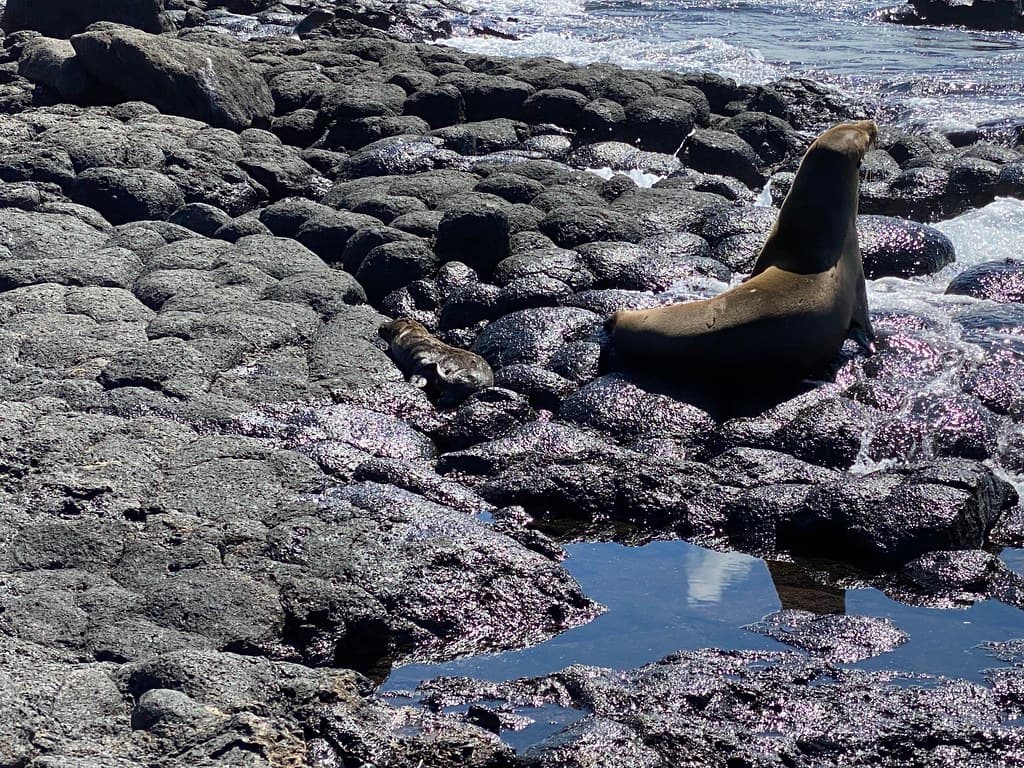
The Galápagos Sea Lion and her baby (Zalophus wollebaeki), North Seymour Island, the Galápagos Islands, Ecuador.
Penguin highways—compacted trails worn smooth by thousands of webbed feet—score the upper beach, leading to rookeries where Adelies nest among the stones. The stench of guano mingles with the mineral scent of ancient sedimentary rock, exposed where ice has retreated over recent decades. Fossil hunters comb this beach for fragments of extinct marine reptiles and primitive birds locked in 66-million-year-old mudstone.
Reaching this latitude demands joining a specialized expedition vessel; Seymour lies beyond the reach of standard Antarctic tourist circuits. You'll time your landing between weather windows, stepping from Zodiac onto slick pebbles while leopard seals patrol offshore. The beach offers no shelter, no infrastructure—only the raw interface between continent and sea, where you'll count your visit in minutes before sub-zero winds drive you back to the ship.


