

The red-and-white awnings of the Rambla Casino frame Playa Bristol like a postcard from 1920s Argentina, when Mar del Plata transformed from fishing village to summer capital. You'll wade into the Atlantic alongside three generations of families who've claimed the same paradores—beach clubs—every January for decades. The sand is coarse and golden, packed firm near the waterline where joggers trace the curve of the bay at dawn.
“This is the birthplace of Argentina's beach resort tradition, where porteño families have summered since the aristocratic era.”
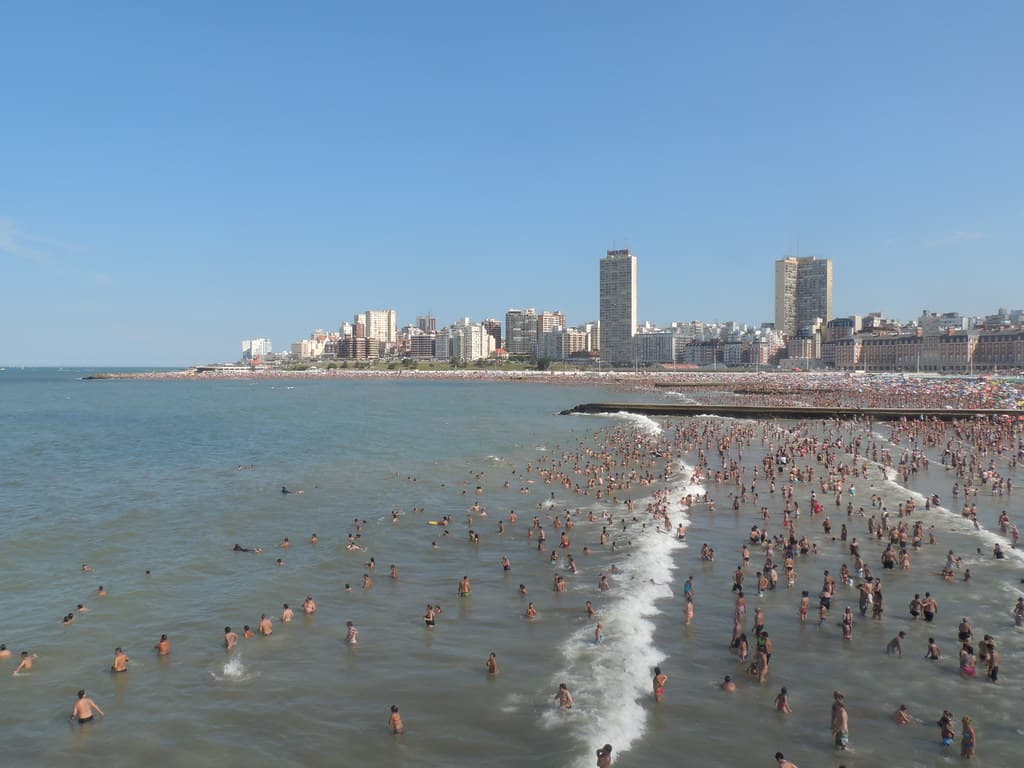 Credit: Flickr
Playa Bristol, Mar del Plata, Agentina
Your view stretches south toward the rocky headlands, north to the forest of high-rise apartments that define Mar del Plata's skyline. Vendors weave between sunbathers hawking bills (sweet caramel wafers) and mate gourds, their calls blending with the crash of waves and shriek of gulls. The water stays brisk even in summer, earning gasps from first-timers and shrugs from locals who've been dipping since childhood.
By late afternoon, the beach transforms into an open-air social club. Teenagers play paletas—wooden paddle ball—near the shore, their games soundtracked by cumbia from portable speakers. You'll watch the sun sink behind the casino's towers, casting long shadows across a scene that has anchored Argentine beach culture for a hundred years, unchanged in all the ways that matter.


