
Playa Constitución unfurls along Mar del Plata's northern shore, a working beach where the rituals of Argentine summer remain refreshingly unpolished. You'll find no manicured rows of rental loungers here—just families who arrive early to stake their territory with windbreaks and coolers, settling in for daylong sessions that revolve around mate rounds and impromptu soccer matches on the hard-packed sand. The beach takes its name from the nearby Constitución neighborhood, a residential grid of modest apartment blocks where locals live year-round, far from the high-rise glamour of the central casino district.
“This is where Mar del Plata's actual residents swim, not where they perform vacation for tourists.”
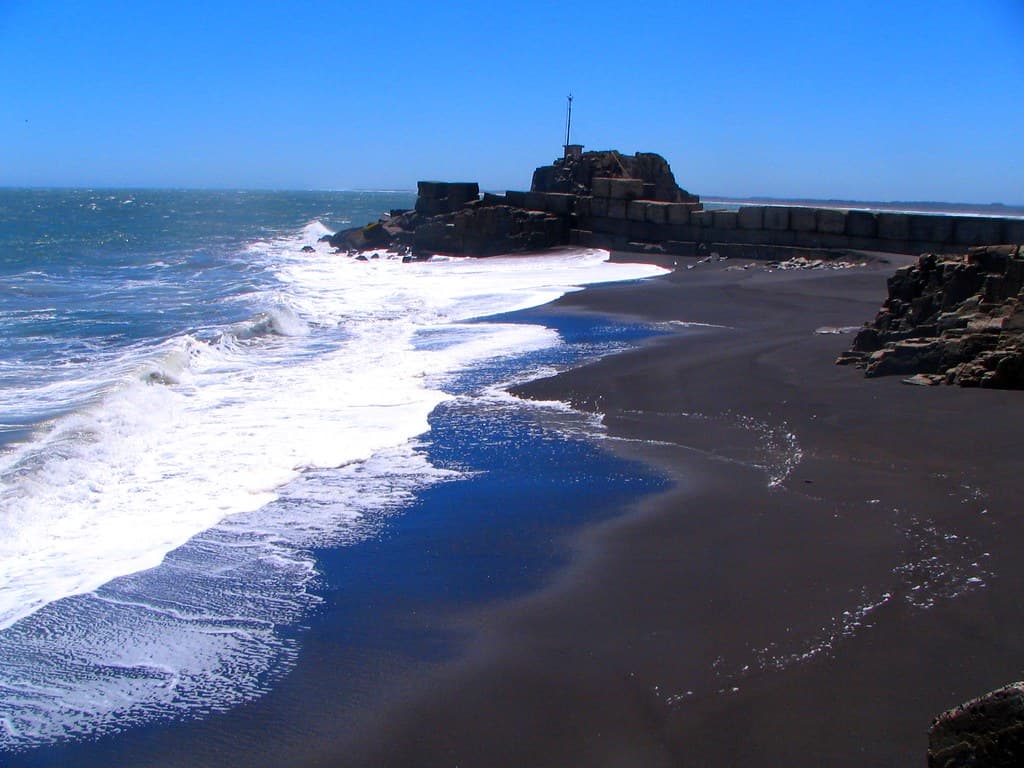 Credit: Flickr
Black Beach and heavy waves on the "silent" ocean
The water runs cold even in January, that bracing South Atlantic chill that makes you wade in slowly, gasping as waves slap your knees. But on sweltering afternoons when the city shimmers under the sun, that first plunge feels like earned relief. The shoreline slopes gently, making it forgiving for children who chase retreating foam and shriek when the next wave arrives. Vendors thread through the crowds selling garrapiñadas—sticky peanut candies—and plastic toys, their calls blending with transistor radios tuned to fútbol matches.
You'll leave with sand in your shoes and salt tightening your skin, smelling faintly of sunscreen and sea spray. This is beach-going stripped to its essentials: sun, sand, and the unhurried pleasure of a city that knows how to waste a summer afternoon without apology.


