
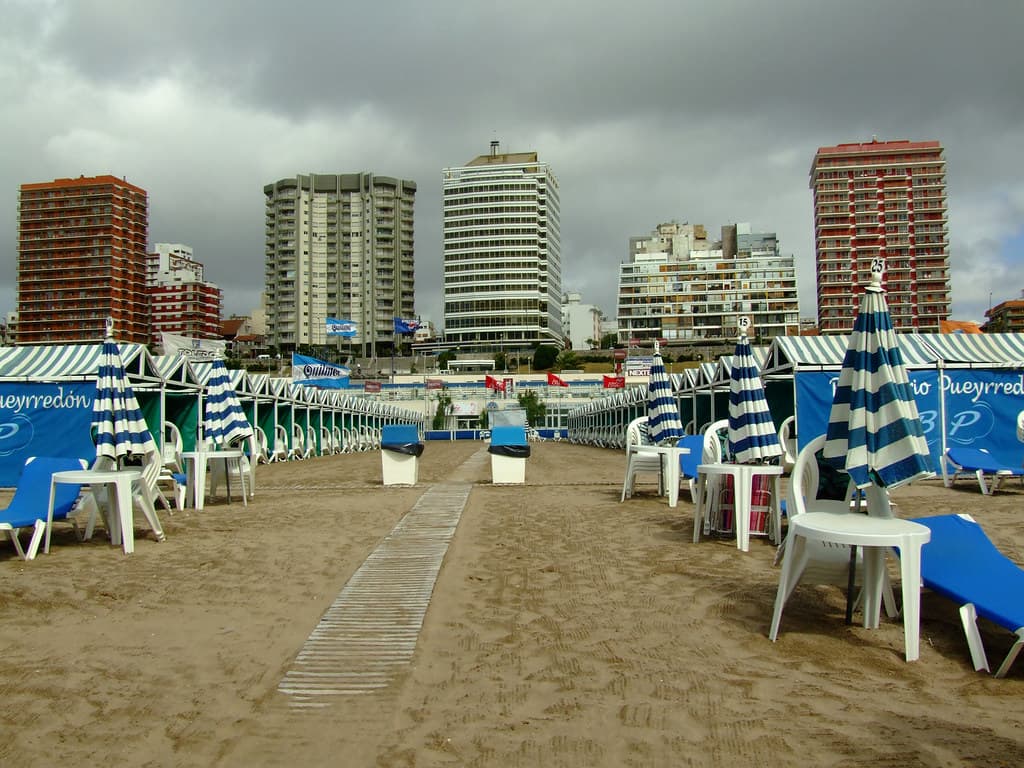
Playa Grande unfolds along Mar del Plata's northern headland, a broad crescent where Argentina's surf scene was born in the 1960s and still thrives today. The beach clubs—wood-frame structures painted in faded blues and whites—rent out palapas and reposeras from October through Easter, their waiter service delivering cortados and milanesas to families who return to the same spot year after year. Between the organized rows, surfers wax longboards and scan the horizon for sets rolling in from the southeast.
“This is where Argentine surf culture took root and still holds court, framed by century-old seaside architecture.”
 Credit: Flickr
Playa grande 2
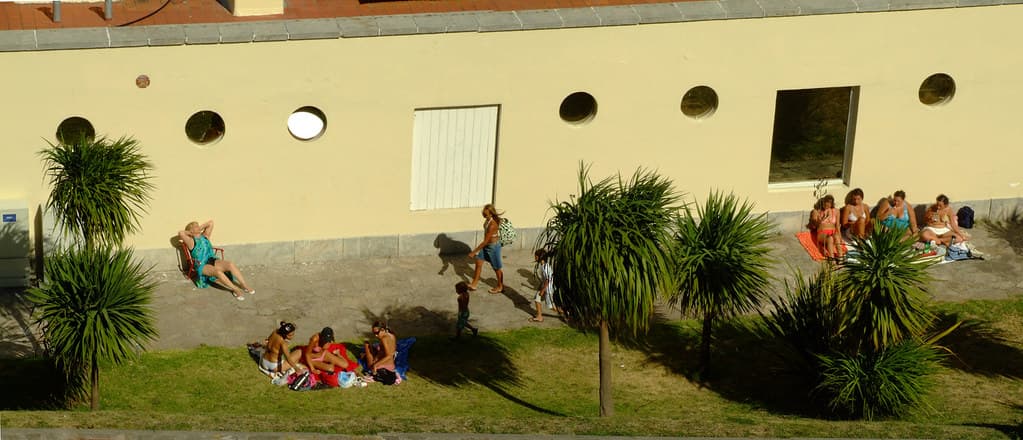
The backdrop reads like a postcard from another era: the Torreón del Monje, a stone castle perched on the southern rocks, keeps watch over beachgoers as it has since 1904. Seagulls wheel above the break while joggers trace the coastal promenade that connects Playa Grande to the city center three kilometers south. On summer weekends the sand buzzes with pickup fútbol matches, mate circles, and the particular choreography of Argentine beach culture—men in tight Speedos, women in high-cut bikinis, children racing toward the foam.
Come March, when Buenos Aires empties out for summer holiday, you'll share this sand with everyone from Palermo hipsters to multigenerational clans from the provinces. The water stays brisk year-round, hovering near 17°C even in peak season, but that never stops the locals from diving in headfirst.


