
The canvas tents go up by eight a.m., staked into the sand by families who return to the same ten-meter plot every January. You'll recognize Playa Las Toscas by the density of these striped refuges, the smell of grilled choripán from the paradores perched on the rambla above, and the steady rhythm of Argentine Spanish bouncing off the waves. This isn't a beach for quiet contemplation—it's the city's living room in summer, pulsing with the energy of school holidays and extended family reunions.
“The only beach in Mar del Plata where you'll witness Argentina's middle-class summer ritual unchanged since the 1960s, complete with the same family tent plots passed down through generations.”
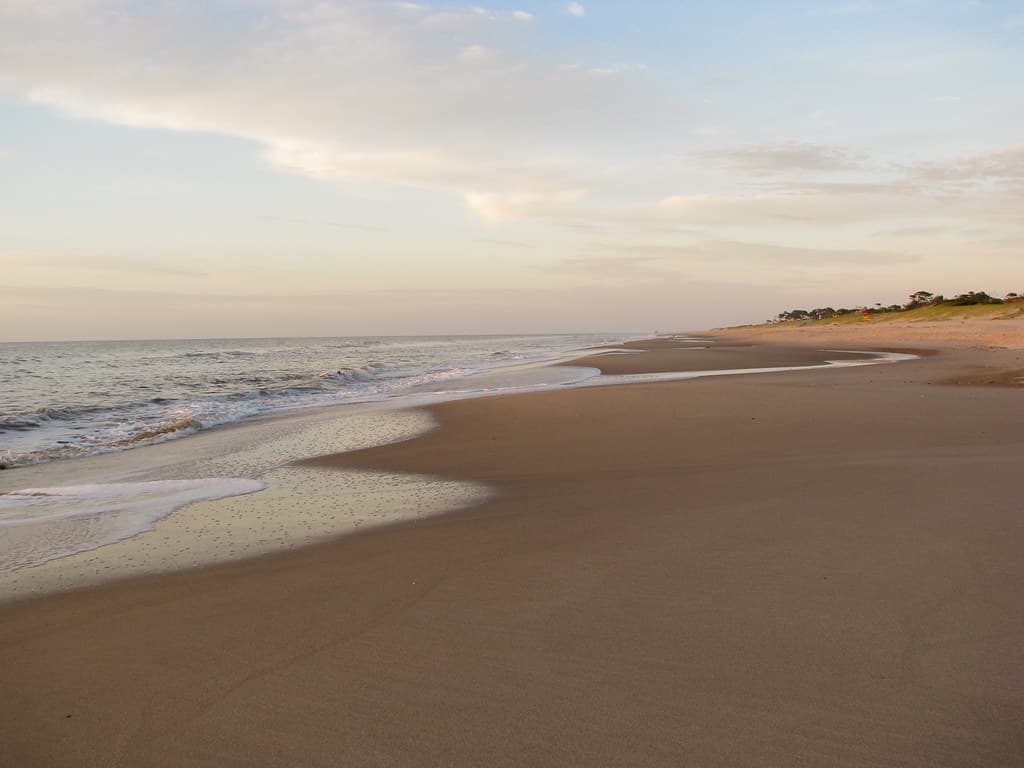 Credit: Flickr
Amanece en la playa
The beach stretches between two landmarks that anchor Mar del Plata's coastal identity: the Belle Époque grandeur of Hotel Bristol to the north and the turreted silhouette of Torreón del Monje to the south. The sand is golden-brown and firm underfoot, packed hard by the tide and thousands of footsteps. The Atlantic here runs cold even in high summer, bracing enough to make children shriek as they dash in and out of the shore break.
You'll navigate a landscape of rented umbrellas, impromptu soccer matches, and thermos-toting abuelas who've perfected the art of keeping mate hot for hours. The paradores—beach clubs that line the promenade—offer showers, lockers, and grilled seafood at plastic tables where you'll eat with sand still between your toes. This is beach culture as social theater, where seeing and being seen matters as much as the suntan.


