
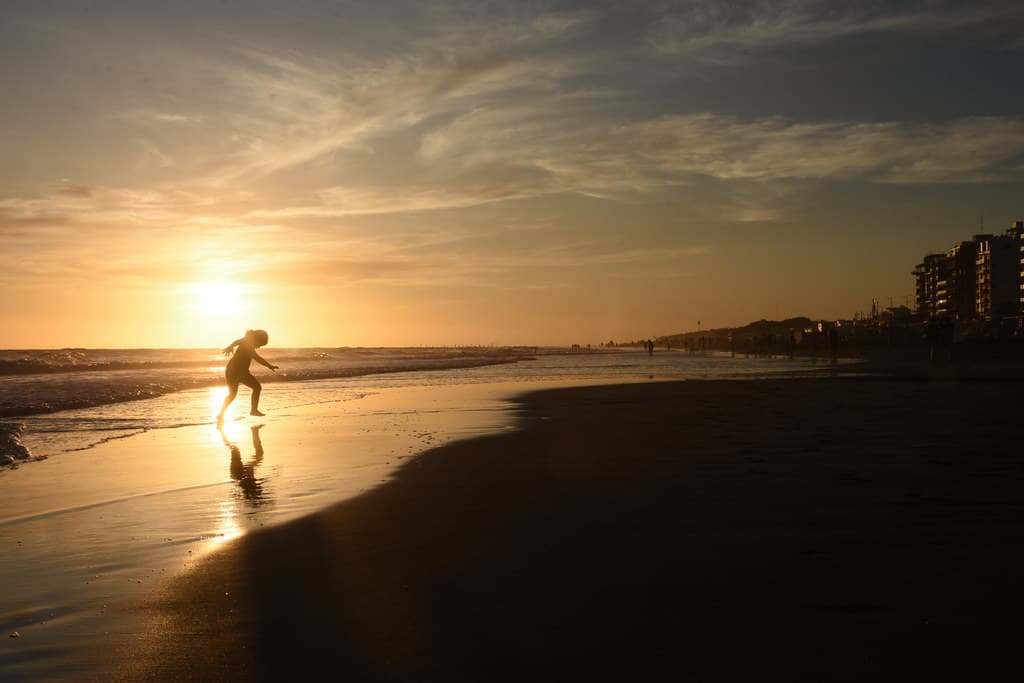
Monte Hermoso unfurls as a five-kilometer ribbon of blonde sand backed by low dunes and Norfolk pines, the beach so flat and firm you can drive along sections at low tide. The slope is famously shallow—you'll walk thirty paces into tea-colored Atlantic water before it reaches your knees—making this the family beach of choice for porteños willing to travel seven hours south from Buenos Aires. Wooden paradores dot the shore, their striped awnings and café tables anchoring clusters of umbrellas where multi-generational groups settle in for the day.
“The only major Argentine beach where you can examine 7,000-year-old fossilized tree trunks at low tide while ankle-deep in the Atlantic.”
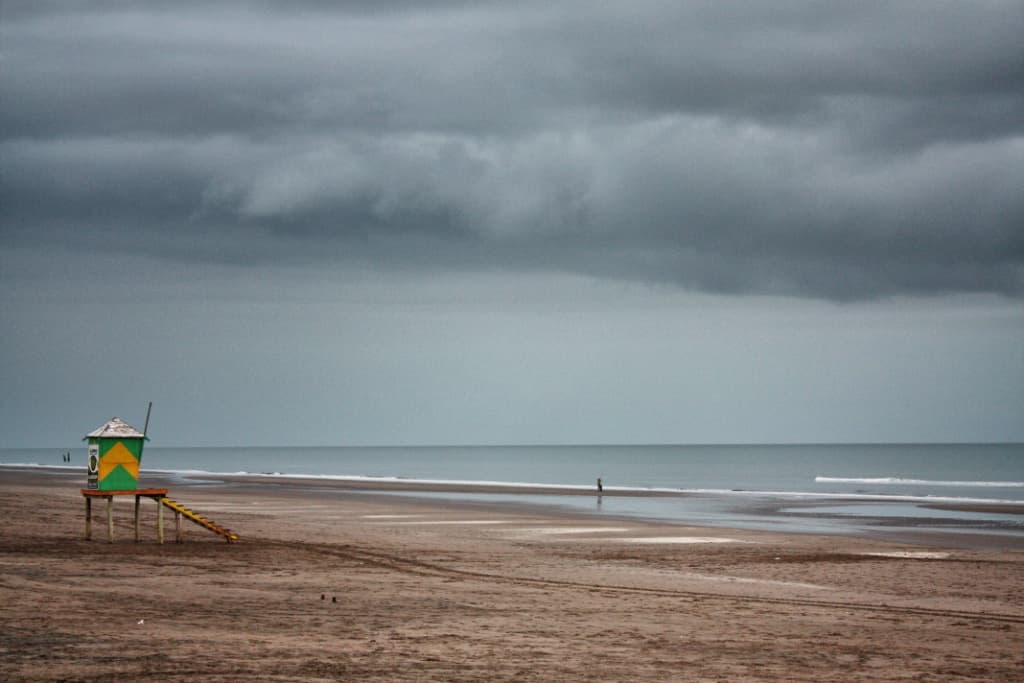 Credit: Flickr
La playa
The beach faces southeast, catching the sunrise over the ocean and transforming each evening as the sun drops behind the town, backlighting the distinctive fossilized forest that emerges at low tide near the eastern edge. The sand here holds a slight amber tint, warmer than the white beaches farther north, and the water temperature climbs several degrees above Mar del Plata thanks to the shallow approach. Mornings bring joggers and mate-sipping walkers; afternoons pulse with volleyball games and children building channels for the retreating tide.
Wind is your constant companion—the persistent southwesterly that keeps windsurfers happy and beachgoers strategic about their umbrella placement. Come between December and February when Argentine families claim their traditional spots, or slip in during November or March when the sand stretches emptier but the water remains swimmable and the sunsets deliver the same tangerine-and-violet performances to smaller audiences.


