
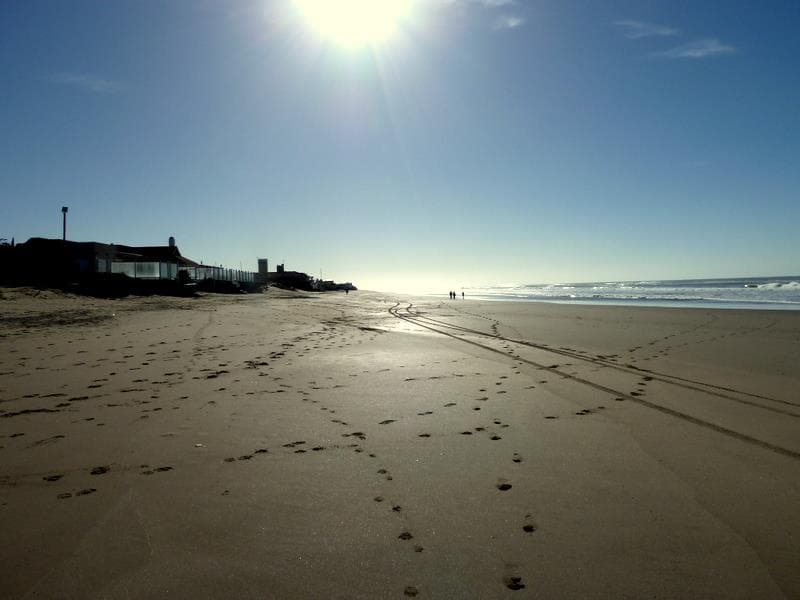
The beach stretches north from Avenida del Mar in a broad ribbon of tan sand that slopes gradually into the Atlantic, where green-blue waves roll in with reassuring consistency. Between you and the dunes, a string of balnearios—private beach clubs—offer striped lounge chairs, cold Quilmes, and grilled provoleta under canvas canopies. Families claim their territory early, spreading blankets between the high-tide line and the clubs' orderly rows.
“This is where Buenos Aires society has perfected the art of the Atlantic summer season for seven decades, complete with balneario rituals and pine-scented air.”
 Credit: Flickr
La playa
By noon the volleyball nets are taut and the beach fills with the cadence of lunfardo slang, the thwack of ping-pong paddles from club decks, and gulls wheeling over discarded choripán wrappers. The town's strict building codes—no structure taller than the pines—keep the skyline low, so the maritime forest forms a dark green backdrop that smells of resin in the heat. Lifeguard towers painted in primary colors punctuate the sand every few hundred meters.
As the afternoon softens, you'll see runners on the hard-packed tidal zone and couples walking to Ostende, the neighboring village just north. The water stays shallow for fifty meters out, warm enough in January and February that children spend hours in the shore break. When the westerly wind picks up around five, the beach begins its slow exhale—vendors packing up their carts of helado, families shaking out towels, the day's particular rhythm winding down.


