
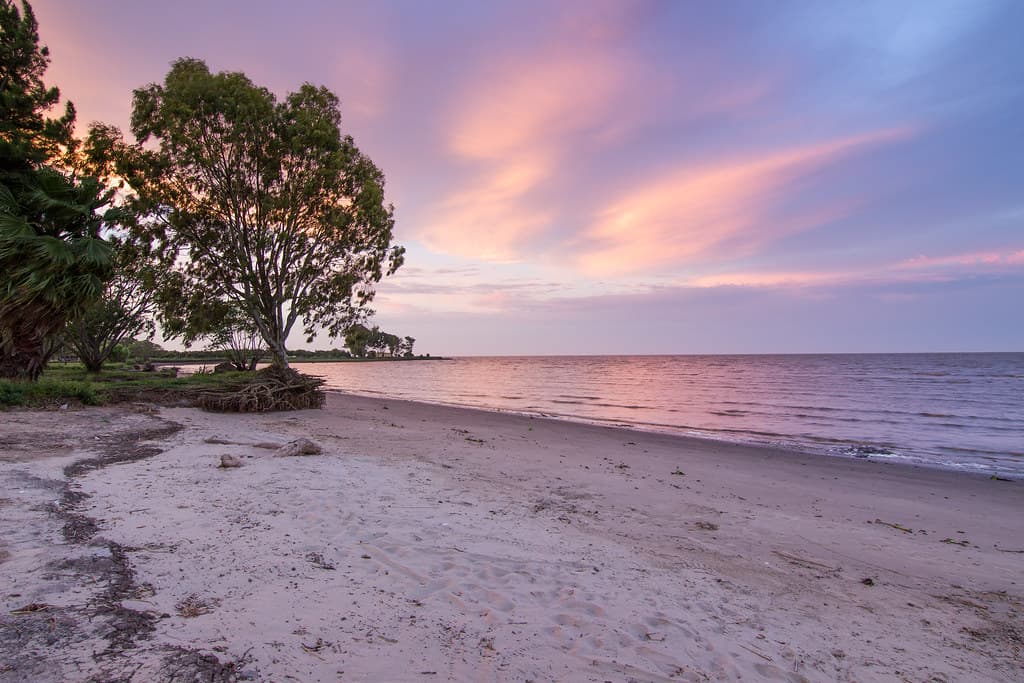
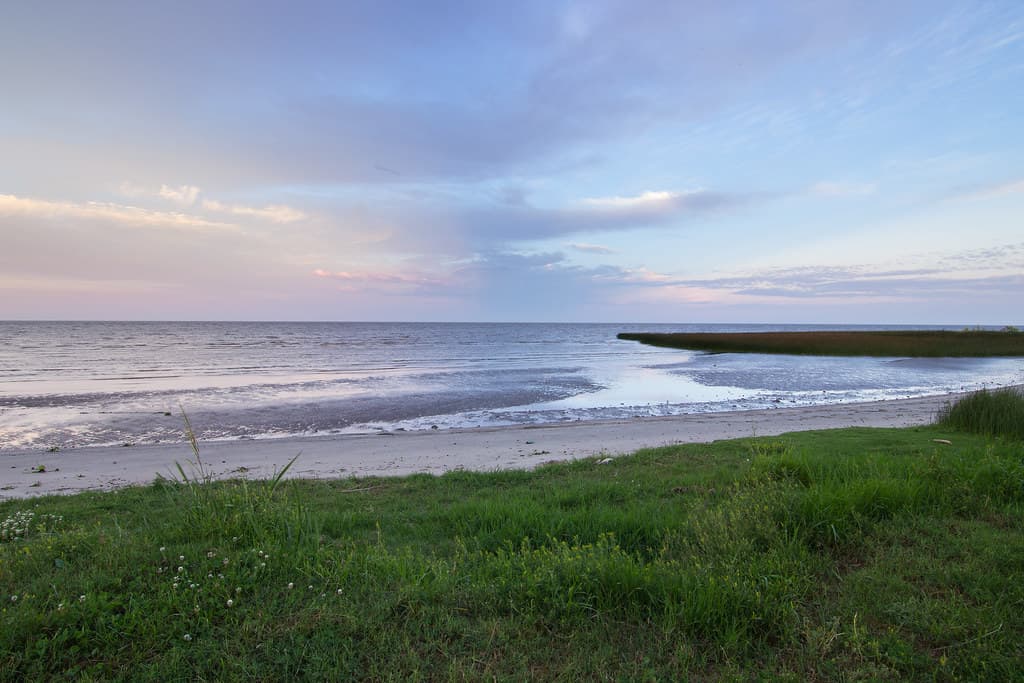
The shoreline at Punta Indio unfolds in a broad sweep of caramel sand and silt, where the freshwater Paraná mixes with the Atlantic in Samborombón Bay. You'll wade far before the water reaches your waist—the gradient is so gentle that toddlers splash freely while their parents set up canvas windbreaks against the southeasterly breeze. The horizon feels enormous here, unmarred by high-rises or boardwalks, just the occasional eucalyptus grove bending inland.
“One of the few mainland Argentine beaches where flamingos feed in the shallows alongside bathers.”
 Credit: Flickr
Playa de Punta Indio V
Sunset transforms the muddy palette into bands of copper and rose, the sky mirrored in tidal pools left by the receding bay. Locals arrive with portable grills to roast chorizo as the light softens, and the scent of woodsmoke drifts across the sand. Pelicans skim the waterline; if you're patient, you might spot a southern right whale breaching offshore between June and November, part of the coastal migration route.
The beach serves Punta Indio's scattered estancias and the village proper—a collection of low houses, a general store, and a marine research station studying the bay's unique brackish ecosystem. You won't find jet skis or parasails. Instead, there's the rhythmic slap of small waves, the crunch of shells underfoot, and the rare luxury of a Buenos Aires Province beach where you can still hear yourself think.


