
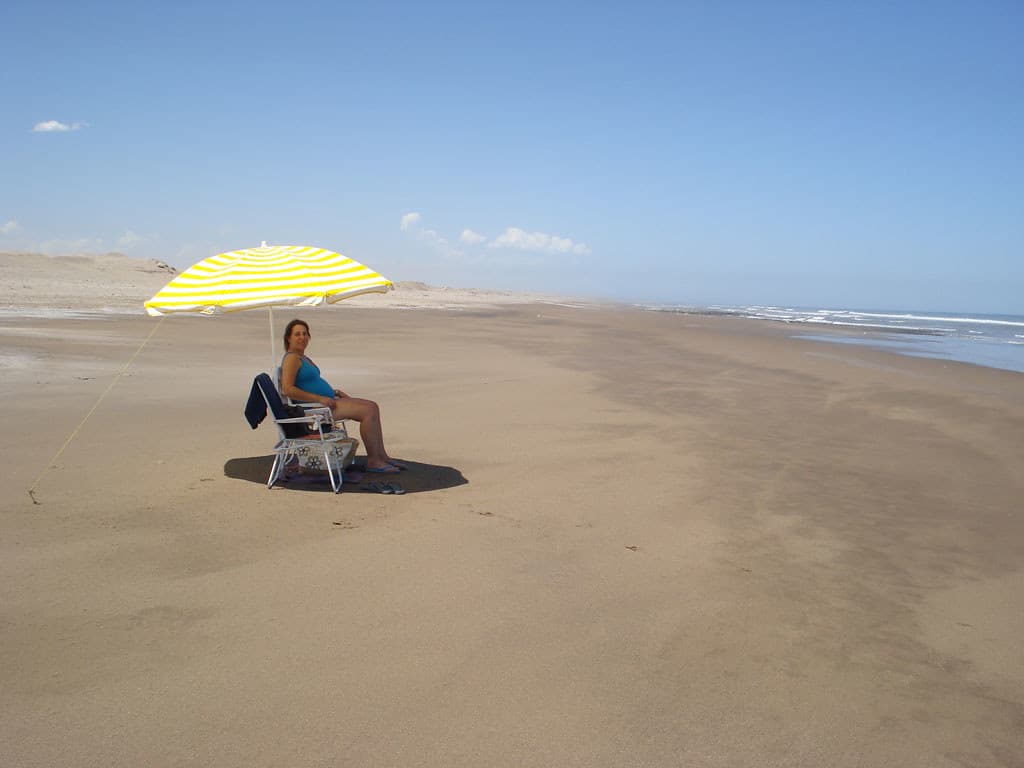
Playa Quequén stretches south from the mouth of the Quequén Grande River, a working beach that refuses to polish itself for outsiders. The sand here is coarse underfoot, salted by Atlantic spray, and the waves arrive in sets powerful enough to knock the unwary sideways. Families stake out their territory with canvas windbreaks—essential armor against the constant offshore breeze—while surfers paddle out in thick wetsuits, reading the shifting sandbars that reshape after every storm.
“This is the everyday beach of Quequén's fishing families—Atlantic honesty without the resort veneer that softens neighboring Necochea.”
 Credit: Flickr
Playa
The rivermouth itself is a study in contrasts: fishing trawlers chug upstream past sunbathers, and the scent of grilled choripán from shoreline parrillas mixes with iodine tang. You'll find no thatched umbrellas or cocktail service here. Instead, locals arrive with thermoses of mate, folding chairs, and the kind of easy familiarity that comes from claiming the same spot every January for thirty years.
Beyond the developed stretch near the port, the beach opens into kilometers of nearly empty coastline. Dunes rise in tawny ridges behind the high-tide line, anchored by tough marram grass. Gulls wheel overhead, and if you walk far enough south on a winter afternoon, you might see southern sea lions hauled out on the distant rocks, their barks carrying on the salt wind.


