
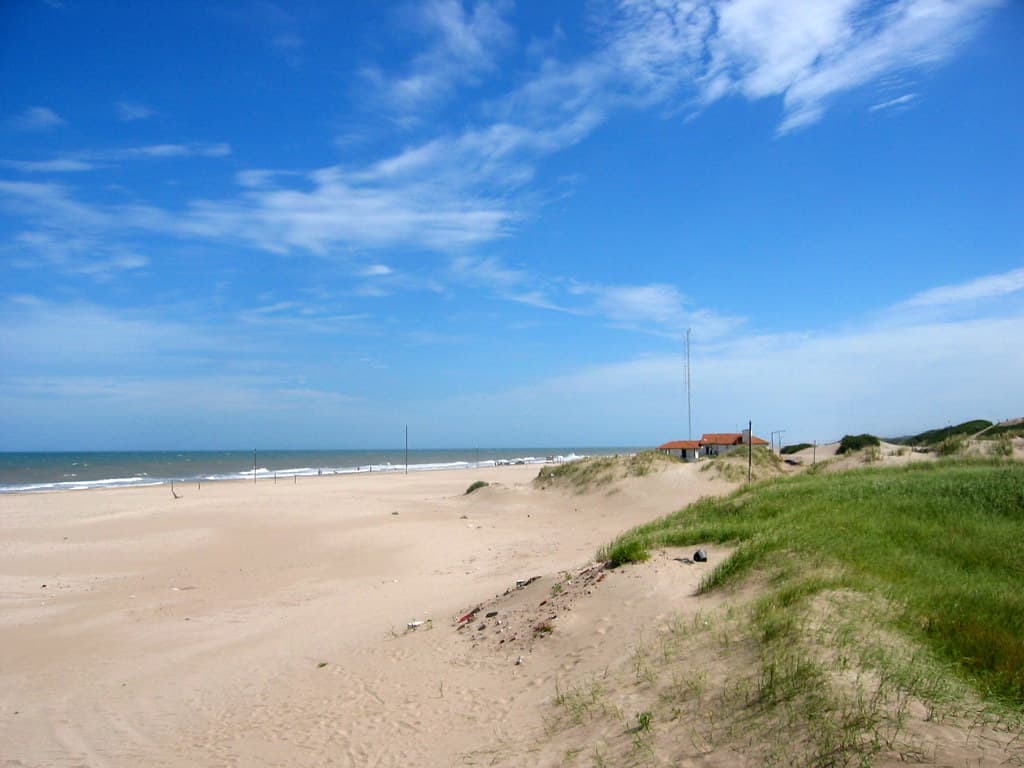
The sand here runs for kilometers in both directions, a broad ribbon of beige that darkens to copper where the Atlantic rushes in. During January and February, you'll share this stretch with thousands of Buenos Aires families who've been coming here since the 1940s, when architect Carlos Idaho Gesell planted the maritime pines that still anchor the dunes. The forest now stands as a green wall behind the beach, shading parillas and ice-cream kiosks, muting the roar of motorbikes on Avenida 3.
“Villa Gesell invented itself—forest, dunes, and all—as a deliberate Atlantic escape shaped by one man's eucalyptus and pine obsession.”
 Credit: Flickr
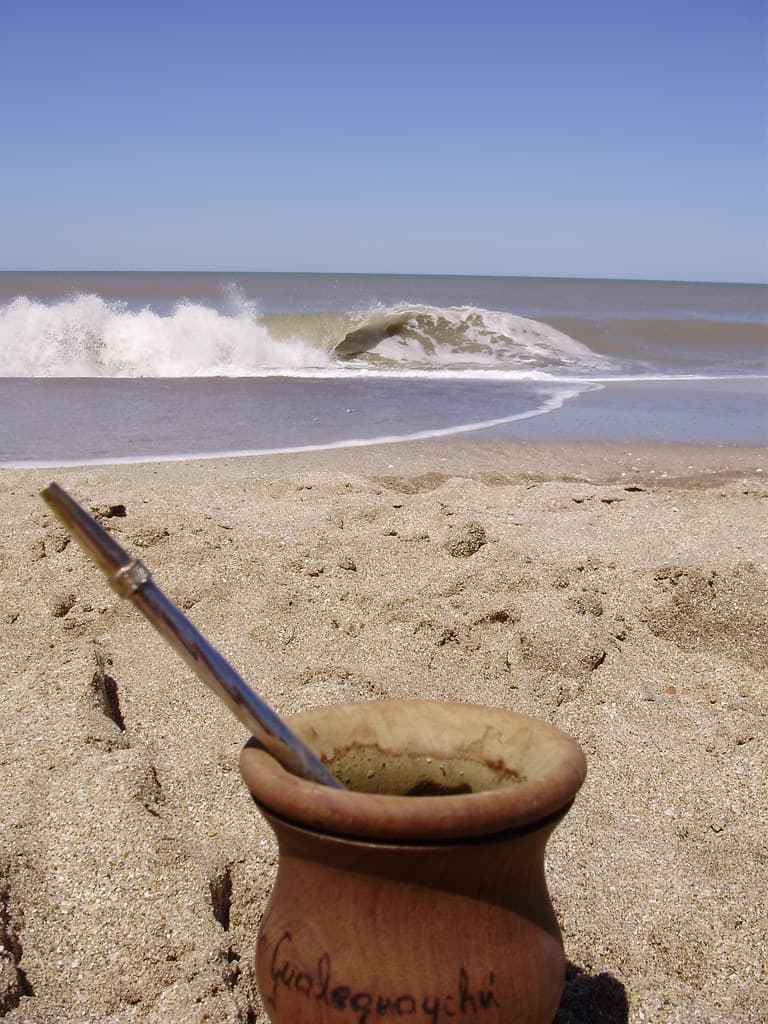
Mate en la playa
By noon, the beach hums: kids bury each other in sand, vendors hawk churros and helado from Styrofoam coolers, and Radio Aspen blares from bluetooth speakers. You'll rent striped canvas windbreaks—carpas—that families arrange in tight villages, anchoring towels against the steady onshore breeze. The waves break gently most days, white foam unfurling over sandbars a hundred meters out, perfect for waist-deep splashing and boogie-boarding.
When the sun drops behind the pines, the town pivots. Beachfront paradores morph into open-air clubs, bass lines vibrating the wooden decks. You'll walk past fire-twirlers and fernet-and-cola stands, the sand still warm beneath your flip-flops. This is Argentina's summer distilled: salt-crusted hair, sunburned noses, and the certainty that tomorrow you'll do it all over again.


