Counting the waves…
Counting the waves…
A refined fusion of water purity, environmental stability, and communal vibrancy for Playa Norte Caleta Valdés.
View MethodologyAnalyzed via live sensors and environmental data.
Wave height, wind, and atmospheric stability.
Live footfall and crowd balance metrics.
Community reviews and curated sentiment.
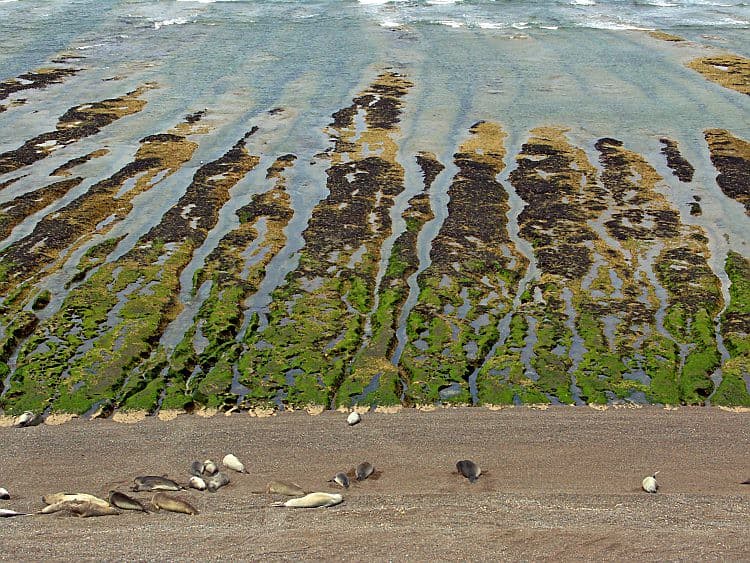
“You step onto smooth stones still wet from the last tide, listening to the low rumble of elephant seals just meters away. Playa Norte Caleta Valdés runs along the edge of a long coastal inlet where wildlife—orcas,…”
Limited recent visitor reports — live OBI telemetry is your best guide for current conditions.
The beach unfolds as a narrow ribbon of gray and ochre pebbles pressed between steep sedimentary cliffs and the cold South Atlantic. You'll find no umbrellas or vendors here—only the crunch of rounded stones beneath your boots and the occasional guanaco watching from the bluff above. Elephant seals congregate along the shoreline during breeding season, their bellowing echoing off the rock face, while offshore, orcas patrol for unwary prey in a hunting technique found almost nowhere else on Earth.
The cliffs themselves tell stories in horizontal bands of color: rust, cream, charcoal. Fossils poke from the strata, remnants of ancient oceans. You walk carefully, aware that the tide can shift quickly in this exposed corner of Península Valdés, cutting off access to sections of beach. The wind here is relentless, shaping every surface, polishing every stone.
Crystal lagoon with rocky outcrop
White cliffs over a desert beach
Breeding colonies September through March
Fossil-studded sedimentary layers exposed
Peak hunting season February-April
Prime Visitation
Anytime | Less Crowds
Where it is
Playa Norte Caleta Valdés
Caleta Valdés, Chubut, Argentina
-42.336700°, -63.618500°
Weather
Loading…
Swell
—
Temp
Warm · Restorative
UV Index
Moderate
Wind
—
Tidal State
Last known
Max Sunlight
—
Ideal Shade
—
Jan - Dec (Peak)
Mar - Nov (Off-season)
Anytime | Less Crowds
Select a category to load nearby places.
Unlock restaurants, luxury stays and curated maritime experiences within 2km
Swimming at Playa Norte Caleta Valdés is not advisable and rarely practiced. This pebble beach is located in a significant wildlife area where elephant seals and sea lions haul out seasonally. The waters are cold, currents can be strong, and the primary purpose of this location is wildlife observation rather than recreation. The beach's ecological importance means human activity should be minimized to avoid disturbing animals. Visitors should maintain safe distances from all wildlife. This is fundamentally a nature viewing and photography destination where respecting wildlife takes priority over water-based activities.
Wildlife viewing opportunities vary by season at Caleta Valdés. Elephant seals are typically present September through March, with breeding season peaking in October-November. Orcas patrol these waters primarily March through April hunting young sea lions. Magellanic penguins visit between September and March. For diverse wildlife and decent weather, January through March offers good balance. The area can be visited year-round, though winter brings harsh conditions and reduced wildlife activity. Early morning visits often provide better lighting for photography and potentially more active animal behavior before midday heat or tourist arrivals.
Accessing Playa Norte Caleta Valdés requires driving across Península Valdés on gravel roads. From Puerto Madryn, travel to the peninsula entrance (paying conservation fees), then continue on the main peninsula road eastward toward Punta Delgada, with the Caleta Valdés area accessible via marked turnoffs. The journey typically takes 2.5-3 hours from Puerto Madryn. A sturdy vehicle is recommended given road conditions. There is no public transportation to this remote location. Organized wildlife tours from Puerto Madryn or Puerto Pirámides often include Caleta Valdés as part of full-day peninsula circuits.
Playa Norte Caleta Valdés is a remote natural area with minimal infrastructure. A ranger station and small interpretation center may have limited hours, but no restaurants, shops, or accommodations exist at the site. Visitors should bring all necessary food, water, and supplies. The nearest services are in Puerto Pirámides or Puerto Madryn, where full accommodation and dining options are available. Some traditional estancias on the peninsula offer rural lodging experiences at distance from the beach. This is a day-trip destination requiring self-sufficiency and advance preparation for remote Patagonian conditions.
Caleta Valdés is renowned for exceptional marine wildlife concentrations. Elephant seals congregate in impressive numbers, particularly during breeding season. Sea lion colonies inhabit the area year-round with varying population sizes. Orcas hunt along the coast, especially during autumn months. The surrounding landscape hosts guanacos, Patagonian foxes, and numerous bird species including giant petrels and steamer ducks. Offshore, southern right whales can sometimes be spotted during their seasonal presence. The combination of multiple species in dramatic Patagonian coastal scenery creates world-class wildlife viewing and photography opportunities unlike most beaches globally.
Photos