
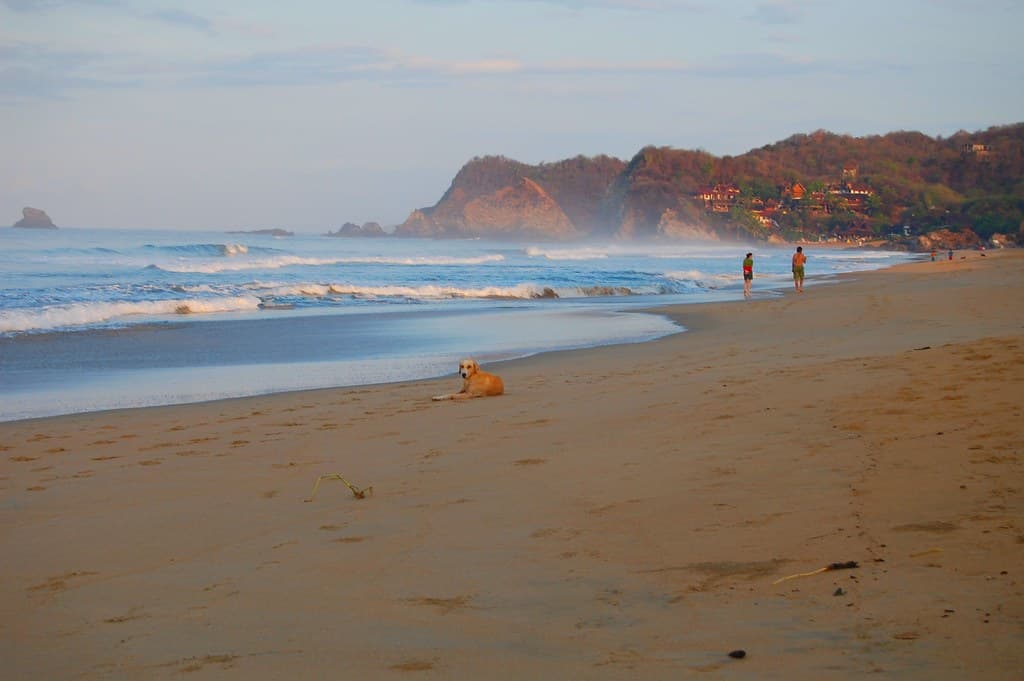
Camarones sits at the edge of the world, a fishing village of barely a thousand souls clinging to Chubut's arid coast. Playa Camarones unfurls from the harbor in a long, flat arc of coarse sand the color of wet cardboard, backed by pebble terraces and low scrub. The Atlantic here is green-gray, often choppy, and the wind—the relentless Patagonian wind—presses against your jacket even on sunny afternoons. Families spread blankets near the ramp where fishermen unload their catch, children digging trenches while parents brew mate from thermoses.
“It serves as the only coastal access point for a hundred-kilometer stretch of Patagonian steppe, anchoring a region defined more by wildlife reserves than human habitation.”
 Credit: Flickr
7 am playa
This is not a beach for lingering swims; the water hovers around 15°C in summer, numbing your calves within minutes. Instead, you walk. The strand extends north toward Cabo Dos Bahías, dissolving into a haze where land and sea blur. Gulls and terns patrol the wrack line, and if you time it right during low tide, tidal pools reveal purple starfish and clinging limpets. The village itself—a grid of low houses, a single gas station, a handful of restaurants serving langostino—feels provisional, as if the wind might one day erase it entirely.
Yet therein lies its pull. Playa Camarones offers no umbrellas, no beach clubs, no crowds. Just you, the immense sky, and the knowledge that this coast has looked exactly this way for centuries—raw, unvarnished, and utterly indifferent to your presence.


