
Playa Km 4 announces itself not with fanfare but with function: a neighborhood beach where Comodoro Rivadavia's northern edge meets the South Atlantic in a working relationship rather than a postcard pose. The pebbles here range from egg-smooth ovals to jagged fragments of shale, shifting and clacking with each retreating wave. You'll see dog walkers at dawn, couples sharing mate at midday, children in puffy jackets testing the frigid shallows—a rotation of locals who've made peace with winds that gust hard enough to carry voices out to sea.
“This is where working-class Patagonia takes its leisure—unvarnished, unhurried, and utterly indifferent to outsiders' expectations of what a beach should be.”
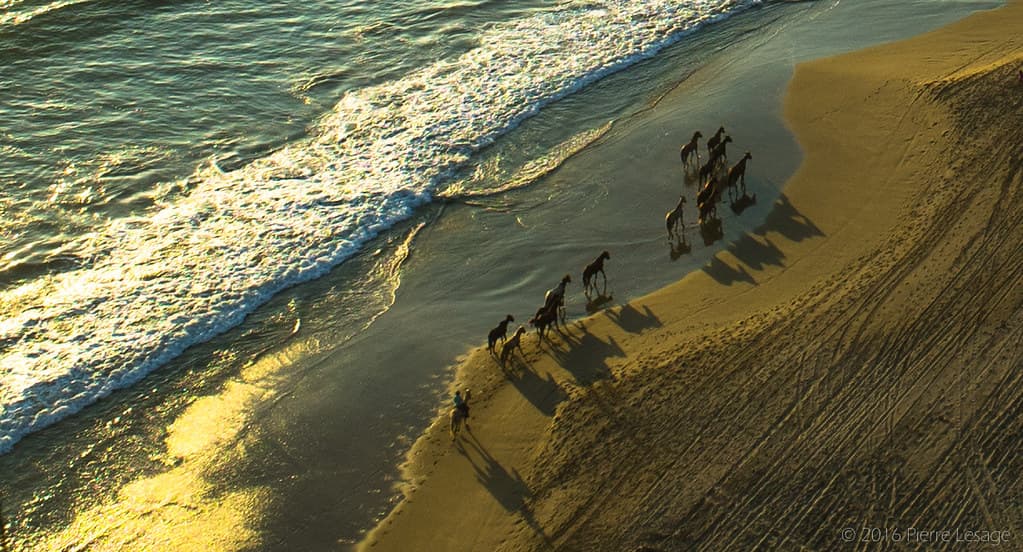 Credit: Flickr
Kite Aerial Photography over Playa Larga, Zihuatanejo
The coastal road hums with traffic just beyond the beach, close enough that you can pick out the rumble of trucks heading to the oil refineries that define this city's skyline. Yet families claim their territory among the stones with practiced ease, wedging coolers between boulders and unfurling blankets weighted down with rocks. The water stays cold year-round, a steely blue-grey that mirrors the often-overcast sky, while cormorants and gulls work the surf line with single-minded efficiency.
What Playa Km 4 lacks in amenities it returns in authenticity. This is Patagonia without polish: the wind in your teeth, the salt on your lips, the sound of pebbles grinding beneath the Atlantic's perpetual restlessness. You come here not to escape the city but to see how Comodoro's residents carve out moments of ease along one of the world's most unforgiving coastlines.


