

You reach Playa Muelle Comodoro by walking toward the cranes. The beach sits pressed against the city's commercial port, where the smell of diesel mingles with salt air and kelp dries in tangled heaps along the tideline. Pebbles crunch underfoot instead of sand, and the water—green-gray and restless—churns with the constant southwesterly that defines this stretch of coast. This is not a place for sunbathing. It's a place for understanding how Comodoro Rivadavia lives: oil rigs on the horizon, fishing boats unloading catch, joggers in technical jackets leaning into the wind.
“The only urban beach in Argentina where oil derricks and cargo cranes form your backdrop instead of palm trees.”
 Credit: Pexels
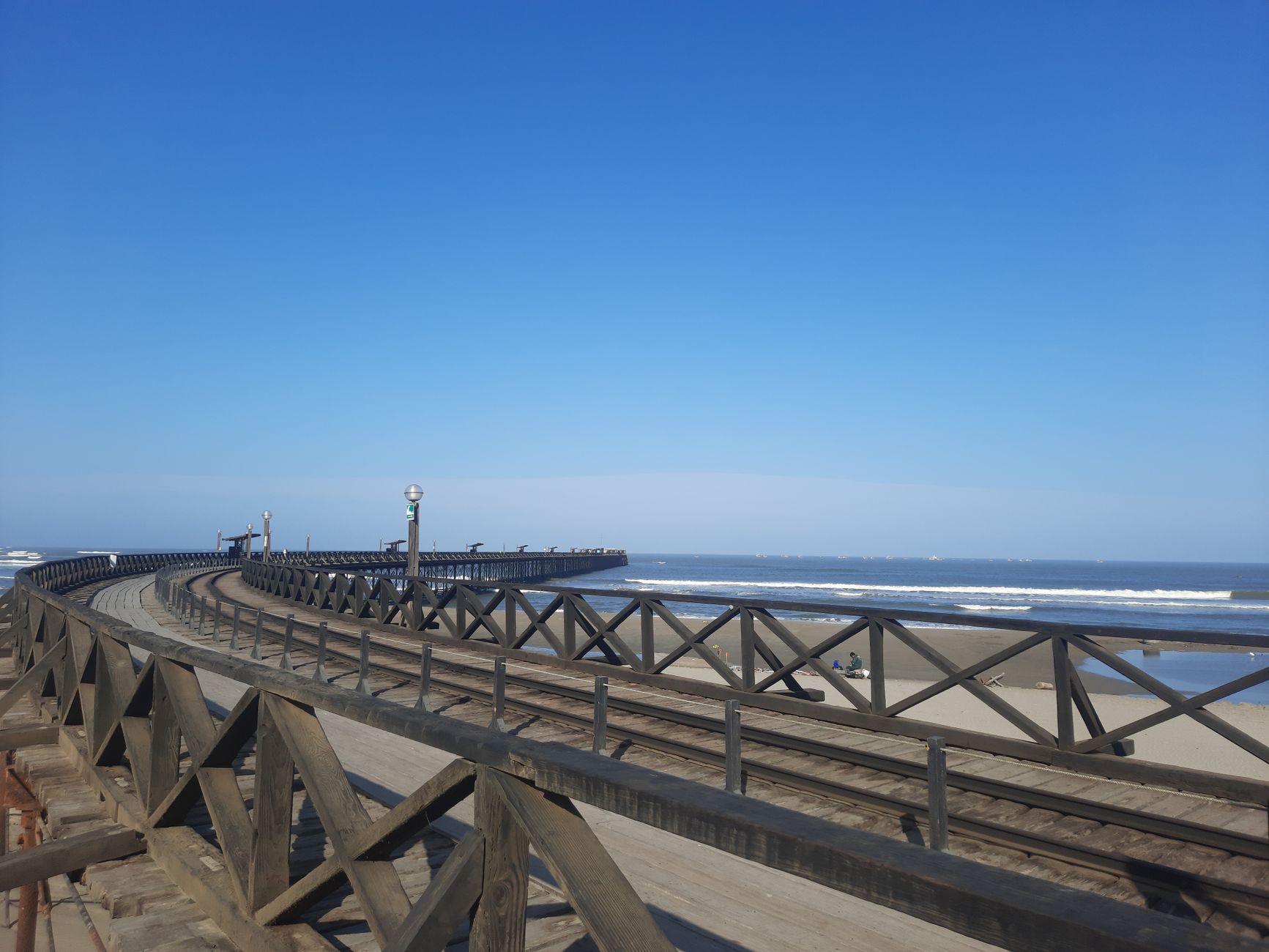
Explore the scenic Pimentel Pier in Peru with its wooden structure and vast ocean views.
The malecón stretches along the shore, a concrete promenade where families stroll at dusk and street vendors sell choripán from metal carts. Gulls wheel overhead, their cries competing with the groan of ship horns. On clear evenings, the sun sinks into the gulf in streaks of copper and violet, backlighting the industrial silhouettes that frame the view. You won't find beach clubs or parasols, but you will find benches facing the water and a handful of cafés serving mate and medialunas to dockworkers and off-duty engineers.
This is Patagonia's working coast, stripped of romance but rich in character. The wind never stops, the stones never warm, and the city never pretends to be anything other than what it is: a place where people earn a living from the sea and the earth beneath it.


