
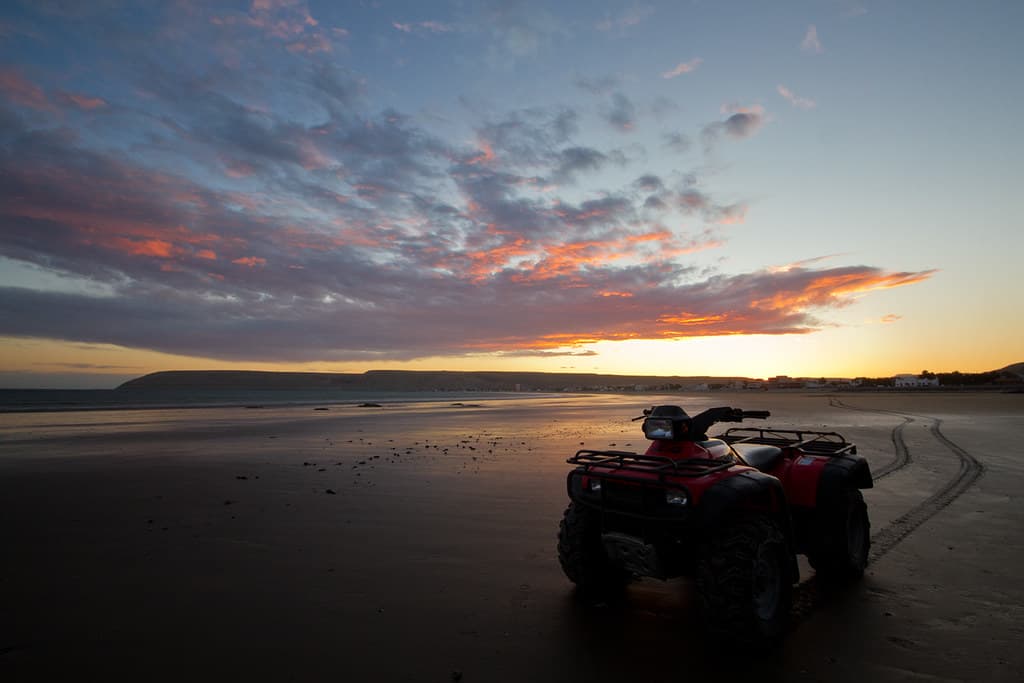
Stella Maris doesn't pretend to be anything it isn't. The beach unfurls along Comodoro's industrial southern flank, a pebble sweep where working families spread blankets between the rocks and the horizon stretches uninterrupted toward Antarctica. The stones here are smooth, rounded by centuries of Patagonian surf, and they shift audibly beneath your feet—a constant percussive reminder that this coast answers to the wind and the tide, not to sunbathers. Offshore, you'll spot the silhouettes of oil rigs, the economic backbone of this windblown city, their platforms dotting the seascape like sentinels.
“It's the only urban beach where Patagonia's oil economy and Atlantic wildness collide in full view.”
 Credit: Flickr
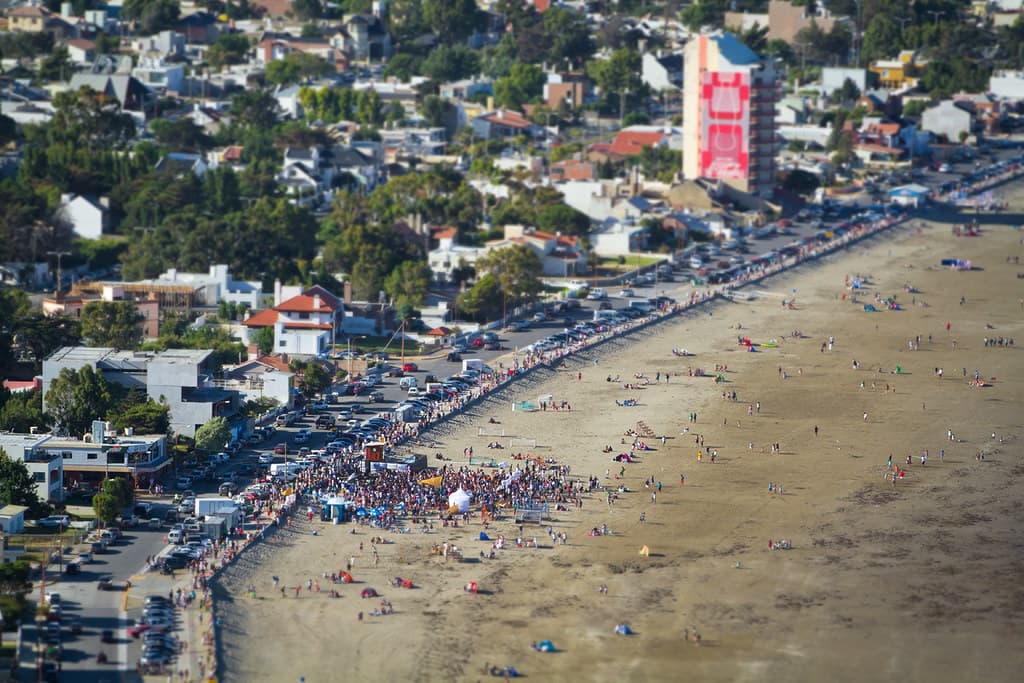
Playa Stella Maris — photo by Bruno Belcastro
The beach sits just before the road curves toward the more polished resort strip of Rada Tilly, making it a last-chance refuge for locals who prefer their coastline unadorned. Families arrive with mate thermoses and fold-up chairs, settling in for long afternoons despite the gusts that whip off the Atlantic. The water is cold year-round—this is the Chubut coast, after all—but that doesn't stop the hardy from wading in during the austral summer.
What Stella Maris offers is authenticity: no beach clubs, no umbrella rentals, just the elemental meeting of land and sea in one of Argentina's least-touristed corners. You'll leave with sand-free shoes but wind-tangled hair, having experienced a slice of Patagonian coast that most travelers never know exists.


