
You walk barefoot across sand the color of biscotti, still cool in the early hours before the December sun burns through the marine layer. The beach slopes gently toward waves that arrive in muscular sets, their white crests visible a hundred meters out. Behind you, low-rise apartment blocks and the occasional parrilla stand form a modest skyline—this is a working beach, not a resort postcard.
“This is Patagonia's everyday beach, where working-class families from Rawson escape the inland steppe without pretense or polish.”
 Credit: Flickr
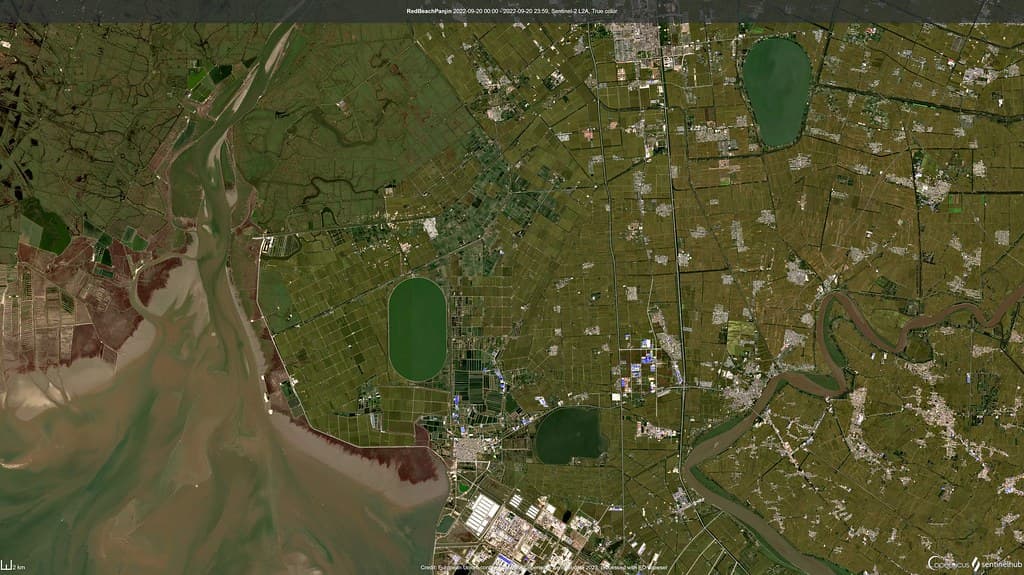
Playa Roja. Red Beach, Panjin, China (20-09-2022)
Midmorning brings the locals: mothers spreading checkered blankets, grandfathers rigging umbrellas against the relentless Patagonian wind that never quite stops. Children dig moats with tin shovels while teenagers test the frigid water, shrieking as ankle-deep surf numbs their calves. The air tastes faintly of salt and grilled chorizo from makeshift carts wheeled onto the sand at noon.
By late afternoon the light softens to amber, illuminating the dunes that roll inland toward scrubland. You might spot a handful of surfers paddling out near the rocky groyne, their wetsuits dark against the pale water. The scene feels timeless—not because it's pristine, but because generations of Chubutenses have claimed this same stretch for their summer Sundays, planting their flags in sand that refuses to stay still.


