
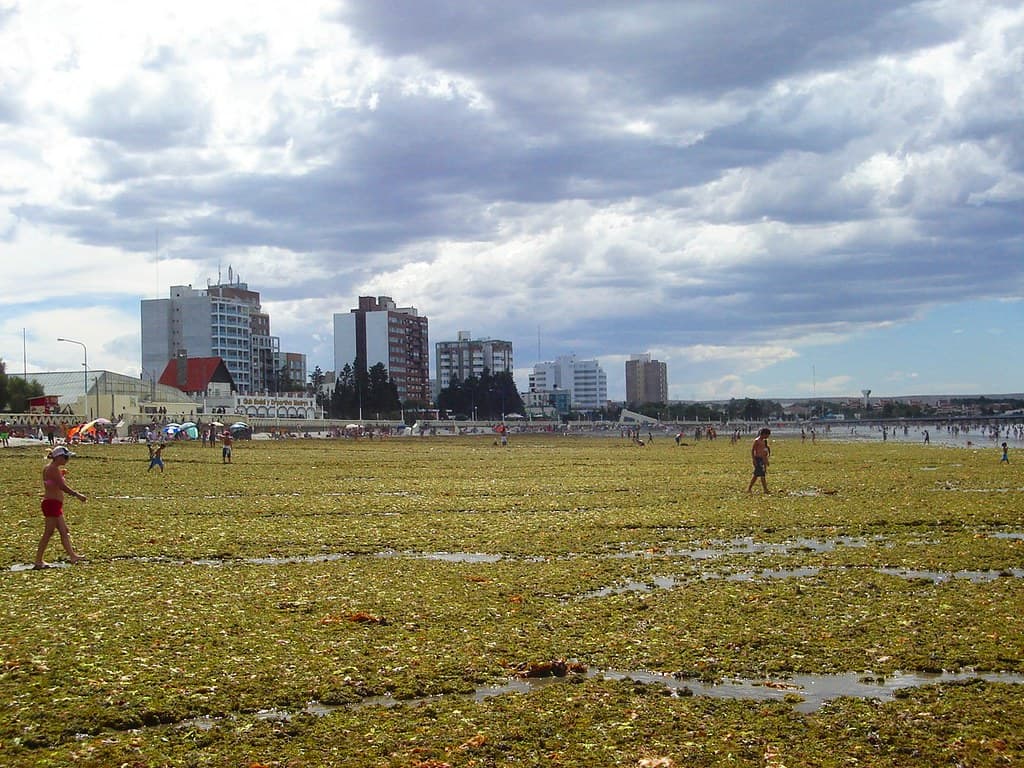
You settle onto the pebble-flecked sand and watch the wind carve patterns across the water's surface. Playa Puerto Madryn stretches along the city's eastern edge, a four-kilometer crescent where the rhythms of daily life pulse stronger than any postcard fantasy. Fishermen cast lines from the pier at sunrise while joggers trace the coastal path, their breath visible in the cold morning air. The beach itself is utilitarian—no palm trees, no turquoise shimmer—just the raw beauty of southern Argentina's steppe meeting the sea.
“The only urban beach in Argentina where you can spot breaching whales from the shoreline during migration season.”
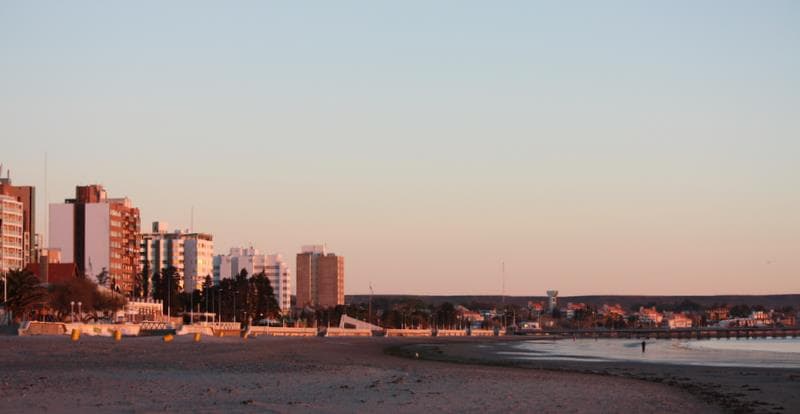 Credit: Flickr
Amanecer frente a la playa
The real draw lies offshore. Golfo Nuevo shelters southern right whales from June through December, and this beach serves as your launching point. Between excursions, you'll find families claiming windbreaks, kids bundled in fleece as they explore tide pools studded with mussels and sea snails. The promenade backing the beach hums with parrillas grilling choripán and cafés serving cortados strong enough to cut through the Patagonian chill.
Come evening, the wind often softens. You walk the length of the beach as the sun drops toward the peninsula, painting the water in shades of copper and slate. It's not a beach for lingering in a swimsuit—the water hovers around 15°C even in summer—but for understanding that Patagonia's coast offers something better than comfort: a front-row seat to one of the planet's great wildlife gatherings.


