
The beach unfolds in a gentle arc beneath striated sandstone bluffs that glow amber in afternoon light, their sedimentary layers reading like pages in a geology textbook. Wooden staircases descend from the clifftop promenade where interpretive plaques mark cave dwellings—actual hollows in the rock where Welsh immigrants weathered their first Patagonian winter. You can peer into these shallow refuges, imagining wool blankets and candle smoke, then walk twenty paces to join Argentine families building sandcastles in the same wind those pioneers endured.
“The cave dwellings where Welsh colonists sheltered in 1865 remain visible in the cliff face, making this the only Argentine beach where you swim beside inhabited ruins of settlement history.”
 Credit: Flickr
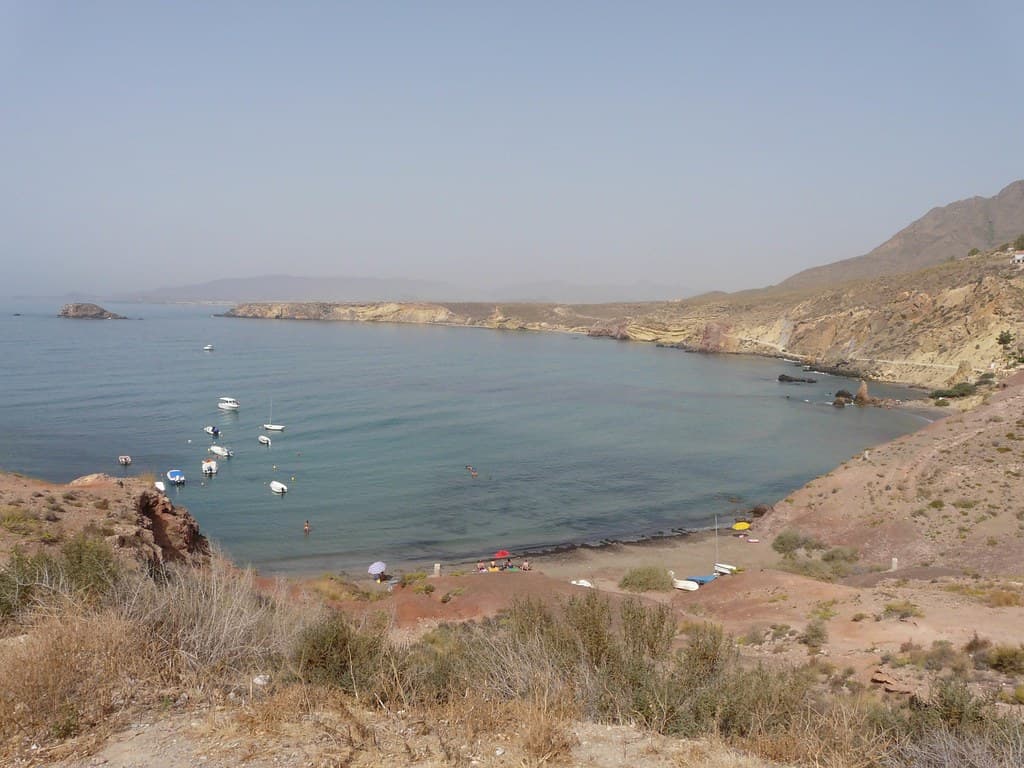
Playa del Rincón, desde Punta Cueva de Lobos (Mazarrón, MURCIA)
The sand itself runs coarse underfoot, studded with shell fragments and smoothed pebbles that clack in the surf. Golfo Nuevo's waters arrive in low, rhythmic swells—cold enough to make you gasp but swimmable in summer months when locals wade in knee-deep. Kelp tangles mark the tideline alongside driftwood bleached silver by relentless sun. The beach stretches wider than it looks from above, giving you room to claim a patch away from the main access points near the Monument to the Welsh Settler.
Urban Puerto Madryn presses close—you'll hear traffic from Avenida Julio Verne overhead and see apartment balconies perched along the cliff edge—but the historical weight of the place, the physical evidence of survival carved into stone, lends gravitas to what might otherwise be just another city beach.


