
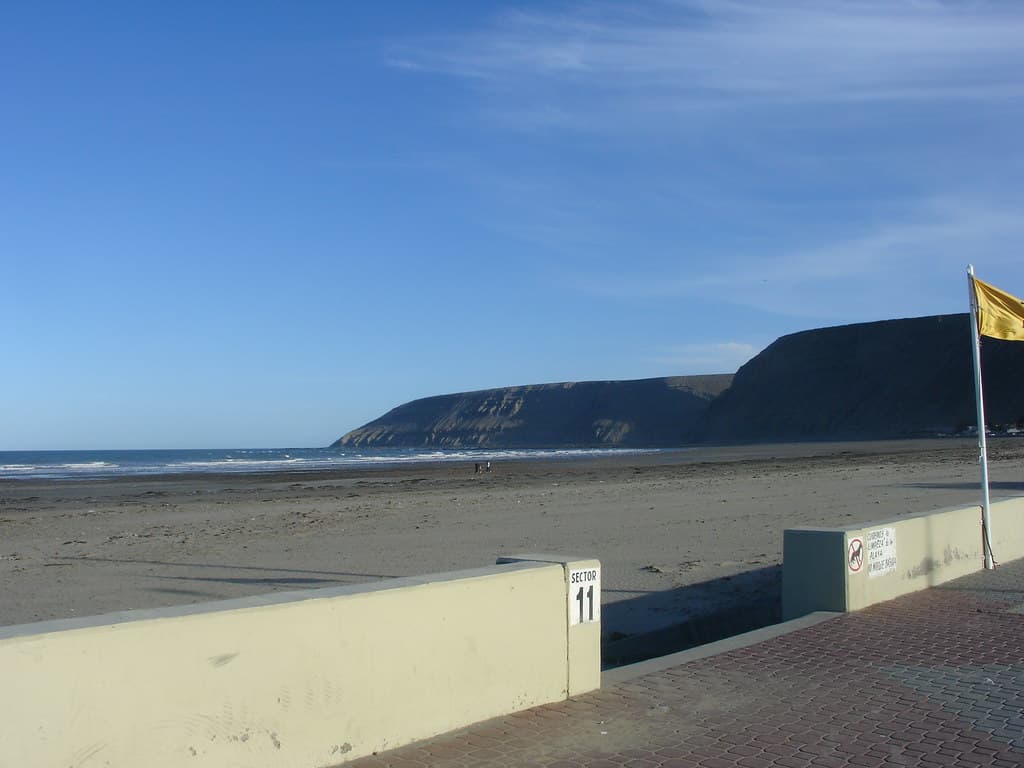
The wind here is not gentle. It sculpts the dunes behind Rada Tilly's three-kilometer crescent, combs through the coirón grasses on the bluffs, and transforms every beach umbrella into a sail. Yet families return year after year, because this is Patagonia's version of accessible coast—no treacherous dirt roads, no isolation, just a paved boulevard connecting you to one of southern Chubut's few swimmable bays.
“Patagonia's most developed beach resort where windswept Atlantic coast meets family-friendly infrastructure rare this far south.”
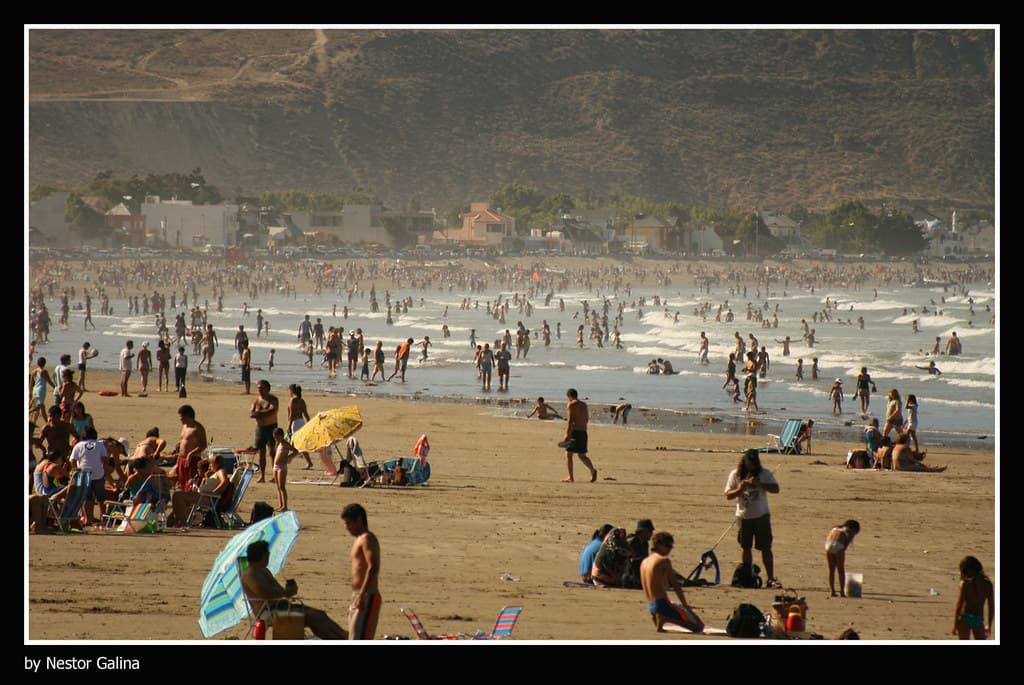 Credit: Flickr
Dia de Playa
You'll notice the beach culture immediately: Argentines arrive with mate gourds, fold-out chairs, and an entire day's provisions. The sand slopes gently into water that never quite shakes its chill, even in January's peak summer. Children dig moats while parents huddle behind nylon windbreaks in primary colors that dot the beach like prayer flags. The boardwalk behind you hums with parrilla smoke and the chatter of vacationing porteños who've driven fifteen hours for this.
Come at dawn and you'll have the strand nearly to yourself, watching cormorants work the surf line as the sun ignites the cliffs to the north. By noon the wind picks up and the beach fills. This is urban Patagonia—raw nature tamed just enough for towels and sunscreen, where you taste salt spray with every exhale and sand finds its way into everything.


