
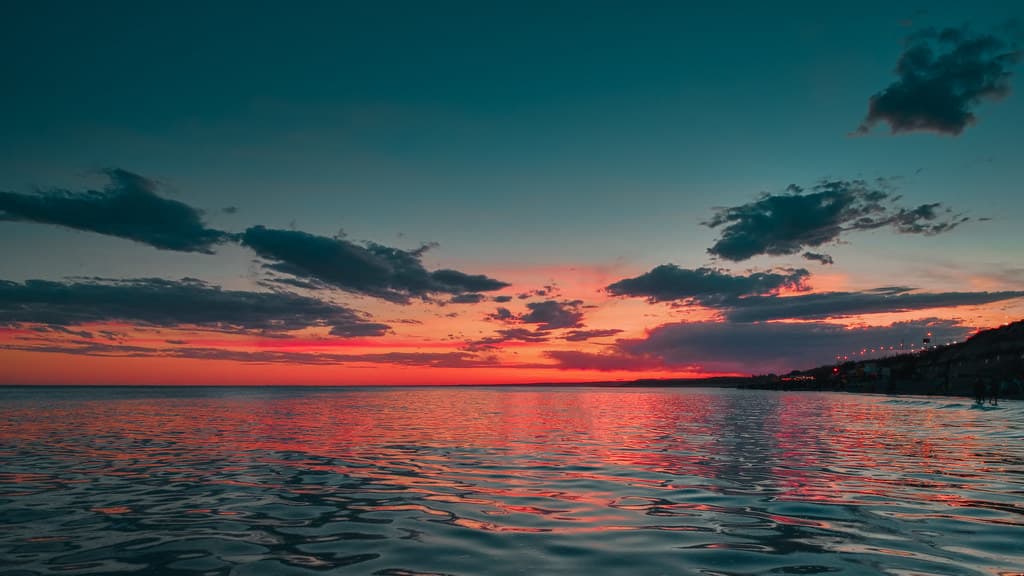
The cliffs announce themselves from the coastal road—burnt sienna striations stacked like geology textbooks, their faces smoothed by millennia of Patagonian gales. You descend onto a beach where red dominates: ruddy boulders the size of sedans, rust-streaked platforms that jut into knee-deep water, even the sand itself carries a faint terracotta tint when wet. Families claim spots in the natural windbreaks these formations create, spreading blankets in alcoves warmed by radiant rock.
“The only beach along this Atlantic stretch where iron-rich sedimentary cliffs paint the entire landscape in shades of rust and crimson.”
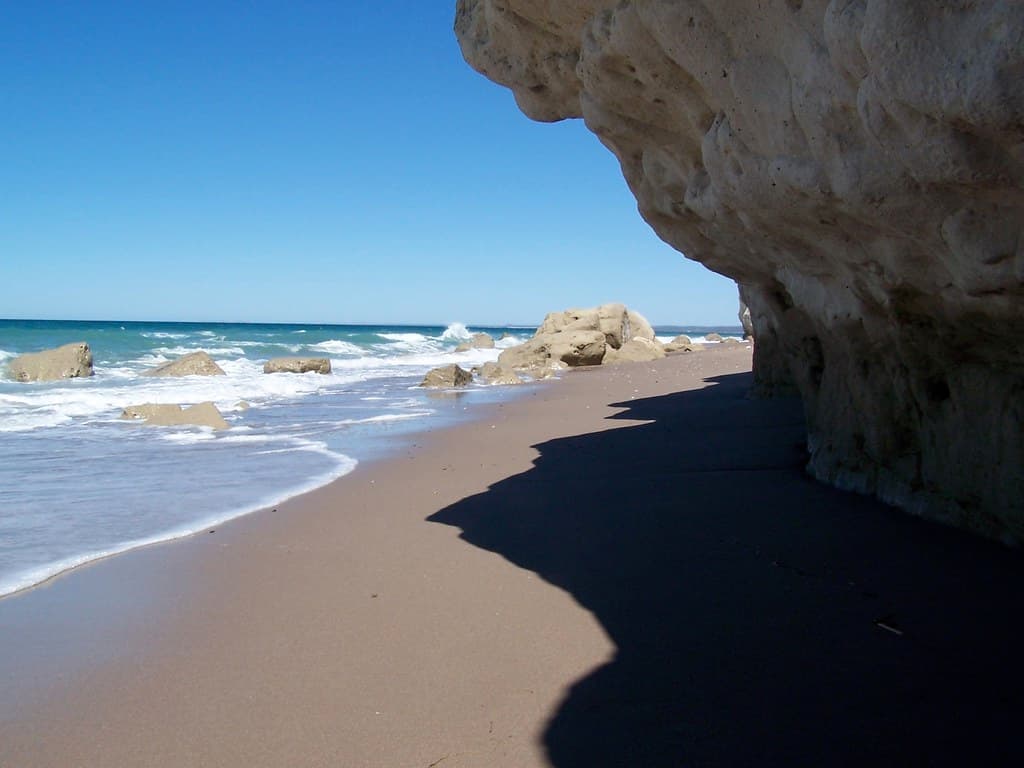 Credit: Flickr
Playa Piedras Coloradas — photo by Lisandro M. Enrique
Tide determines your experience. At low water, broad flats emerge dotted with tidal pools—miniature aquariums where translucent shrimp dart between anemones and small crabs scuttle over pebbled bottoms. Children crouch with plastic buckets, parents wade shin-deep across warm shallows that stretch fifty meters seaward. High tide brings the Atlantic against the cliff base, limiting the strand but deepening swimming zones where the water runs exceptionally clear over sandy bottom.
The chromatic drama peaks in late afternoon. That russet stone absorbs daylight all morning, then radiates it back as the sun arches west, turning every surface into a warm-toned studio for smartphone photographers. The contrast—oxblood rock, cream sand, cobalt water—creates compositions so saturated they barely need filtering. You'll leave with gritty feet, wind-tangled hair, and a camera roll that finally does justice to Patagonia's mineral palette.


