
The drive south from Sierra Grande follows a two-lane that hugs the coast, passing scrubland where guanacos sometimes graze within sight of the sea. When you reach Punta Colorada, the landscape shifts: ochre headlands jut into the Atlantic, and Playa Las Casitas unfolds in a sheltered arc between them. The beach takes its name from the handful of modest summer houses perched above the sand, their weathered facades testimony to decades of Patagonian wind.
“One of the few accessible beaches along Río Negro's remote coast where Patagonian steppe descends directly to tidal sand.”
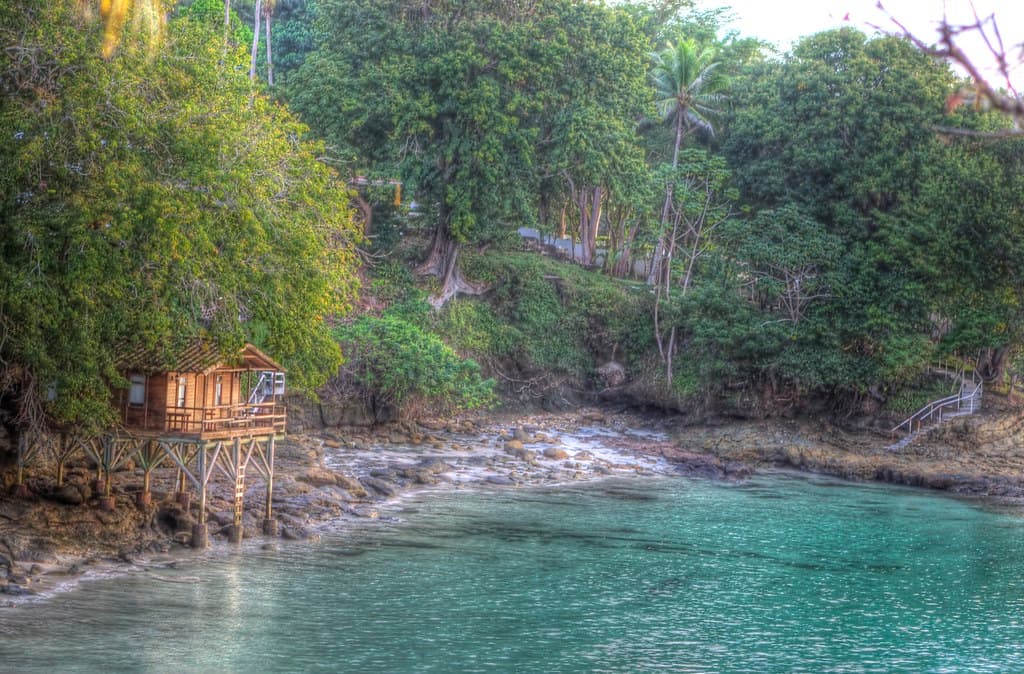 Credit: Flickr
Casita a pie de Playa...
You'll notice the silence first. Waves roll in with a steady hiss, and the only other sound is the occasional cry of a kelp gull wheeling overhead. The sand underfoot is coarse and scattered with fragments of mussel shells, darkened by the mineral-rich cliffs that bookend the cove. Families arrive mid-morning with thermoses of mate and empanadas wrapped in foil, staking out spots near the dunes where the wind relents.
The water stays cold year-round—this is the Atlantic at latitude 41 south—but children wade in during summer afternoons when the sun warms the shallows. Low tide reveals tide pools studded with anemones and small crabs, and the rocky outcrops at either end of the beach offer vantage points to scan for southern right whales that migrate past between June and December. There are no restaurants or kiosks; you bring what you need and leave with everything you brought.


