
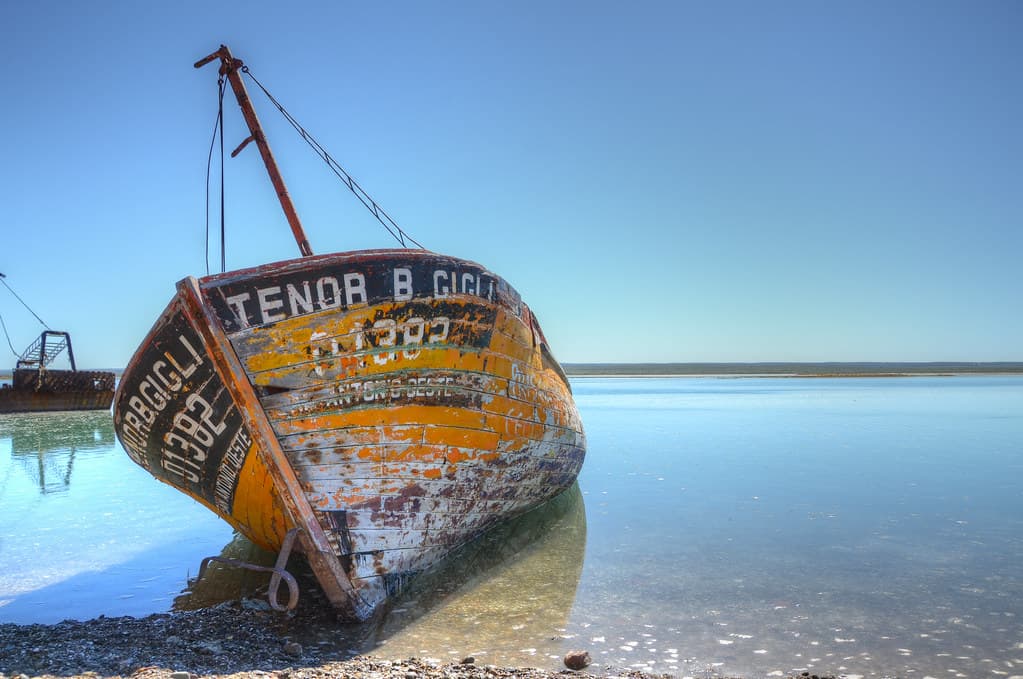
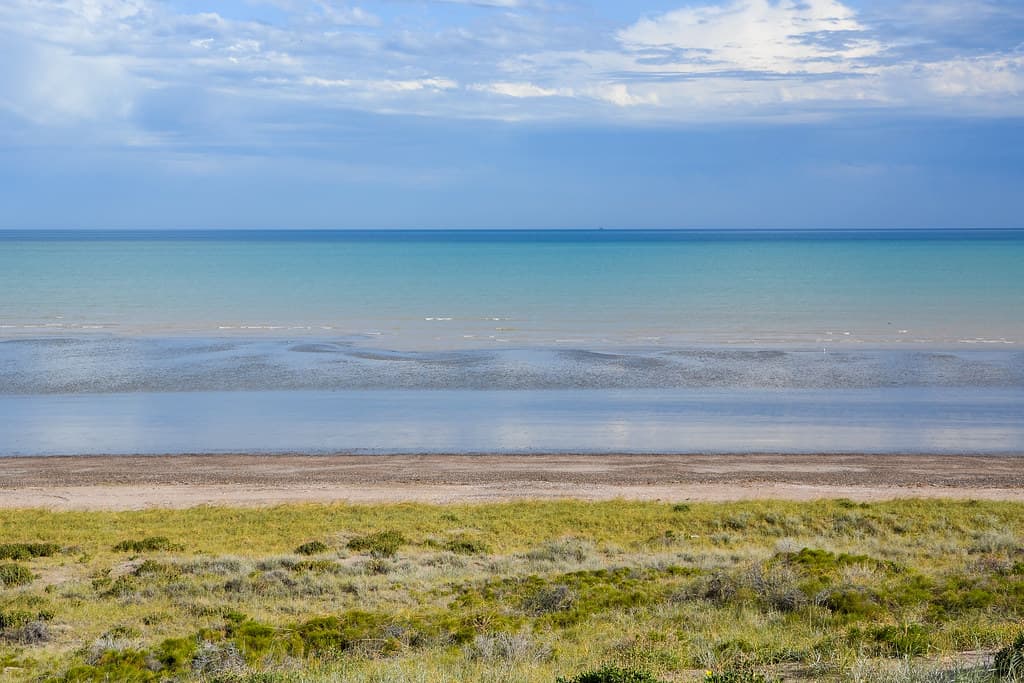
The beach hugs the western edge of San Antonio Oeste, a working port town where the rhythm follows fishing trawlers, not tourism calendars. You won't find beach bars or umbrella rows here—just a broad swath of beige sand that meets the bay's famously calm water, protected from Atlantic swells by a wide mouth and shallow gradient. At high tide you wade in knee-deep for twenty paces; at low tide, you walk across ribbed sand flats that gleam like wet silk under the Patagonian sky.
“The only accessible Patagonian bay beach that combines year-round warmth, working-port authenticity, and family-friendly shallows untouched by resort development.”
 Credit: Flickr
Playa San Antonio Oeste — photo by emiliokuffer
Families arrive mid-afternoon with thermoses of mate and beach tents that snap in the perpetual wind. The water temperature surprises first-timers—this bay warms faster than the open coast at Las Grutas, and by January it holds the heat of a bathtub left to cool. You'll see grandparents wading out in street clothes, children building moats that fill as the tide creeps back, dogs splashing in the shallows.
Sunset is the town's communal theater. You position yourself near the old port infrastructure—cranes silhouetted against apricot clouds, seabirds wheeling over moored vessels—and watch the sky cycle through rose, amber, violet. By the time the light fades, the parrillas along the waterfront are smoking, and the smell of grilling cordero drifts across the sand. This is a beach that belongs to the people who live beside it, and they'll share it without fanfare.


