
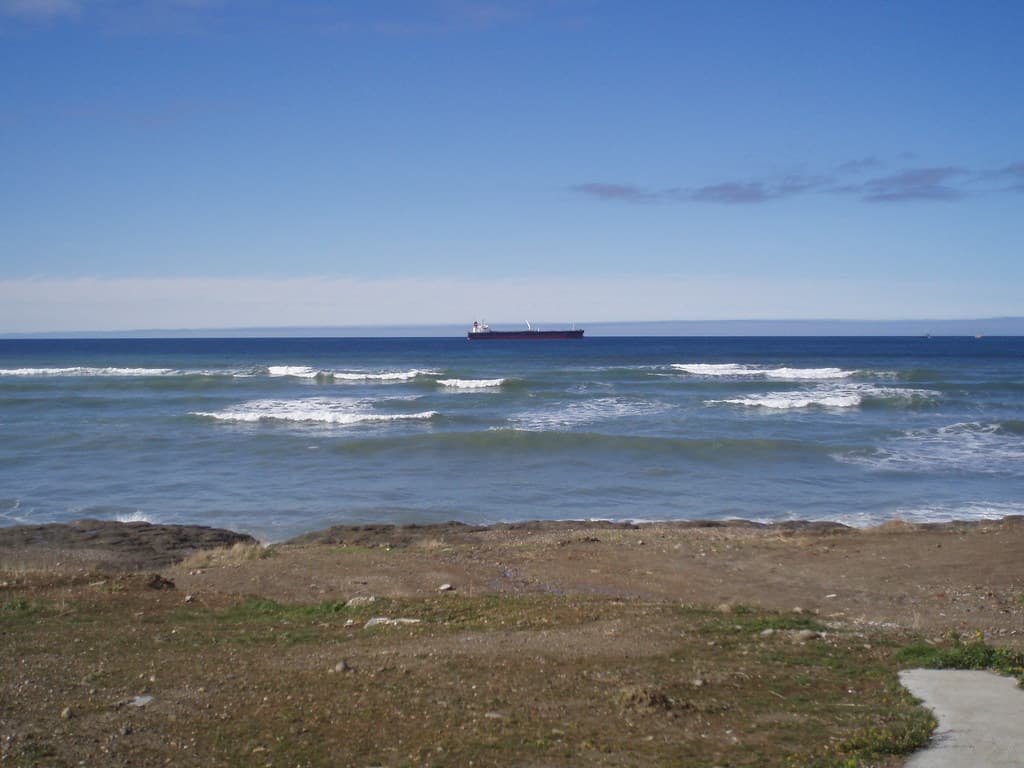
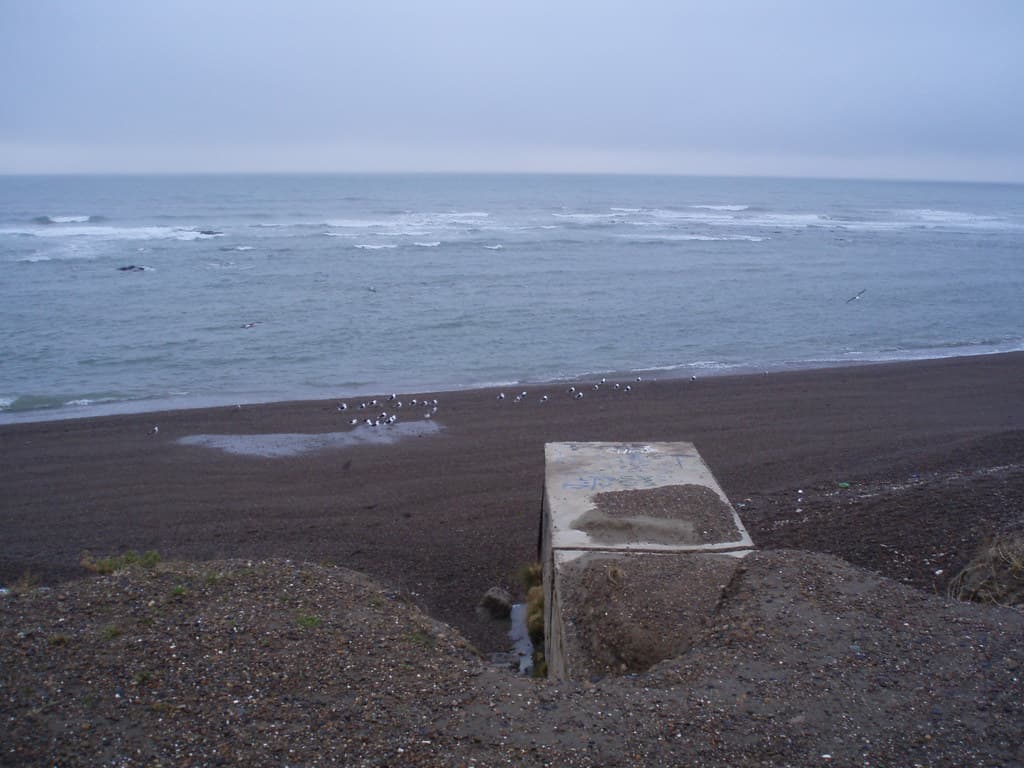
The stones beneath your feet carry the weight of the Atlantic, smooth and oval from centuries of tumbling in the cold current. Behind you, the refinery towers punctuate the skyline, reminders that Caleta Olivia built itself on petroleum, not postcards. The air tastes of salt and diesel, an industrial honesty rare along tourist coastlines.
“The authentic coastal anchor for Argentina's oil capital, where industry and recreation share the same unvarnished shoreline.”
 Credit: Flickr
Playa
Families arrive with mate thermoses and folding chairs, settling into the afternoon as the westerly wind tugs at their hair. The water churns gray-green, flecked with white where it meets the shoreline in rhythmic percussion. Locals wade in without ceremony, accustomed to the bite of Patagonian water that never quite warms.
Sunset transforms the working waterfront into something unexpected. The light catches the cranes and silos, turning utilitarian metal into bronze sculpture. You'll hear Spanish mingling with the cry of gulls, the laughter of children racing across the stones. This beach doesn't court admiration—it simply exists, functional and familiar, the recreational heart of a town that earns its living from the earth below and the sea beyond.


