
Walk east from the plaza along the esplanade and you'll find where the town meets the estuary: a stretch of sand and pebble beach flanked by corrugated-metal boathouses and the concrete pilings of Muelle de Ramón. This isn't wilderness—it's working waterfront, where the day's catch gets unloaded in plastic tubs while dogs patrol for scraps and retired fishermen occupy the same bench they've claimed for decades.
“The only beach where Patagonian coastal life unfolds unfiltered—working boats, local families, and industrial heritage sharing a single shore.”
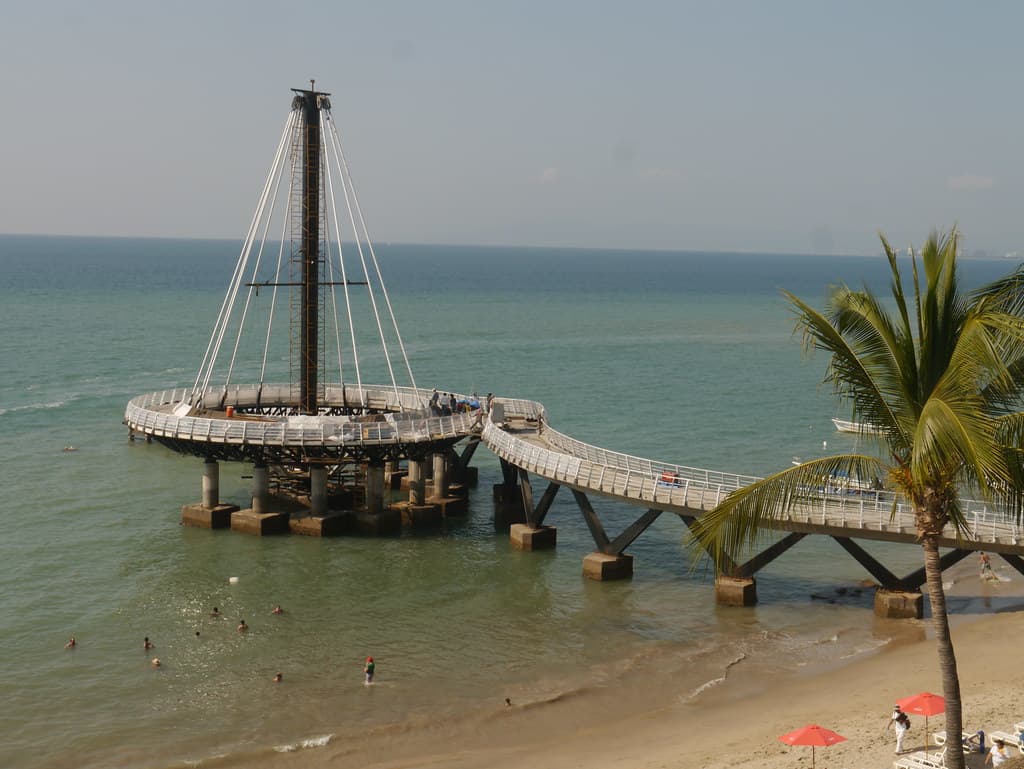 Credit: Flickr
New pier in Puerto Vallarta, Jalisco nearing completion Muelle de Playa Muertos
The beach itself runs along the town's industrial edge, a narrow band of coarse sand studded with rounded stones the size of your fist. At low tide, rusted cables and old anchors emerge from the mud, artifacts of a century of maritime commerce. Yet families still spread blankets here on calm afternoons, and teenagers gather at dusk, bluetooth speakers competing with the clang of rigging against masts. The water stays icy year-round, but that doesn't stop determined locals from wading in during January heat waves.
Sunset transforms the scene. The western sky ignites behind the fuel depot and fish processing plant, turning industrial silhouettes into dramatic cutouts. Cormorants return to roost on channel markers, and the water reflects gold and rust as boats motor in from day trips to the outer ría. You'll smell grilling choripán from the food cart that parks near the pier, and hear Spanish and occasional Tehuelche words carried on the evening wind. It's authentic, unglamorous, and utterly unpretentious.


