

The approach reveals the beach gradually, the road descending through stratified cliffs that speak of ancient seabeds thrust upward by tectonic force. At the bottom, the cañadón opens onto pebbles darkened by mineral content, the stone clicking underfoot with a distinctive pitch different from beaches just kilometers away. Driftwood accumulates where canyon meets shore, creating natural sculptures that last until the next big storm redistributes them.
“The canyon-beach confluence where freshwater carves through coastal geology to meet the Atlantic's relentless erosion.”
 Credit: Pexels
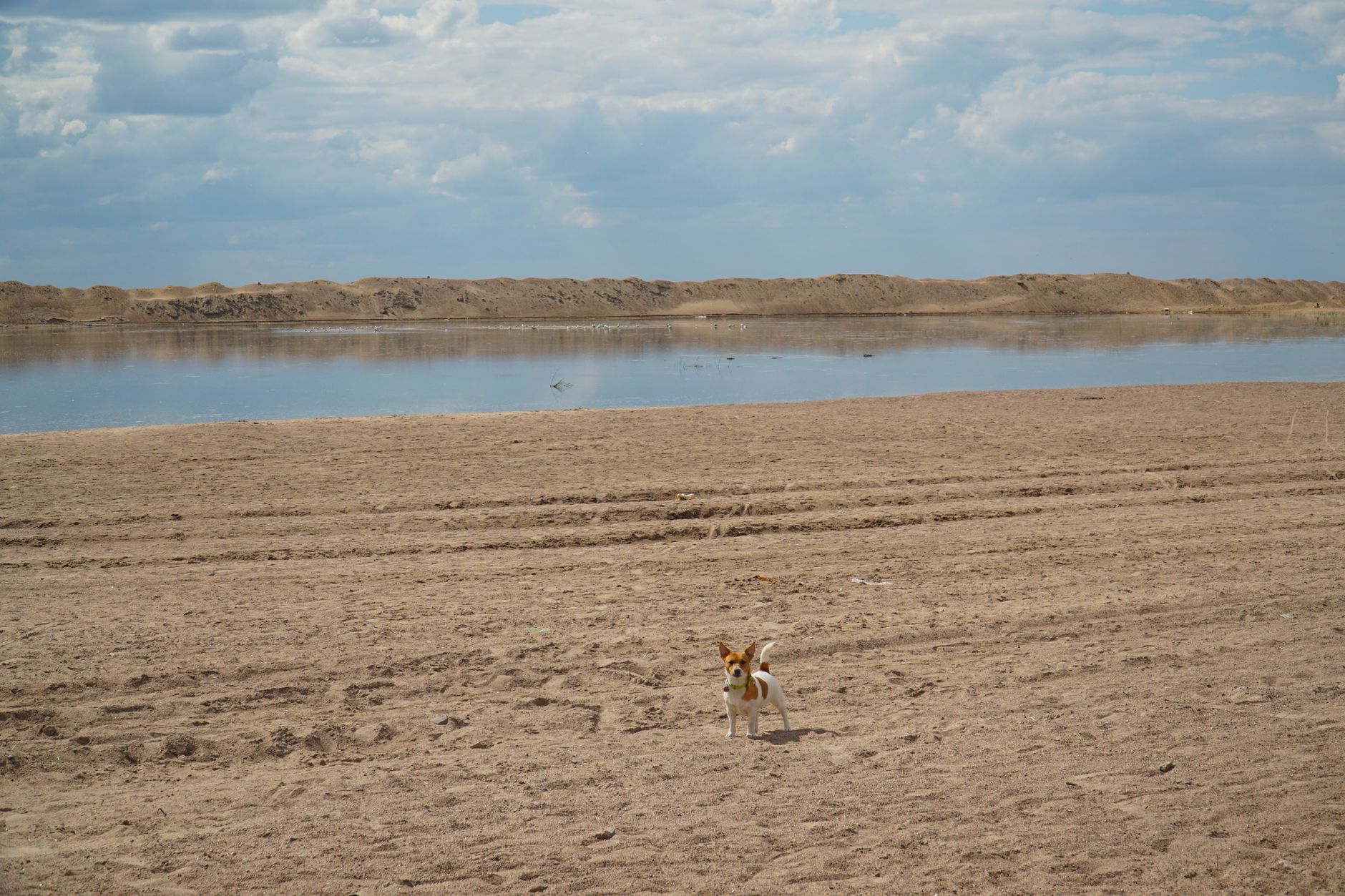
A small dog stands on a sandy shore with a waterbody in Saint Petersburg under a cloudy sky.
Seabirds nest in the canyon walls during breeding season, their calls echoing off stone in a chorus that drowns out the waves. Tide pools form between larger rocks, miniature ecosystems where purple starfish cling beneath the surface and tiny crabs dart for cover when your shadow falls across them. The water here runs particularly cold, fed by underground springs that emerge through the canyon floor.
Few travelers make it this far—Monte León's main attractions lie further south, and Puerto Santa Cruz itself draws limited tourism. Those who arrive often have the beach entirely to themselves, a private audience with Patagonia's elemental forces. The isolation feels earned rather than accidental, a reward for navigating the rough access road and choosing this particular bend in a coastline that offers hundreds.


