
The beach begins where the pavement ends, a practical strip of grey and brown cobbles wedged between the AGP industrial zone and the rhythmic surge of the South Atlantic. This is where Río Grande comes to the water not for beauty but for proximity—dog walkers at dawn, shift workers eating lunch from plastic containers, teenagers passing a thermos of mate while sitting on overturned crates stamped with shipping codes.
“AGP offers the only walking-distance ocean access for Río Grande's northern neighborhoods, making it the city's democratic waterfront despite industrial surroundings.”
 Credit: Flickr
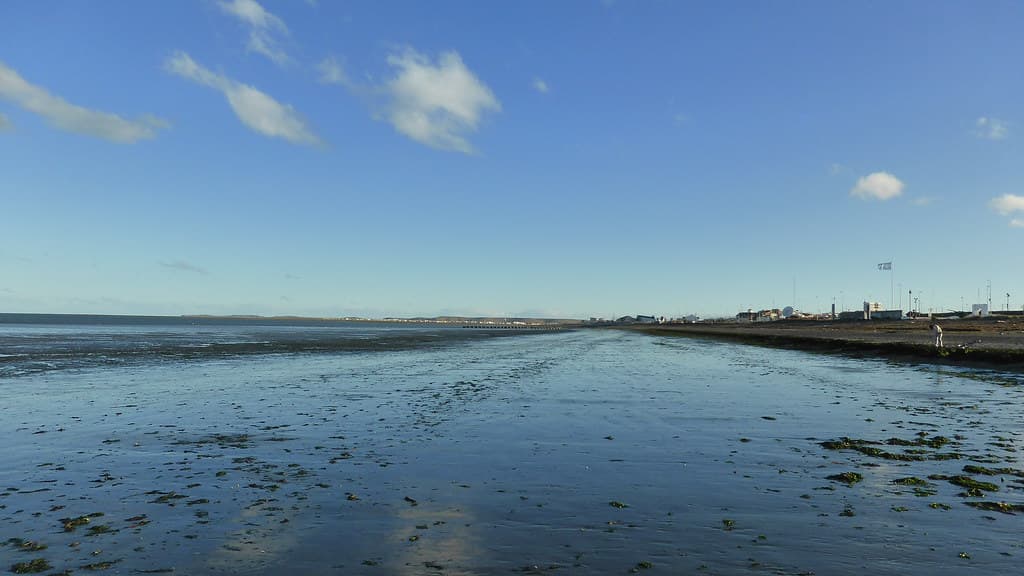
Playa Barrio AGP — photo by feder77
The shoreline curves gently, offering shelter from the worst of the wind that hammers more exposed beaches. Rusted bollards and sections of chain emerge from the stones, relics of decades of port activity. Kelp lies in tangled heaps at the high-tide mark, and the air carries diesel notes mixed with brine. To the north, you'll see the cranes and warehouses that keep this frontier city connected to mainland Argentina; to the south, the coast stretches toward more scenic points.
What it lacks in drama it compensates for in authenticity. This is a beach of function, a place locals visit between errands rather than as a destination. Children collect smooth stones for school projects, fishermen check crab pots wedged between rocks, and on rare windless evenings, families gather to watch the sun drop behind the city's silhouette while cormorants dive for silverside in the shallows.


