
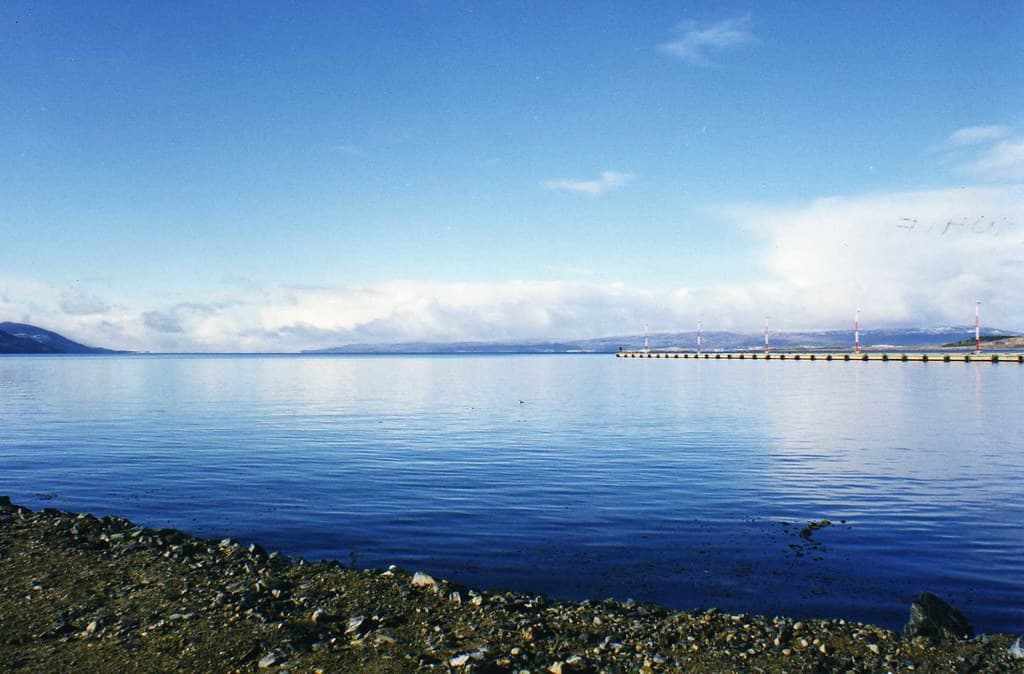
You follow the old estancia route eastward from Ushuaia, where the road narrows to gravel and the last houses disappear behind lenga forest. The beach reveals itself suddenly—a crescent of grey and amber pebbles stretching toward peaks still streaked with August snow even in summer. Wind funnels through the channel with enough force to lean into, carrying the salt-metal scent of the Beagle and the distant bark of sea lions from unseen rocks.
“The estancia route delivers hikers to one of the few Beagle Channel beaches where gaucho history meets sub-Antarctic wilderness.”
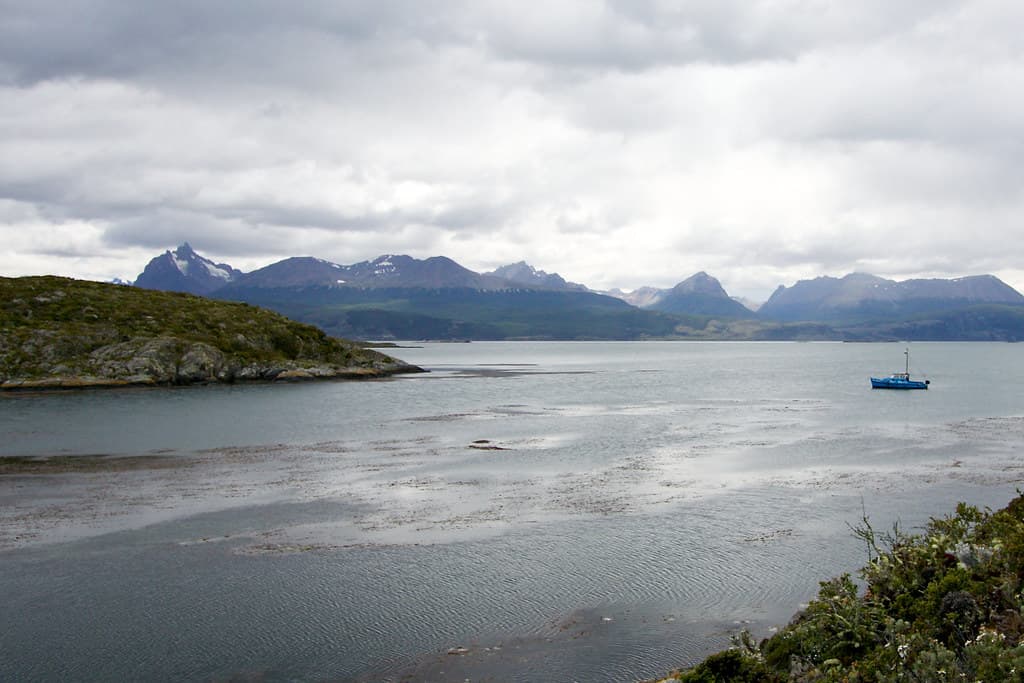 Credit: Flickr
Playa Estancia Túnel — photo by m.nikitin
The stones beneath your feet are smooth as river jade, centuries of wave action polishing schist and granite into ovals that click and shift with each incoming swell. No sand softens the shoreline here; this is bedrock country, where the Andes make their final stand before vanishing beneath the Drake Passage. Kelp forests sway in the shallows, their bronze fronds surfacing and submerging with tidal rhythms unchanged since Darwin sailed these waters.
You frame your shot carefully—the weathered fence posts of the old sheep station, the pewter channel, the Chilean mountains beyond—knowing the light here changes minute by minute as clouds race eastward. A caracara watches from a driftwood log, unimpressed by your presence. This far south, the landscape tolerates visitors but never welcomes them.


