
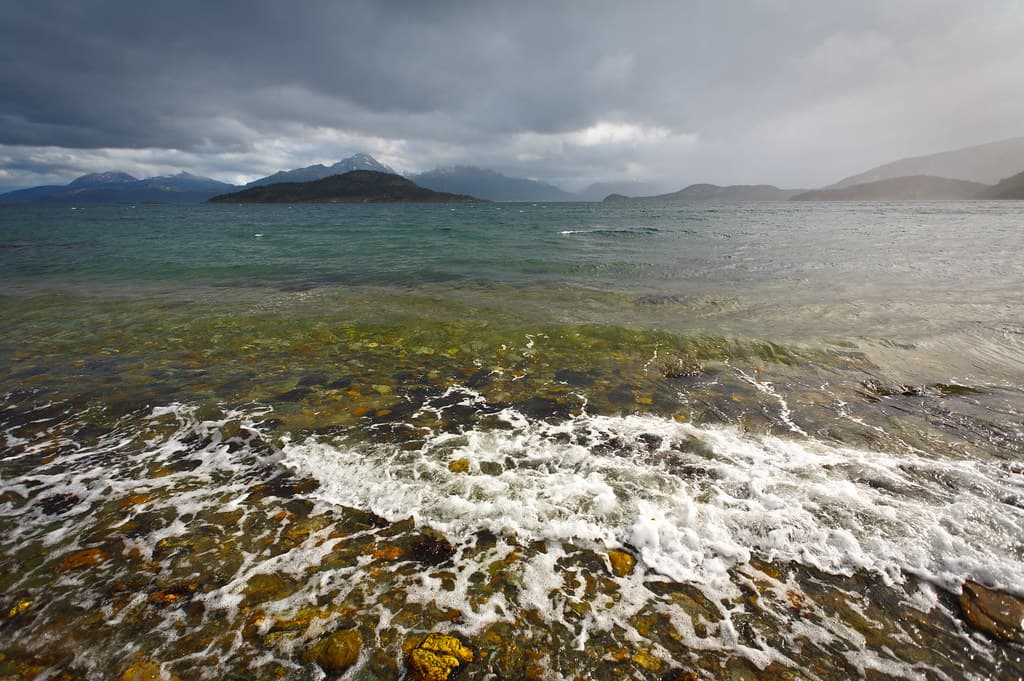
Isla Redonda Oeste occupies strategic geography: close enough to Chilean waters that maritime boundaries become conversation, far enough from Ushuaia that silence replaces the cruise-port din. The beach itself runs perhaps three hundred meters of mixed pebble and coarse sand, bookended by rock outcrops where giant kelp anchors in the shallows. At low tide, the kelp lies exposed like bronze cables across the stones; at high water, it floats vertically, forming submerged forests that filter the light to emerald.
“Positioned at the Chile-Argentina channel narrows, offering visceral geographic intimacy with both nations' territories across navigable but demanding waters.”
 Credit: Flickr
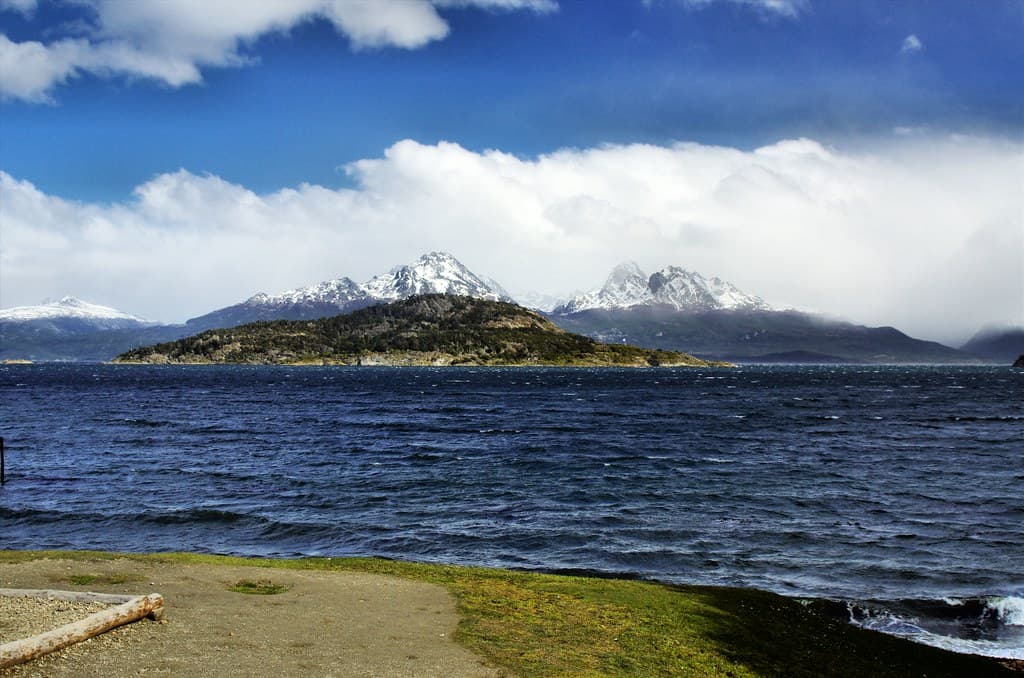
Playa Isla Redonda Oeste — photo by nimdok
The facing vista dominates: Navarino Island's peaks rise abruptly from sea level, their flanks striped with snow gullies even in summer. Clouds catch on the ridgelines, sometimes concealing the summits entirely, other times parting to reveal granite spires that seem impossibly vertical. The channel's water moves with purpose here, pushed by tides and funneled by geography, creating standing waves and whirlpools that mark the current's intensity. Occasionally, a Chilean naval patrol vessel passes, or a sailboat bound for Cape Horn.
Landings require permission from boat captains who read weather and tide tables like scripture. The wind can funnel through the channel with frightening speed, transforming calm water to whitecapped chaos within an eyeblink. But when conditions align and you step onto this western beach, you stand at the functional edge of two nations, surrounded by water that has carried Yámana bark canoes, British survey ships, and modern yachts attempting the uttermost south.


