
Murrays Beach lies tucked into the northern arm of Jervis Bay, protected by headlands that keep the surf at bay and the sandflies mercifully absent. You'll park among the scribbly gums and walk twenty paces to a strand so pale it glows even under cloud cover. The sand squeaks underfoot—a hallmark of the silica content that makes Jervis Bay beaches contenders for the whitest in the world.
“The bay's north-facing orientation and shallow gradient create swimming conditions as calm as a lagoon, rare along Australia's ocean-facing coast.”
 Credit: Flickr
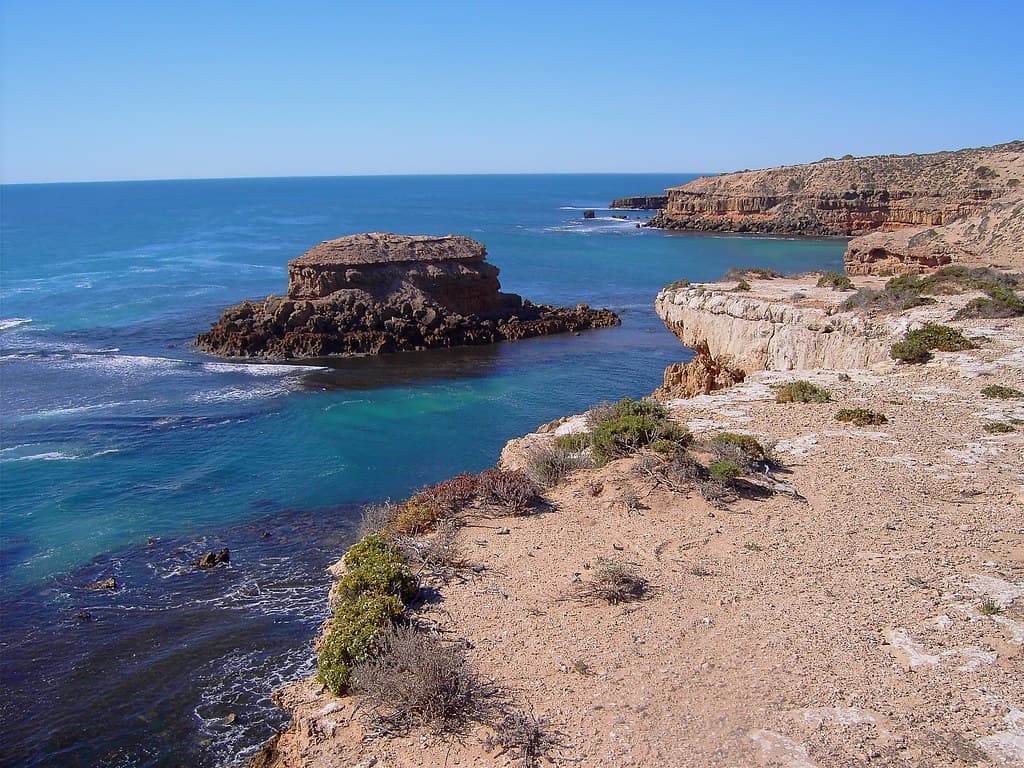
Streaky Bay. Wild coastline near Streaky Bay.
The shallows extend far enough that you can walk out fifty metres and still stand chest-deep, the seabed visible through water that shifts from mint to slate depending on the sky. Families claim spots beneath the she-oaks that fringe the beach, their needles carpeting the sand in rust-coloured drifts. By midday the carpark fills with Canberra day-trippers hauling eskies and inflatable rafts, but the beach never feels crowded—there's always another stretch of sand, another pocket of shade.
Stay past four and you'll watch the light turn the bay molten, the headlands bruising to purple while kookaburras start their evening racket in the paperbarks. Bring your own provisions; the nearest shop sits a ten-minute drive back in Huskisson, and the only facilities here are drop toilets and a cold-water tap that runs fast enough to rinse salt from small, sandy feet.


