
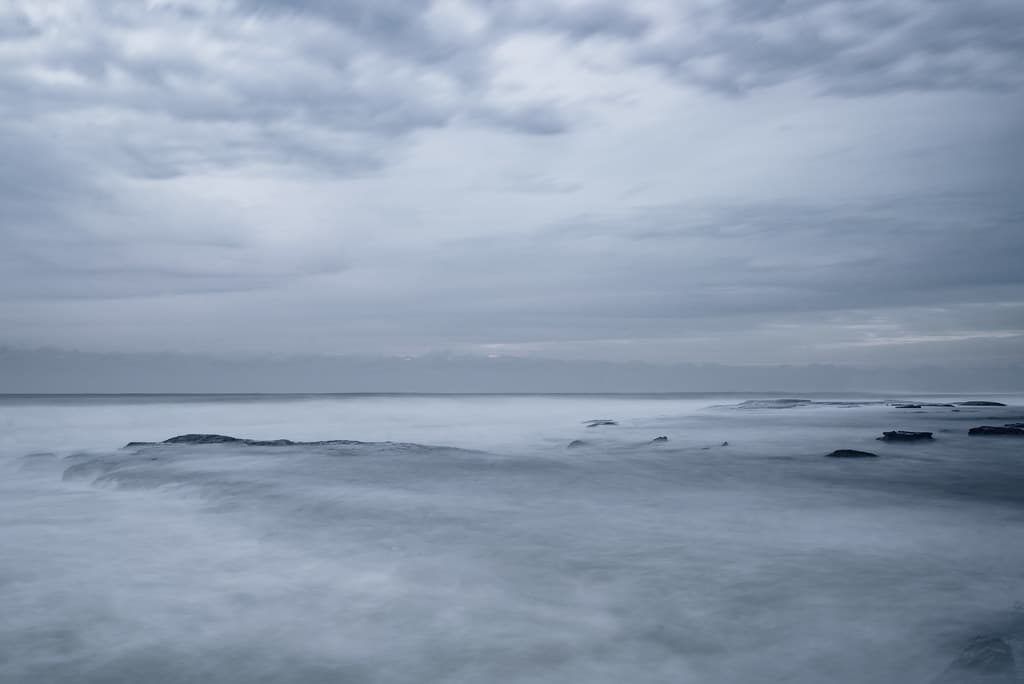
The coastal path from the carpark winds down through banksia and scribbly gums, their paperbark trunks twisting above the sandstone. At the bottom, the beach opens suddenly: a horseshoe of sand pressed between headlands that glow burnt orange in afternoon light. Gulls wheel above the rock platform at the northern end, where tide pools collect between hunks of weathered stone.
“Bilgola maintains the intimacy of a local beach despite sitting just thirty kilometers from Sydney's center, its compact crescent shielding swimmers and surfers from crowds.”
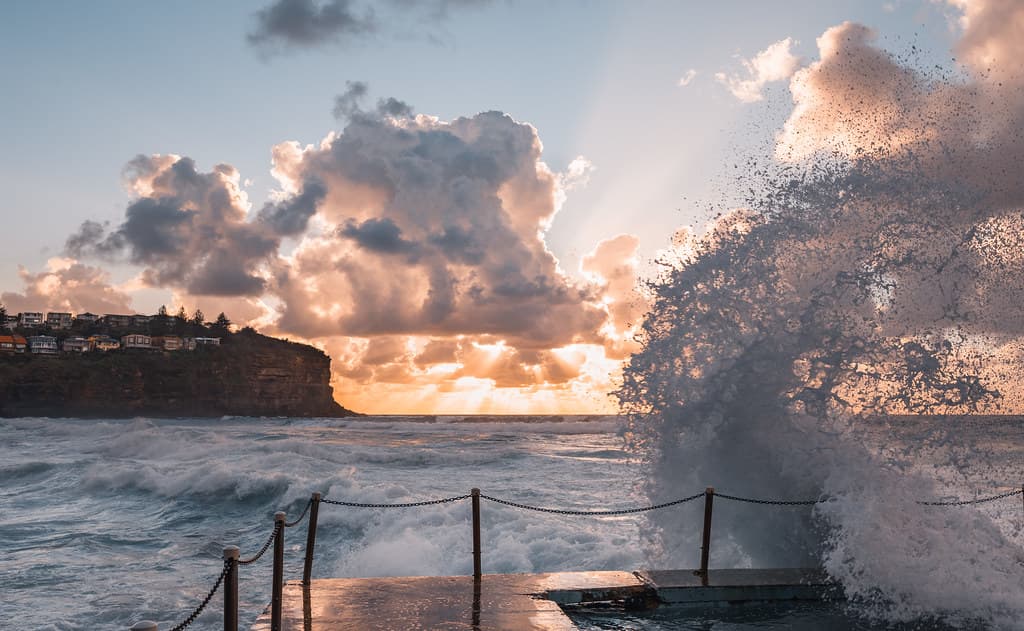 Credit: Flickr
Wave action
The swell hits differently here than at neighboring beaches. Bilgola faces east-northeast, pulling in longer-period swells that wrap around the southern headland and form defined peaks along the shore. Between sets, you'll watch surfers paddle back out, their silhouettes framed against the horizon where container ships trace the shipping lane. The rip runs predictably beside the rocks—useful for getting out back, treacherous if you're unaware.
Above the sand, the Bilgola Beach Surf Life Saving Club sits weathered and functional, its red and yellow flags planted each patrol day. A handful of Norfolk pines lean landward from decades of sea wind. The beach empties by late afternoon, save for dog-walkers taking advantage of off-leash hours and teenagers claiming the northern rocks for post-school sessions. The light slants golden across the water then, turning the shorebreak amber as it crashes and retreats across the hard-packed sand.


