
The sand stretches two kilometers north from the rocky entrance channel where Lake Macquarie drains into the Tasman Sea, creating a constantly shifting sandbar that sculpts hollow, punchy waves even when neighboring beaches lie flat. You'll share the shore with multigenerational Newcastle families who've claimed the same picnic spots for decades, their eskies wedged into the coarse golden sand that squeaks underfoot as you walk toward the water. Gulls wheel overhead, their cries mixing with the shouts of kids bodyboarding in the shorebreak.
“The volatile lake-entrance sandbar manufactures waves when flat spells plague the rest of the Hunter Coast.”
 Credit: Flickr
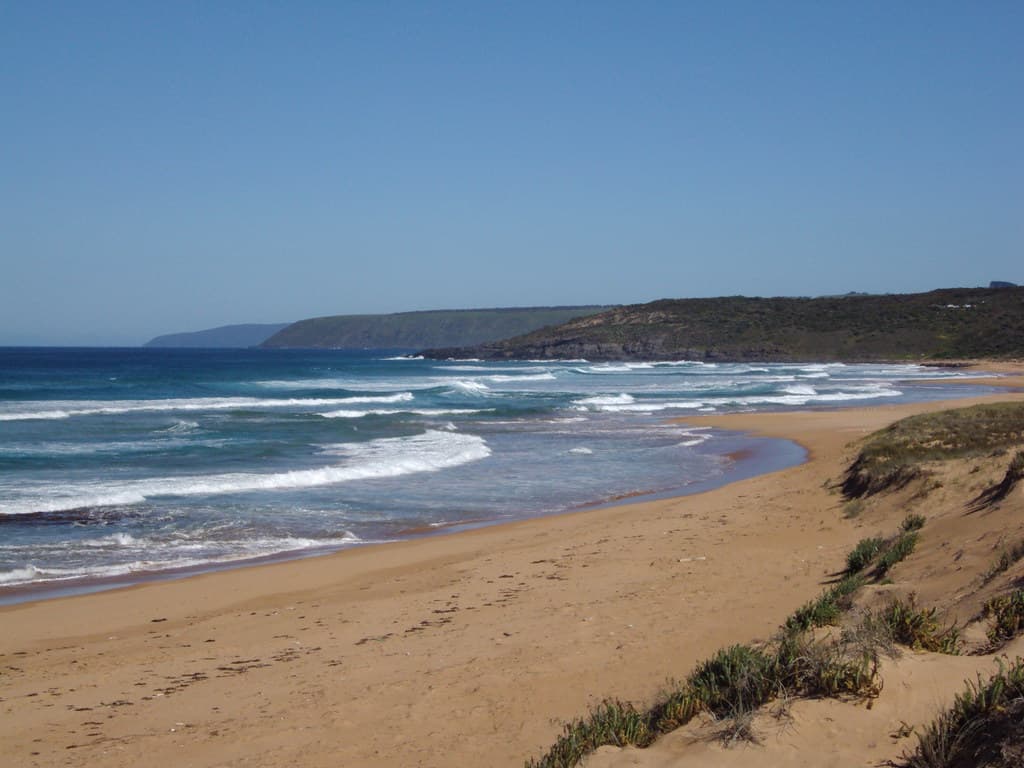
Waitpinga Beach near Victor Harbor South Australia. A popular fishing and surfing beach.
The beach takes its name from the forge workers who once lived in this coal-country village, though today the only hammering comes from waves hitting the sand with metronomic force. Blackwood casuarinas lean landward along the dune line, their needle-leaves rustling in the nor'easter that builds most afternoons. Between swims, you'll notice how the current pulls north—strong enough that lifeguards reposition flags hourly—and how the water shifts from navy to jade depending on whether the lake is flushing or the tide is flooding in.
Beyond the surf club's yellow-and-red façade, the coastal reserve spreads into low scrub where you can escape the weekend crowds. The lake entrance itself is no-swim territory—the rips are vicious—but watching the hydraulics from the rocks offers its own drama, especially after storms when the channel runs brown with tannin-stained runoff and debris tumbles seaward in the outflow.


