Counting the waves…
Counting the waves…
A refined fusion of water purity, environmental stability, and communal vibrancy for Little Jibbon Beach.
View MethodologyAnalyzed via live sensors and environmental data.
Wave height, wind, and atmospheric stability.
Live footfall and crowd balance metrics.
Community reviews and curated sentiment.
“You'll trade the crowds at the main beach for a tucked-away stretch of honey-colored sand where Port Hacking laps gently at weathered rock platforms. The track through coastal scrub takes ten minutes, maybe twelve if…”
Limited recent visitor reports — live OBI telemetry is your best guide for current conditions.
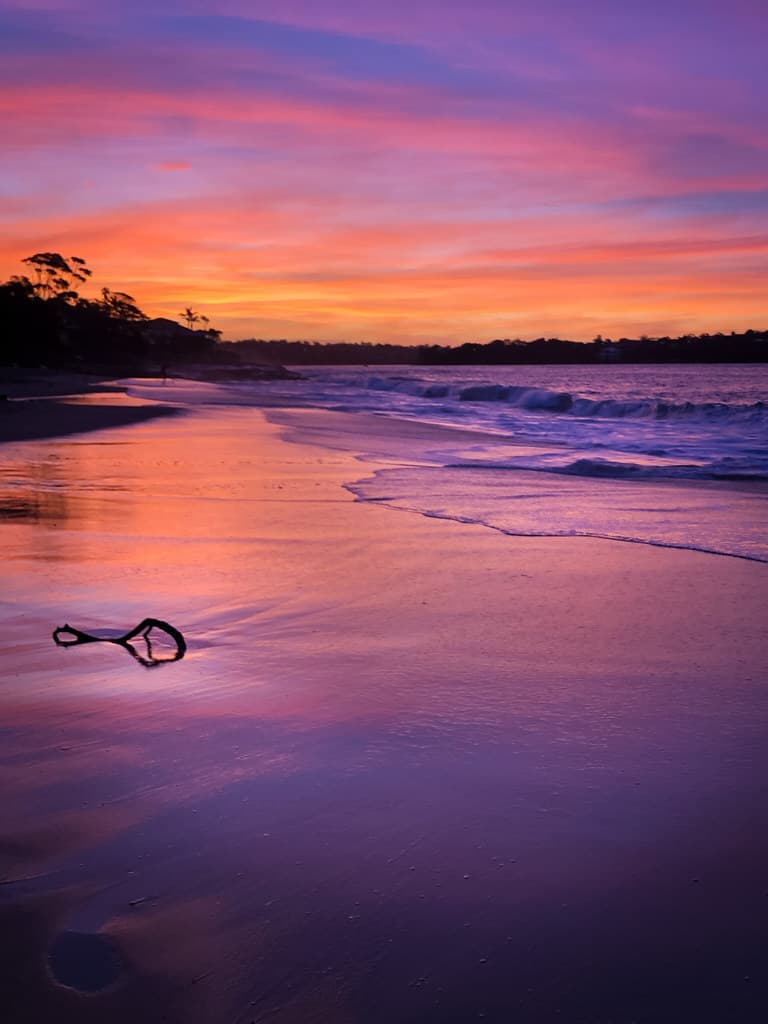
Little Jibbon sits at the southern edge of Bundeena, shielded from the ferry crowds by a low sandstone headland and a thicket of banksias. The approach from Loftus Street winds through she-oaks that whisper in the salt breeze, opening suddenly onto a compact crescent where the sand holds the warm amber tones of the surrounding cliffs. At low tide, the rock shelf extends into Port Hacking, forming shallow pools that catch afternoon light and harbor darting fish the length of your finger.
The beach faces northwest into the protected waterway, so the swells that pound Bondi barely register here—just a rhythmic slosh against the platform edge. Wallabies emerge from the Royal National Park boundary at dusk, grazing on the grassy fringe while kookaburras call from the angophoras above. A few weathered logs mark the high-tide line, natural seating for the handful of Bundeena residents who time their visits to the early-morning glass-off or the golden hour before the last ferry departs.
Aboriginal rock art fifteen minutes on
Protected cove, gentle entry, stingray-safe
Late light on layered cliffs
Where it is
Little Jibbon Beach
Bundeena, New South Wales, Australia
-34.098600°, 151.163900°
Weather
Loading…
Swell
—
Temp
Warm · Restorative
UV Index
Moderate
Wind
—
Tidal State
Last known
Max Sunlight
—
Ideal Shade
—
Jan - Dec (Peak)
Mar - Nov (Off-season)
Historical data suggests peak visibility and stable sea temperatures occur during the prime visitation window.
Select a category to load nearby places.
Unlock restaurants, luxury stays and curated maritime experiences within 2km
Little Jibbon Beach is a small, sheltered cove that generally offers calmer conditions than more exposed ocean beaches. However, there are no lifeguard patrols, so swim at your own risk and stay alert to changing conditions. The beach is better suited to wading and snorkeling in calm weather rather than serious swimming. Check tide times before visiting, as the beach can become quite narrow at high tide. Always supervise children closely and be mindful that help is not immediately available in emergencies.
Little Jibbon Beach is accessible year-round, with each season offering different appeal. Summer (December-February) brings warm water and ideal swimming conditions, though it can get busy on weekends. Autumn and spring provide pleasant temperatures with fewer crowds, perfect for exploring rock pools and coastal walks. Winter offers solitude and dramatic scenery, though swimming is only for the hardy. Visit during weekdays for more privacy, and aim for low to mid-tide when the beach area is at its most expansive.
Little Jibbon Beach is accessed via walking tracks from Bundeena. Park in Bundeena village near the ferry wharf or along residential streets (observe parking restrictions). From Bundeena, follow the Jibbon Beach Track through Royal National Park—Little Jibbon is a quieter cove located before the main Jibbon Beach. The walk takes approximately 20-30 minutes on bushland trails. Alternatively, reach Bundeena by ferry from Cronulla, making this a car-free day trip option. Wear sturdy shoes as paths can be uneven.
Little Jibbon Beach itself has no facilities—it's a remote, natural beach within Royal National Park. You'll need to bring all food, water, and supplies with you. The nearest amenities are in Bundeena village (20-30 minute walk back), which has a cafe, general store, and pub. Bundeena offers limited accommodation including holiday rentals and a guesthouse. Most visitors come as day-trippers. There are no toilets or freshwater at the beach, so plan accordingly and pack out all rubbish.
Yes, the area around Jibbon Beach (near Little Jibbon) features significant Aboriginal rock engravings created by the Dharawal people. These ancient artworks depict fish, whales, and other culturally important figures carved into rock platforms. The engravings are located along the walking track and near the headland. Please treat these sacred sites with respect—do not touch, walk on, or deface the engravings. Interpretive signs provide context, but experiencing these artworks offers a meaningful connection to the area's Indigenous heritage spanning thousands of years.